Sourcing plastic pet bowls from China
For reusable plastic pet bowls confirmed under 3924 90 00 90, the UK duty range is a single rate of 6%. Consumer products sold in Great Britain must be safe in normal and reasonably foreseeable use. Check the resin, rim finish, stability and cleaning performance. Cambridge China Bridge sources plastic pet bowls.
Buying from China for a business? How our UK China sourcing agent service works · China sourcing agent for small orders and first imports
Duty on plastic pet bowls
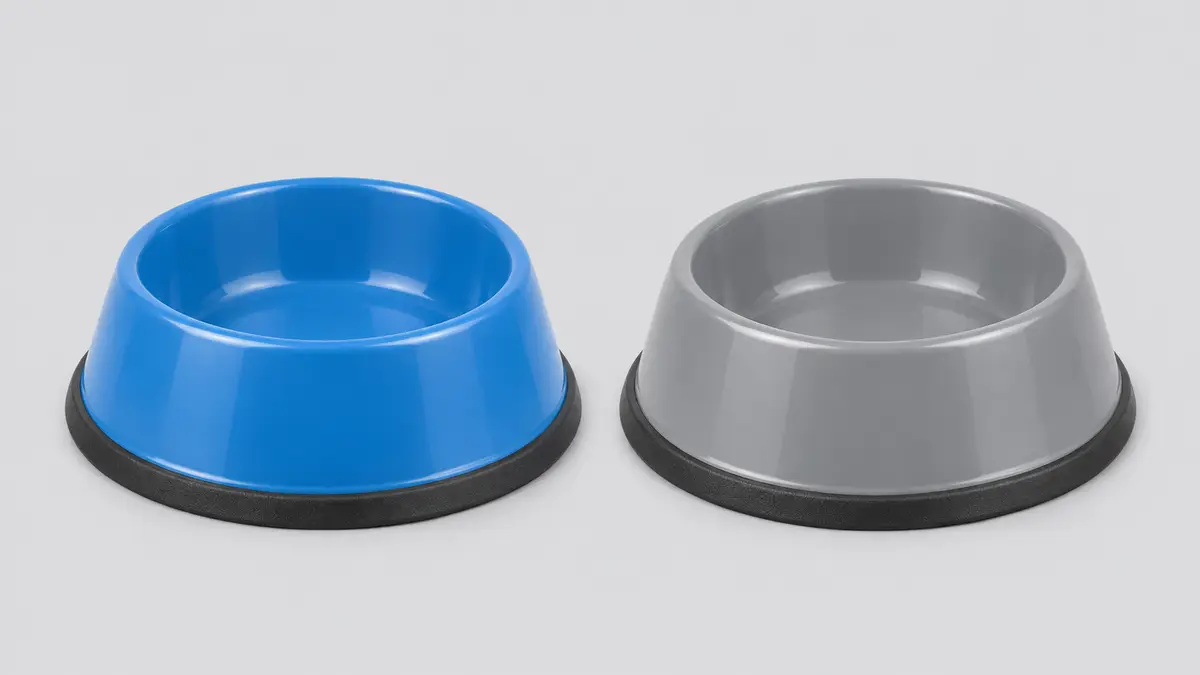
Read from the UK Trade Tariff on 28 October 2026, heading 3924 covers plastic tableware, kitchenware, other household articles and hygienic or toilet articles. This guide covers reusable plastic pet bowls proposed for the other household articles line, 3924 90 00 90. The table shows bowl styles sharing that line, rather than separate tariff subdivisions.
The supplied facts show 6% duty for goods from China under this line, with no anti-dumping duty, countervailing duty, suspension or attached import control listed. Separate kitchenware lines carry declaration controls. If a bowl is also intended for human food, ask your customs broker to confirm the classification and declaration requirement.
Give your broker photographs, resin composition, base materials and intended use to confirm the commodity code. Mixed-material bowls need particular attention. For another pet bowl material, see the ceramic pet bowl guide.
| Goods | Commodity code | Duty | Anti-dumping or countervailing duty on China |
|---|---|---|---|
| Reusable moulded plastic pet feeding bowls, subject to classification | 3924 90 00 90 | 6% | None |
Specify the resin, bowl profile and cleaning
Specify the resin, colourants, recycled content, dimensions, usable capacity, empty weight and wall thickness. Describe the intended animal and whether the bowl holds dry feed, wet feed or water. For slow-feeding designs, approve the channel width, ridge height and access for cleaning against a physical sample.
Consumer products supplied in Great Britain must be safe in normal and reasonably foreseeable use under the General Product Safety Regulations 2005. Confirm with the relevant product safety authority what producer name and address and product reference or batch identification should appear on the product or packaging. Assess sharp edges, breakage and detachable base parts.
Agree the non-slip material, attachment method, cleaning instructions and evidence supporting dishwasher claims. Ask for finished-product testing appropriate to the resin, colour and intended use. A generic food-grade claim does not identify what was tested. Discuss the scope through testing and certification. Require approval before material or construction changes.
Worked duty example
Illustrative example, not a quote: Illustrative order: 2,000 reusable moulded plastic pet feeding bowls, assuming classification is confirmed under 3924 90 00 90, invoiced at £7,000 free on board, with £600 of freight and insurance to the UK. The customs value is £7,600. Duty at 6% is £456. Import VAT at 20% is charged on the customs value plus duty, £8,056, so it is £1,611.20. Import taxes total £2,067.20; a VAT-registered importer can usually reclaim the VAT, so the lasting cost is the £456 of duty. The import duty and VAT guide explains each step.
Inspection checklist
Body and rim: compare dimensions, weight and finish with the approved sample; check for cracks, short moulding, sharp flash and rough feeding channels.
Stability and leakage: fill the bowl, check for seepage and rocking, and test sliding and tipping on the agreed floor surfaces.
Base and cleaning: check retention of non-slip parts; repeat the agreed washing trial and inspect for warping, trapped residue, odour and colour transfer.
Packing and identification: separate nested arrival samples, inspect scuffing and distorted rims, and match product references and batch identification to the order. Agree sampling through the quality inspection guide.
Working out your own order? Send us the product on WhatsApp and we reply the same working day: WhatsApp us
What goes wrong
Thin bases can rock or distort after washing. Non-slip rings can detach, while deep slow-feeding channels can retain wet feed and resist brushing. Tight nesting can scuff the feeding surface or distort the rim. Trial production samples with the intended feed and cleaning method before approving shipment.
A report for another resin or colour leaves the supplied bowl unassessed. Keep the approved sample, material specification and relevant reports linked to the order. If odour, cracking or colour transfer appears on arrival, separate the affected stock and investigate before sale.
Cambridge China Bridge sources these products for UK businesses, checking the factory and the documents before shipment. See factory verification. For repeat volumes, see container programmes.
Frequently asked questions
What is the UK import duty on plastic pet bowls from China?
The supplied facts show 6% under 3924 90 00 90, with no anti-dumping duty, countervailing duty or suspension listed. Confirm classification for the actual bowl.
Is a food-grade claim enough for a plastic pet bowl?
Ask for reports identifying the actual resin, colour and finished bowl, with testing matched to its intended use. A generic claim does not show which product or conditions were assessed.
How do I check a plastic slow-feeding bowl?
Trial the intended feed, check access around the ridges and brush every channel. Inspect for sharp flash, trapped residue, instability and distortion after the agreed cleaning trial.
What should I specify for a non-slip pet bowl?
Specify the base material, attachment method and intended floor surfaces. Test sliding and tipping when filled, then check that the base remains attached after washing.