Sourcing sheepskin suede leather from China
Sheepskin suede leather under this heading has a single UK duty rate of 0% for goods from China. Confirm complete tanning and the animal species: fully tanned skins have an animal-health import exemption, while CITES depends on the species. Cambridge China Bridge sources sheepskin suede leather.
Buying from China for a business? How our UK China sourcing agent service works · China sourcing agent for small orders and first imports
Duty and the tanning distinction
Read from the UK Trade Tariff on 29 September 2026, heading 4112 covers sheep or lamb leather further prepared after tanning or crusting, without wool, whether split or unsplit, excluding leather of heading 4114. The buying variants above share the sole commodity line supplied. For the broader product family, see sheep and lamb leather.
The supplied tariff record gives 0% duty for China, with no anti-dumping or countervailing duty and no suspension recorded. It attaches CITES import and export controls. For imports from China, CITES-listed specimens require the appropriate permits; ask your customs broker to confirm applicability to the declared species. Fully tanned hides and skins fall within APHA's animal-health import exemption. Obtain evidence of complete tanning rather than relying on the word suede.
Confirm the species, absence of wool, processing stage and finish before using 4112 00 00 00. A suede trade description alone does not establish the heading. Follow finding your commodity code and send your broker the specification and material photographs.
| Goods | Commodity code | Duty | Anti-dumping or countervailing duty on China |
|---|---|---|---|
| Unsplit sheep suede leather, further prepared, without wool | 4112 00 00 00 | 0% | None |
Specify the nap and usable cutting area
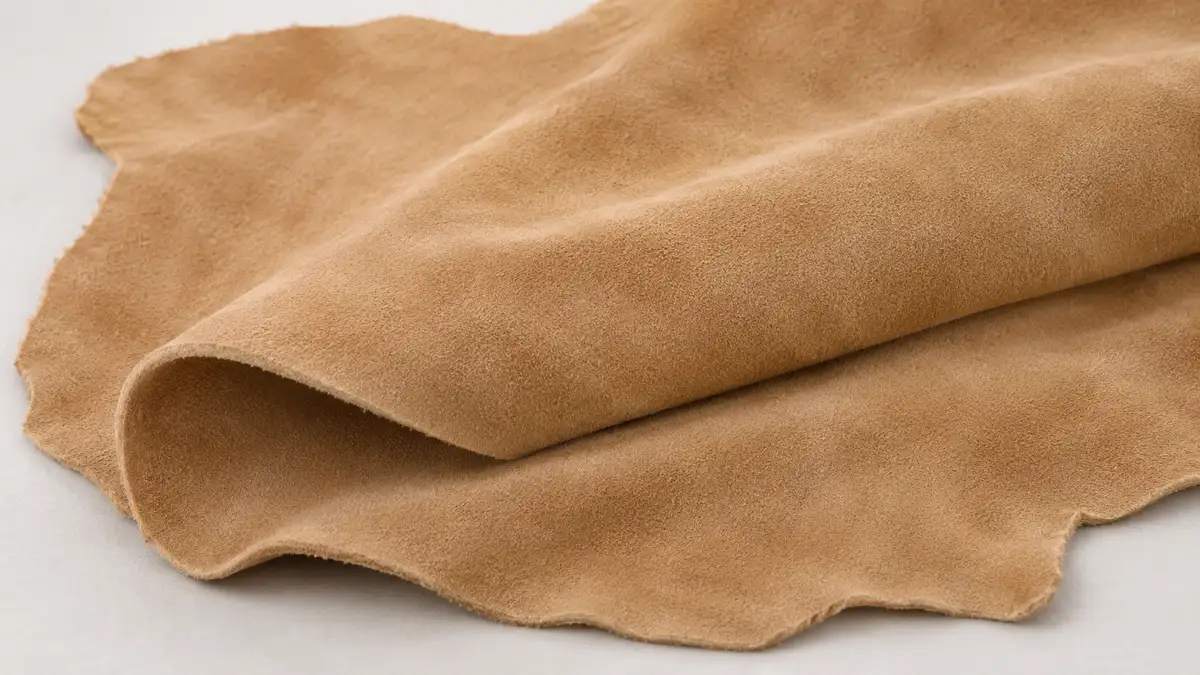
State sheep or lamb, split or unsplit construction, intended use, thickness tolerance and usable area measurement. Identify which face carries the suede nap. Agree its length, density, direction and feel against a retained physical sample, alongside colour references viewed with the nap brushed consistently.
Define acceptable holes, scars, thin patches and edge damage using marked sample skins. Agree how defective areas are excluded from the invoiced usable area. Specify rub resistance, stretch, tear performance and packing that protects the nap from compression and damp.
UK REACH restrictions can limit or prohibit chemicals in articles. Ask a laboratory to assess the applicable restrictions for your intended use and agree testing of the dyed production leather through testing and certification. Match reports to the tannery, colour and batch.
Worked duty example
Illustrative example, not a quote: Illustrative trial consignment of dyed sheepskin suede leather under 4112 00 00 00, invoiced at £4,112 free on board, with £142 of freight and insurance to the UK. The customs value is £4,254. Duty at 0% is £0. Import VAT at 20% is charged on the customs value plus duty, £4,254, so it is £850.80. With no duty, the only import tax is the VAT, which a VAT-registered importer can usually reclaim. The import duty and VAT guide explains each step.
Inspection checklist
Identity: check the species declaration, tanning evidence, split construction and batch references against the order.
Surface: brush the nap consistently before comparing shade; check bald patches, uneven buffing, staining and compressed areas.
Cutting yield: measure usable area and thickness across the skin, marking holes, scars and weak edges against the agreed defect rules.
Performance and packing: check agreed rub and stretch results, review batch-linked laboratory reports, and inspect for damp, mould and packing impressions. Use quality inspection explained to brief the inspection.
Working out your own order? Send us the product on WhatsApp and we reply the same working day: WhatsApp us
What goes wrong
A large skin can still give poor cutting yield when scars or thin areas cross the intended panels. Matching total area without marking defects hides this problem. Approve a cutting layout on representative skins before accepting the supplier's area calculation.
Nap direction can make matching colours appear different, while uneven buffing can leave permanent patchiness. Compare skins under consistent lighting with the nap aligned. Keep affected batches separate while you investigate; a supplier's generic test report does not identify the leather delivered.
Cambridge China Bridge sources these products for UK businesses, checking the factory and the documents before shipment. See factory verification. For repeat volumes, see container programmes.
Frequently asked questions
What is the UK import duty on sheepskin suede leather from China?
The supplied tariff record gives 0% for 4112 00 00 00, with no anti-dumping or countervailing duty recorded. Confirm that your leather fits the heading.
Does fully tanned sheepskin suede need a health certificate?
APHA guidance exempts hides and skins that have undergone complete tanning from health certification and veterinary border checks. Obtain evidence that the leather is fully tanned.
Does sheepskin suede leather need CITES permits?
The tariff attaches CITES controls. Permits depend on whether the declared species is CITES-listed. Ask your broker to confirm the species and applicable documentation before shipment.
What should I check before accepting suede skins?
Check usable cutting area, thickness variation, nap consistency, shade with the nap aligned, rub performance and damp damage against the approved sample and written specification.