Sourcing scallop extract from China
Scallop extract from China under heading 1603 carries UK duty of 0% to 12%, depending on immediate pack size. Confirm import eligibility, factory approval and veterinary documents before ordering, and specify the scallop content and salt level. Cambridge China Bridge sources scallop extract.
Buying from China for a business? How our UK China sourcing agent service works · China sourcing agent for small orders and first imports
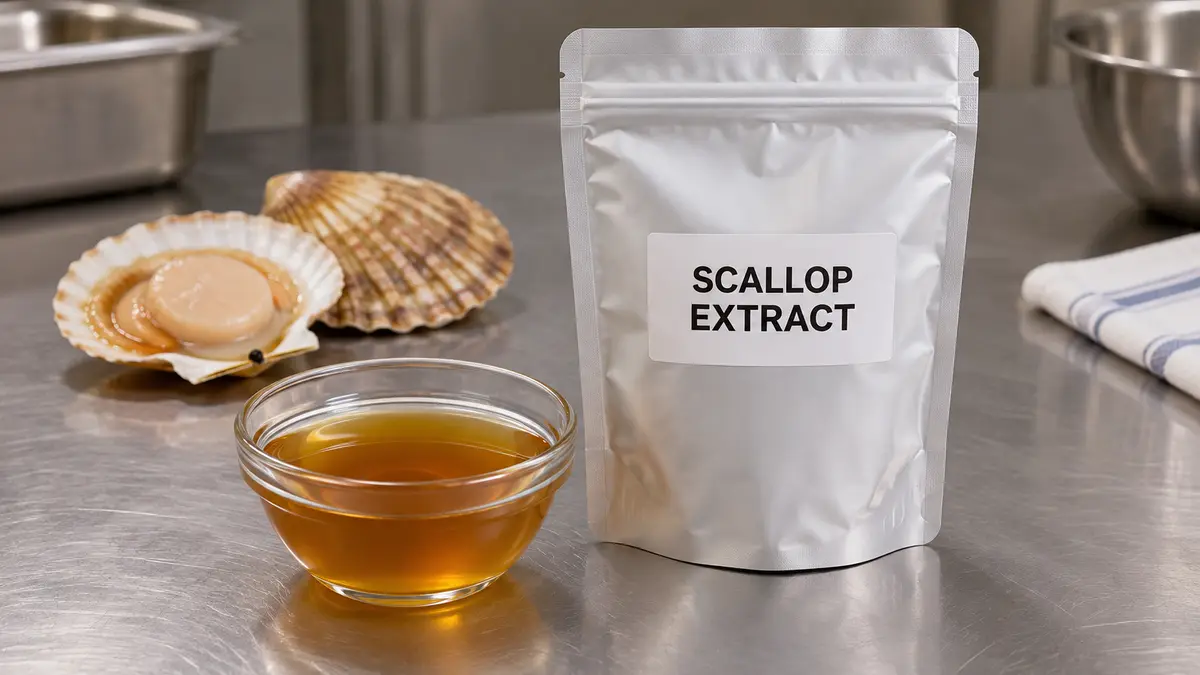
Scallop extract duty and import controls
Read from the UK Trade Tariff on 29 September 2026, heading 1603 covers extracts and juices of meat, fish, crustaceans, molluscs and other aquatic invertebrates. The supplied fishery-product lines carry 12% for immediate packs with a net content of 1 kg or less and 0% for larger packs. No anti-dumping duty, countervailing duty or suspension is listed.
The tariff attaches veterinary, organic import and CITES import and export controls. For a China shipment, confirm product eligibility, establishment approval, health certification and the veterinary entry document with your customs broker before dispatch. Pre-notify the border control post before arrival. Confirm the CITES requirements with your broker. For organic extract, confirm certification and the certificate of inspection with your organic control body; the exporter’s control body issues that certificate.
Confirm the commodity code using the complete formulation, processing method and immediate pack size. The table includes residual 'other' lines for comparison; they are not interchangeable alternatives to the fishery-product lines for scallop extract. See the clam extract guide for the wider heading.
| Goods | Commodity code | Duty | Anti-dumping or countervailing duty on China |
|---|---|---|---|
| Scallop extract containing fishery products, immediate packs up to 1 kg | 1603 00 10 80 | 12% | None |
| Scallop extract containing fishery products, larger immediate packs | 1603 00 80 10 | 0% | None |
| Other extracts, packs up to 1 kg; classification comparison only | 1603 00 10 89 | 12% | None |
| Other extracts, larger packs; classification comparison only | 1603 00 80 90 | 0% | None |
Specify scallop content and extract strength
Specify the scallop species, raw-material origin, whether the extract uses muscle or other tissues, and whether the scallops are farmed or wild. Obtain the complete recipe, including salt, sugar, flavour enhancers, carriers and preservatives. Distinguish concentrated scallop extract from a blended seasoning sold under a similar name.
Agree liquid, paste or powder form, solids content, salt level, colour, aroma and performance in your intended recipe. Define the dilution method for comparing samples. Specify packaging, closure, storage after opening and evidence supporting shelf life. Mollusc allergens must be emphasised on prepacked food labels.
Worked duty example
Illustrative example, not a quote: Illustrative trial shipment of concentrated scallop extract in bulk drums under 1603 00 80 10, invoiced at £30,000 free on board, with £4,000 of freight and insurance to the UK. The customs value is £34,000. Duty at 0% is £0. Import VAT at 20% is charged on the customs value plus duty, £34,000, so it is £6,800. With no duty, the only import tax is the VAT, which a VAT-registered importer can usually reclaim. The import duty and VAT guide explains each step. This assumes the goods are standard-rated for VAT. Most food for human consumption is zero-rated, and animal feed can be too, in which case no import VAT is due, so check the rate for your product in HMRC's VAT Notice 701/14.
Inspection checklist
Identity: match the scallop species, ingredient declaration, batch marks and supplier records to the approved specification.
Strength: compare solids, salt, colour, aroma and application performance with the retained sample using the agreed dilution method.
Packaging: check seals, leakage, swelling, net contents and powder clumping; compare arrival conditions with the agreed storage instructions.
Documents and labels: match shipment documents to the factory and batch, check the applicable border paperwork, and verify that mollusc allergens are emphasised in the ingredients list.
Working out your own order? Send us the product on WhatsApp and we reply the same working day: WhatsApp us
What goes wrong
Added salt or carriers can mask a weaker scallop extract. A sample may perform well in water but give an unsuitable flavour or sediment in the buyer’s sauce or stock. Agree application testing and measurable composition before approving production.
Leaking closures, moisture-damaged powder and inconsistent batch identification complicate acceptance. A tariff code also cannot establish import eligibility. Resolve approval and documentation questions before shipment, and investigate suspect packs before releasing stock.
Cambridge China Bridge sources these products for UK businesses, checking the factory and the documents before shipment. See factory verification. For repeat volumes, see container programmes.
Frequently asked questions
What is the UK import duty on scallop extract from China?
The supplied heading 1603 fishery-product lines carry 12% for immediate packs of 1 kg or less and 0% for larger packs. No anti-dumping or countervailing duty is listed.
Can I import scallop extract from China into Great Britain?
Check eligibility for the exact product and establishment before ordering. Ask your broker to confirm the applicable veterinary documents, health certification and border arrangements.
Does scallop extract need an allergen declaration?
Scallop is a mollusc allergen. On prepacked food, allergens must be emphasised each time they appear in the ingredients list.
How do I compare scallop extract samples?
Use the same agreed dilution and your intended recipe. Compare solids, salt, aroma, colour, sediment and flavour against a retained sample, and obtain the complete formulation.