Sourcing rubber urinal bottles from China
Rubber urinal bottles of heading 4014 from China carry 0% UK duty, with no listed trade remedies. Consumer products must be safe in foreseeable use; medical-device status depends on intended purpose and mode of action. Cambridge China Bridge sources rubber urinal bottles.
Buying from China for a business? How our UK China sourcing agent service works · China sourcing agent for UK manufacturers and engineering firms
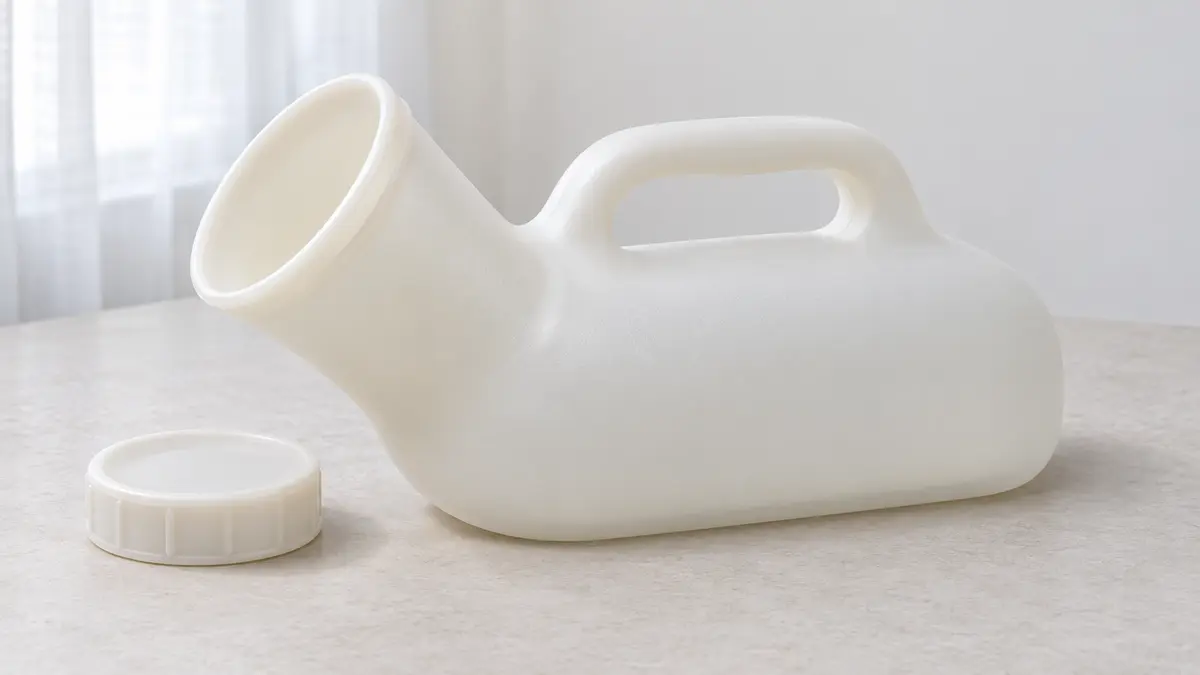
Rubber urinal bottles: 0% duty
Heading 4014 covers hygienic or pharmaceutical articles of vulcanised rubber other than hard rubber, with or without hard-rubber fittings. Rubber urinal bottles fall within the other-articles line. The table shows purchasing variants sharing that line, rather than separate tariff subdivisions.
Read from the UK Trade Tariff on 30 September 2026, code 4014 90 00 00 carried 0% duty for goods from China. The supplied tariff data lists no anti-dumping or countervailing duty, suspensions or import controls for this line.
Confirm the material and finished construction before choosing the commodity code. A product described simply as a urinal bottle may be plastic rather than rubber. For another product family within this heading, see rubber enema bags.
| Goods | Commodity code | Duty | Anti-dumping or countervailing duty on China |
|---|---|---|---|
| Rubber urinal bottles with removable caps | 4014 90 00 00 | 0% | None |
Specify the bottle, closure and intended use
Agree the rubber compound, capacity, mouth shape, wall thickness, handle construction and cap seal against an approved sample. Specify whether graduations are approximate or intended for measurement. Agree the cleaning method, permitted cleaning agents, drying procedure and storage instructions. Ask for evidence supporting any claim that the bottle tolerates disinfection or sterilisation.
For Great Britain, medical-device status depends on the manufacturer's stated intended purpose and the product's mode of action. Confirm the intended use before approving labels or advertising. Consumer products must be safe in normal or reasonably foreseeable use.
If the bottle is a medical device, it must be registered with the medicines and healthcare products regulator for the Great Britain market. A manufacturer outside the UK must appoint a UK Responsible Person. Manufacturers must meet the applicable device marking and conformity assessment requirements. Review the documentation for the actual model through testing and certification support.
Worked duty example
Illustrative example, not a quote: Illustrative order of 2,000 rubber urinal bottles under 4014 90 00 00, invoiced at £5,000 free on board, with £2,000 of freight and insurance to the UK. The customs value is £7,000. Duty at 0% is £0. Import VAT at 20% is charged on the customs value plus duty, £7,000, so it is £1,400. With no duty, the only import tax is the VAT, which a VAT-registered importer can usually reclaim. The import duty and VAT guide explains each step. This assumes the goods are standard-rated for VAT. Contraceptive products sold other than on prescription take the reduced rate of VAT under HMRC's VAT Notice 701/57, so check the rate for your product.
Inspection checklist
Body and mouth: inspect sampled bottles for thin patches, cracks, moulding flash and rough contact edges; compare shape and rigidity with the approved sample.
Closure and leaks: fill with water to the agreed working level, fit the cap and tilt through the agreed handling positions. Check seams, neck joints and seals for leakage.
Cleaning and reuse: repeat the agreed cleaning process and inspect for swelling, tackiness, cracking, retained residue and seal distortion. Check that the bottle drains and dries as specified.
Identity and packing: match the model, compound declaration, instructions and batch identification to the order. Inspect for crushed necks, detached caps and distorted handles on arrival.
Working out your own order? Send us the product on WhatsApp and we reply the same working day: WhatsApp us
What goes wrong
A cap that fits the sample can leak on production bottles when neck moulding or seal dimensions change. Thin walls can collapse during handling, while rough mouths and moulding flash make contact uncomfortable. Check samples taken from production, including the supplied caps, rather than relying on a display sample.
An unapproved compound change can alter flexibility and cleaning performance. Treat retained liquid, tackiness after cleaning and unreadable graduations as reasons to investigate. Keep the agreed compound and cleaning process in the purchase specification, and compare arrival samples with the approved sample.
Cambridge China Bridge sources these products for UK businesses, checking the factory and the documents before shipment. See factory verification. For repeat volumes, see container programmes.
Frequently asked questions
What is the UK import duty on rubber urinal bottles from China?
The supplied tariff reading gives 0% duty under 4014 90 00 00, with no listed anti-dumping or countervailing duty.
Are rubber urinal bottles medical devices?
Do not decide from the product name alone. Medical-device status depends on the manufacturer's stated intended purpose and the product's mode of action.
Can rubber urinal bottles be sterilised?
Ask for evidence for the actual compound, bottle and closure using the proposed process. Check for cracking, swelling and leakage afterwards; do not accept a general rubber-material claim.
How do I check a rubber urinal bottle for leaks?
Fill it with water to the agreed working level, fit its supplied cap and tilt it through the agreed handling positions. Inspect the seams, neck and cap seal.