Sourcing rubber flip-flops from China
Rubber flip-flops from China carry 16% UK duty across the relevant lines, so there is no rate variation within this selection. Footwear composition labelling is required, and consumer products must be safe in normal or reasonably foreseeable use. Cambridge China Bridge sources rubber flip-flops.
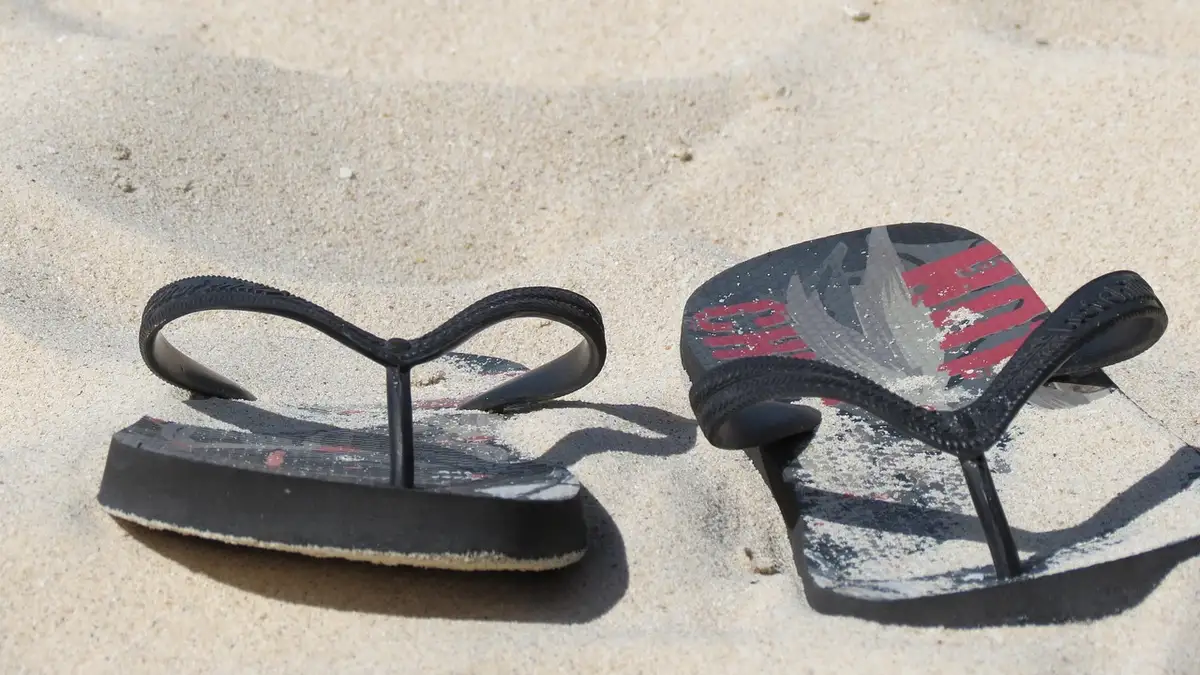
Rubber flip-flop duty and construction
Heading 6402 covers footwear with rubber or plastic outer soles and uppers. The line for straps or thongs assembled to the sole by plugs is 6402 20 00 00. Check the underside of the sample to identify the attachment. The table also includes nearby lines for other rubber-upper constructions and plastic-strap alternatives; they are alternatives to check, rather than interchangeable codes.
Read from the UK Trade Tariff on 30 September 2026, all selected lines carried 16% duty for goods from China. The supplied tariff record lists no anti-dumping or countervailing duty, suspensions or attached import controls for these lines. Controls attached to other products within the heading should not be treated as controls on these selected lines. For snowboard footwear, see our plastic-shell snowboard boot sourcing guide.
Give your customs broker the material breakdown, photographs of the strap attachment and a finished sample to confirm the commodity code. For other constructions, see the rubber and plastic sandals guide.
| Goods | Commodity code | Duty | Anti-dumping or countervailing duty on China |
|---|---|---|---|
| Flip-flops with straps attached to the sole by plugs | 6402 20 00 00 | 16% | None |
| Other rubber-upper flip-flops, without plug-fastened straps | 6402 99 10 00 | 16% | None |
| Plastic-strap alternatives, combined sole and heel height over 3 cm | 6402 99 31 00 | 16% | None |
| Other plastic-strap alternatives, without plug-fastened straps | 6402 99 39 00 | 16% | None |
Specify the compound, plugs and size run
Specify the rubber compound for the sole and straps separately, including any foam layers or plastic components. Agree sole thickness, hardness, tread pattern, strap width, toe-post position and plug shape against an approved sample. Ask the factory to identify changes to compounds, moulds or attachment methods before production.
Agree footbed dimensions and quantities by UK size, rather than relying on the size mark alone. Wear-test samples for toe-post rubbing and strap pressure. Agree strap retention, sole flexing, wet-surface grip and chemical testing with a laboratory using the actual materials and intended use.
Confirm with Trading Standards how footwear composition labels should identify the materials of the upper, lining and sock, and outer sole, including how to label components containing different materials. Consumer products sold in Great Britain must be safe in normal or reasonably foreseeable use.
Worked duty example
Illustrative example, not a quote: Illustrative mixed-size order of rubber flip-flops; values are illustrative under 6402 20 00 00, invoiced at £7,000 free on board, with £1,480 of freight and insurance to the UK. The customs value is £8,480. Duty at 16% is £1,356.80. Import VAT at 20% is charged on the customs value plus duty, £9,836.80, so it is £1,967.36. Import taxes total £3,324.16; a VAT-registered importer can usually reclaim the VAT, so the lasting cost is the £1,356.80 of duty. The import duty and VAT guide explains each step.
Inspection checklist
Strap retention: pull and flex production straps using the agreed method; check that plugs remain seated and that the surrounding sole does not tear.
Fit and finish: compare footbed dimensions, toe-post position and strap clearance with the approved size samples; check for sharp moulding flash and mismatched pairs.
Sole performance: check tread definition, sole thickness, flex cracking and permanent compression; compare grip-test results with the agreed acceptance criteria.
Labels and packing: match composition labels to the material specification, verify size and colour assortments, and check for warped soles, damp cartons and rubbing damage on arrival.
Working out your own order? Send us the product on WhatsApp and we reply the same working day: WhatsApp us
What goes wrong
A plug can pull through if its head is too small or the sole tears around the hole. A replacement compound can also change flexibility, grip and compression. Keep an approved sample and require repeat checks when the compound or mould changes.
A correct size stamp can hide a short footbed or misplaced toe post. Rough strap edges cause rubbing, while tightly compressed packing can distort the sole. Check finished production pairs before shipment and repeat the fit and packing checks on arrival.
Cambridge China Bridge sources these products for UK businesses, checking the factory and the documents before shipment. See factory verification. For own-brand ranges, see sourcing for brands.
Frequently asked questions
What is the UK import duty on rubber flip-flops from China?
The selected lines carry 16% duty in the supplied tariff record, with no listed anti-dumping or countervailing duty, suspension or attached import control.
Which commodity code applies to plug-fastened flip-flops?
6402 20 00 00 describes footwear with straps or thongs assembled to the sole by plugs. Confirm the finished construction and materials before using it.
Do rubber flip-flops need composition labels?
Confirm footwear composition labelling requirements with Trading Standards, including how to identify the materials of the upper, lining and sock, and outer sole. Agree the label artwork against the actual material specification.
How do I check whether the straps will pull out?
Agree a retention test before ordering, then test production pairs. Check plug seating, tearing around the holes and damage after repeated strap flexing.