Sourcing rubber finger cots from China
Rubber finger cots provisionally classified under the other-articles line carry 4% UK duty from China. The garment suspension is narrowly worded. Finger cots intended to protect the wearer fall within personal protective equipment rules; medical devices require a separate compliance check. Cambridge China Bridge sources rubber finger cots.
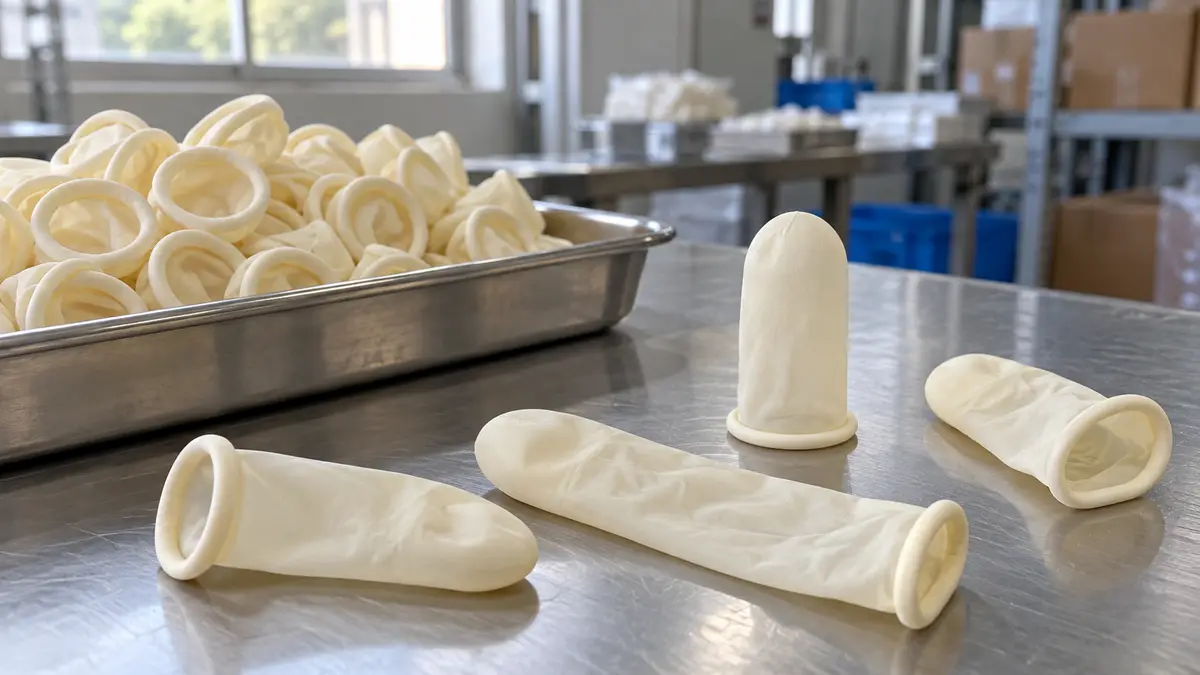
Rubber finger cot duty and classification
Read from the UK Trade Tariff on 29 September 2026, heading 4015 covers clothing and clothing accessories of vulcanised rubber other than hard rubber. For finger cots, use the other-articles line, 4015 90 00 00, as a classification candidate for your broker to confirm. The supplied facts contain only this relevant candidate, so the table shows a single line. For swimming accessories in this heading, see our rubber swimming cap sourcing guide.
This line carries 4% duty for goods from China. The supplied snapshot lists no anti-dumping or countervailing duty and no attached import controls. Its 0.00 % suspension applies only to protective unisex garments made of rubber sheeting, textile reinforced rubber or textile backed rubber. Do not assume a finger cot qualifies.
Give your broker the rubber composition, photographs, dimensions and intended use before confirming the commodity code. Keep tariff classification separate from the checks needed to sell the product.
| Goods | Commodity code | Duty | Anti-dumping or countervailing duty on China |
|---|---|---|---|
| Rubber finger cots, subject to confirmation of classification | 4015 90 00 00 | 4% | None |
Specify material, fit and intended use
State whether the finger cot is for handling electronic components, covering a dressing or protecting the wearer. Agree natural rubber latex or synthetic rubber, powder status, colour, length, wall thickness, opening diameter and rolled-rim construction. Approve samples for fit, grip and removal before production.
Finger cots designed to protect the wearer against health or safety risks fall within personal protective equipment rules in Great Britain. Importers must check conformity assessment, technical documentation, the relevant marking and the declaration of conformity. If the product is a medical device, its classification depends on intended purpose and other use factors, and registration with the medicines regulator is required.
For electronics work, agree the surface-resistance test method, test conditions and acceptance criteria with the customer. For clean handling, specify powder and residue expectations. Ask for evidence matching the actual material and finished product through testing and certification.
Worked duty example
Illustrative example, not a quote: Illustrative order of 60,000 rubber finger cots under 4015 90 00 00, invoiced at £2,000 free on board, with £2,000 of freight and insurance to the UK. The customs value is £4,000. Duty at 4% is £160. Import VAT at 20% is charged on the customs value plus duty, £4,160, so it is £832. Import taxes total £992; a VAT-registered importer can usually reclaim the VAT, so the lasting cost is the £160 of duty. The import duty and VAT guide explains each step.
Inspection checklist
Fit and dimensions: compare sampled cots with the approved sample, measure the agreed dimensions and check that the opening stays in place without excessive tightness.
Film and rim: inspect for pinholes, thin patches, tears, uneven thickness and split rolled rims. Stretch samples using the agreed method and check recovery.
Cleanliness and performance: check powder, loose particles, sticky surfaces and transfer onto a clean test surface. Verify any agreed electrical-performance results against the batch.
Packing and identity: compare material, size, batch identity and intended-use wording with the order. Check that bags are sealed and cots separate easily. Plan sampling with the quality inspection guide.
Working out your own order? Send us the product on WhatsApp and we reply the same working day: WhatsApp us
What goes wrong
A sample fits but production has a tighter opening or thinner tip. Powder or surface residue transfers onto components, cots stick together in the bag, or an electrical-performance claim rests on a report for a different formulation. Specify measurable acceptance criteria and retain the approved sample.
A supplier describes the same cot as suitable for electronics, medical use and wearer protection without matching evidence. Settle the intended use before approving packaging or placing the order. A physical inspection cannot establish regulatory conformity.
Cambridge China Bridge sources these products for UK businesses, checking the factory and the documents before shipment. See factory verification. For repeat volumes, see container programmes.
Frequently asked questions
What is the UK import duty on rubber finger cots from China?
The supplied tariff snapshot gives 4% for 4015 90 00 00, the candidate other-articles code. Ask your broker to confirm classification. The listed suspension is restricted to specified protective garments.
Do rubber finger cots need CE or UKCA marking?
Decide the intended use first. For wearer-protection products within personal protective equipment rules, the importer must check the relevant conformity marking and supporting documentation.
Can I buy finger cots for medical use?
Confirm whether the product is a medical device before ordering. Medical-device classification depends on intended purpose and use factors; devices on the Great Britain market require registration with the medicines regulator.
How do I check finger cots for electronics assembly?
Agree fit, powder and residue criteria, then verify electrical performance using the customer's agreed method and conditions. Check production batches against the approved material and sample.