Sourcing rubber-coated tyre cord yarn from China
Rubber-coated tyre cord yarn from China carries 4% UK duty across the listed lines, with no listed trade remedies or suspensions. Confirm the code from fibre, twist and construction, and check UK REACH restrictions against the coating ingredients. Cambridge China Bridge sources rubber-coated tyre cord yarn.
Buying from China for a business? How our UK China sourcing agent service works · China sourcing agent for UK manufacturers and engineering firms
UK duty on rubber-coated tyre cord yarn
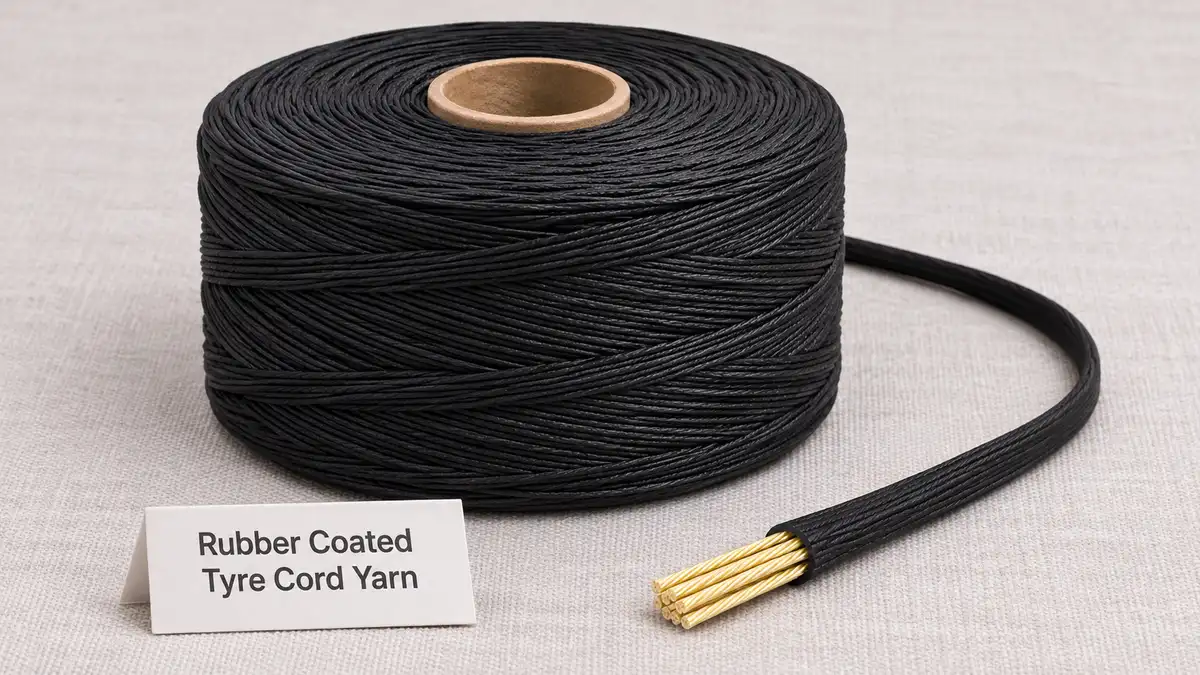
Heading 5604 covers textile-covered rubber thread and cord, and textile yarn and strip impregnated, coated, covered or sheathed with rubber or plastics. This guide concerns rubber-coated textile yarn for tyre reinforcement. For material supplied as fabric, see the tyre cord fabric guide.
Read from the UK Trade Tariff on 2 October 2026, every listed line carried 4% duty for goods from China. The supplied tariff record lists no anti-dumping or countervailing duty, no suspension and no attached import controls. The duty range is therefore a single rate for the lines shown.
Classification depends on fibre, high-tenacity status, construction and presentation. The synthetic filament line excludes non-textured single yarn untwisted or with no more than 50 turns per metre; the viscose line excludes single yarn untwisted or with no more than 250 turns per metre. Both specify non-retail presentation. Send the broker the fibre specification, twist data and coating description to confirm the commodity code. The other-yarn row is conditional on classification outside the high-tenacity subheading.
| Goods | Commodity code | Duty | Anti-dumping or countervailing duty on China |
|---|---|---|---|
| Coated high-tenacity synthetic filament yarn, qualifying non-retail constructions | 5604 90 10 10 | 4% | None |
| Coated high-tenacity viscose rayon yarn, qualifying non-retail constructions | 5604 90 10 20 | 4% | None |
| Other impregnated or coated high-tenacity polyester, polyamide or viscose yarn | 5604 90 10 90 | 4% | None |
| Other rubber-coated textile yarn, outside the high-tenacity subheading | 5604 90 90 90 | 4% | None |
Specify the yarn and its rubber bond
State the fibre, linear density, filament construction, ply structure, twist direction and twist level. Agree breaking force, elongation, heat shrinkage and coating add-on against an approved sample. Identify the rubber coating separately from any adhesion treatment, and specify spool dimensions, winding tension, net yarn weight and storage conditions.
Agree adhesion testing using the buyer's rubber compound and curing conditions. A strength result for bare yarn does not establish the coated yarn's bond performance. Request the coating ingredients and supporting chemical information: UK REACH restrictions can limit, ban or set conditions on substances. Check which restrictions apply to the actual formulation and intended use before supply in Great Britain.
Worked duty example
Illustrative example, not a quote: Illustrative order: 5 tonnes of rubber-coated high-tenacity twisted nylon yarn on spools under 5604 90 10 10, invoiced at £16,000 free on board, with £1,200 of freight and insurance to the UK. The customs value is £17,200. Duty at 4% is £688. Import VAT at 20% is charged on the customs value plus duty, £17,888, so it is £3,577.60. Import taxes total £4,265.60; a VAT-registered importer can usually reclaim the VAT, so the lasting cost is the £688 of duty. The import duty and VAT guide explains each step.
Inspection checklist
Identity and construction: match spool labels and batch records to the ordered fibre, linear density, ply structure and twist; compare samples with the approved yarn.
Coating and adhesion: inspect for bare patches, uneven coating, tackiness and flaking; test adhesion with the agreed rubber compound and curing conditions.
Mechanical performance: sample across spools for breaking force, elongation and heat shrinkage using the agreed methods; match test reports to the delivered batch.
Packing and winding: check net yarn weight, damaged spool flanges, winding consistency, moisture protection and batch traceability. Use the inspection guide to define the sampling brief.
Working out your own order? Send us the product on WhatsApp and we reply the same working day: WhatsApp us
What goes wrong
Yarn can meet breaking-force targets yet bond poorly to the buyer's rubber compound. Uneven treatment, contamination or a changed coating formulation can produce inconsistent adhesion. Heat shrinkage can disrupt the reinforcement during processing, while tacky coating or poor winding can cause snagging and breaks during unwinding.
Approve a processing trial with the intended compound before accepting bulk material. Retain reference samples and compare repeat batches for coating add-on, adhesion and shrinkage. Agree how the supplier will report formulation changes, and investigate unexplained differences between batch reports and arrival tests.
Cambridge China Bridge sources these products for UK businesses, checking the factory and the documents before shipment. See factory verification. For repeat volumes, see container programmes.
Frequently asked questions
What is the UK import duty on rubber-coated tyre cord yarn from China?
The supplied tariff record shows 4% on all listed lines, with no anti-dumping or countervailing duty and no suspensions. Confirm the commodity code for the yarn's construction.
Is rubber-coated yarn the same as tyre cord fabric?
Check the supplied form: individual yarn on spools and material supplied as fabric need separate classification checks. Specify the construction rather than relying on the supplier's product name.
How should I test adhesion before ordering?
Use the intended rubber compound and agreed curing conditions. Compare coated yarn from several spools with the approved sample, and record both adhesion and mechanical results.
What chemical information should I request?
Ask for the coating and adhesion-treatment ingredients and supporting chemical information. Check applicable UK REACH restrictions against the formulation and intended use.