Sourcing rolling mill backup rolls from China
Rolling mill backup rolls from China carry 0% UK duty across the relevant roll lines, with no listed anti-dumping or countervailing duty. Replacement work must be competent and leave the mill safe for use. Specify material, bearing fits, hardness depth and ultrasonic acceptance criteria. Cambridge China Bridge sources rolling mill backup rolls.
Buying from China for a business? How our UK China sourcing agent service works · China sourcing agent for small orders and first imports
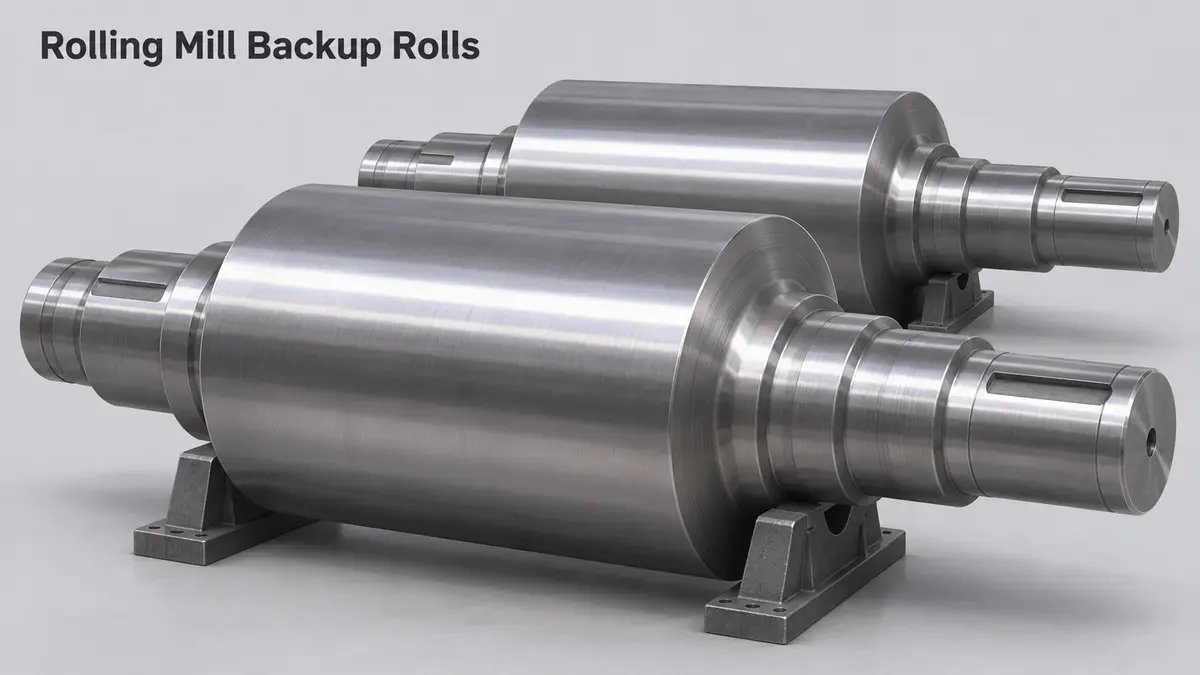
Zero duty, with classification by roll material
Heading 8455 covers metal-rolling mills and their rolls. Open-die forged steel backup rolls for both hot and cold rolling fall under 8455 30 31 00. Cast iron rolls and other rolls have separate lines. The table also includes associated mill parts; that parts line is not the description for a complete backup roll.
Read from the UK Trade Tariff on 3 October 2026, the selected lines carry 0% duty for goods from China. The supplied tariff record lists no anti-dumping or countervailing duty, suspensions or attached import controls for these lines. Import VAT is normally 20%; see import duty and VAT.
Give your broker the drawing, material specification, manufacturing route and intended mill use to confirm the commodity code. A cold-rolling backup roll should not be described as a cold-rolling work roll. For complete mills and other roll types, see rolling mills and mill rolls.
| Goods | Commodity code | Duty | Anti-dumping or countervailing duty on China |
|---|---|---|---|
| Open-die forged steel backup rolls for hot or cold rolling | 8455 30 31 00 | 0% | None |
| Cast iron rolling-mill rolls, where specified as backup rolls | 8455 30 10 00 | 0% | None |
| Other rolling-mill rolls, where specified as backup rolls | 8455 30 90 00 | 0% | None |
| Other rolling-mill parts supplied alongside backup rolls | 8455 90 00 00 | 0% | None |
Specify the backup roll against the mill drawing
State whether the roll supports work rolls in a hot or cold mill. Agree the material grade and manufacturing route, barrel diameter and length, neck dimensions, bearing-seat fits, shoulders, fillets, surface finish and run-out. Use the mill's approved drawing and identify its revision in the order.
Specify barrel hardness on an agreed scale, the required hardness depth and the ultrasonic acceptance criteria. Ask for chemical analysis, heat-treatment records, a hardness map and an ultrasonic report traceable to each roll. Check that the producer can carry out the specified forging, heat treatment and machining through factory verification.
HSE states that refurbishment using similar replacement parts does not require re-marking. Replacement work must still be competent and leave the machinery safe for use. Ask the mill engineer to review proposed changes in material or geometry before accepting a substitute.
Worked duty example
Illustrative example, not a quote: Illustrative shipment of 12 open-die forged steel backup rolls under 8455 30 31 00, invoiced at £180,000 free on board, with £9,000 of freight and insurance to the UK. The customs value is £189,000. Duty at 0% is £0. Import VAT at 20% is charged on the customs value plus duty, £189,000, so it is £37,800. With no duty, the only import tax is the VAT, which a VAT-registered importer can usually reclaim. The import duty and VAT guide explains each step.
Inspection checklist
Identity: match each roll's identification to its drawing, chemical analysis, heat-treatment record and test reports.
Fit: measure barrel, necks, bearing seats, shoulders and fillets against the agreed drawing; check surface finish and run-out.
Soundness: review or witness ultrasonic testing against the agreed acceptance criteria, and compare measured barrel hardness with the hardness map.
Arrival: check for corrosion, impact marks and damaged bearing seats; photograph defects before installation and retain the packing and inspection records.
Working out your own order? Send us the product on WhatsApp and we reply the same working day: WhatsApp us
What goes wrong
A roll can match the overall dimensions but have the wrong bearing-seat fit, shoulder position or fillet geometry. Resolve drawing differences before machining. A report for another roll or heat gives no reliable acceptance evidence for the delivered item.
Internal defects, hardness that falls away too quickly below the surface and residual stress from heat treatment can cause early cracking or spalling. Agree the rejection criteria before production and keep each roll's records available for investigating any failure.
Cambridge China Bridge sources these products for UK businesses, checking the factory and the documents before shipment. See factory verification. For machinery and equipment, see machinery imports.
Frequently asked questions
What is the UK import duty on backup rolls from China?
The relevant roll lines carry 0% duty in the supplied tariff record, with no listed anti-dumping or countervailing duty. Open-die forged steel backup rolls are under 8455 30 31 00.
Do cold-rolling backup rolls use the cold-rolling work-roll code?
No. The tariff description for 8455 30 31 00 expressly includes open-die forged steel backup rolls for hot and cold rolling. Confirm the material and manufacturing route with your broker.
What reports should come with each backup roll?
Request chemical analysis, heat-treatment records, a hardness map and an ultrasonic report against agreed acceptance criteria. Match every report to the delivered roll.
Does replacing backup rolls require the mill to be re-marked?
HSE says refurbishment using similar replacement parts does not require re-marking. Work must remain competent and leave the mill safe. Ask the mill engineer to review changes to material or geometry.