Sourcing raw ostrich skins from China
The supplied tariff data shows 0% duty for raw ostrich skins under 4103 90 00 00. Confirm the animal-health import route and species-specific CITES position before ordering; the tariff rate alone does not establish admissibility. Cambridge China Bridge sources raw ostrich skins.
Buying from China for a business? How our UK China sourcing agent service works · China sourcing agent for small orders and first imports
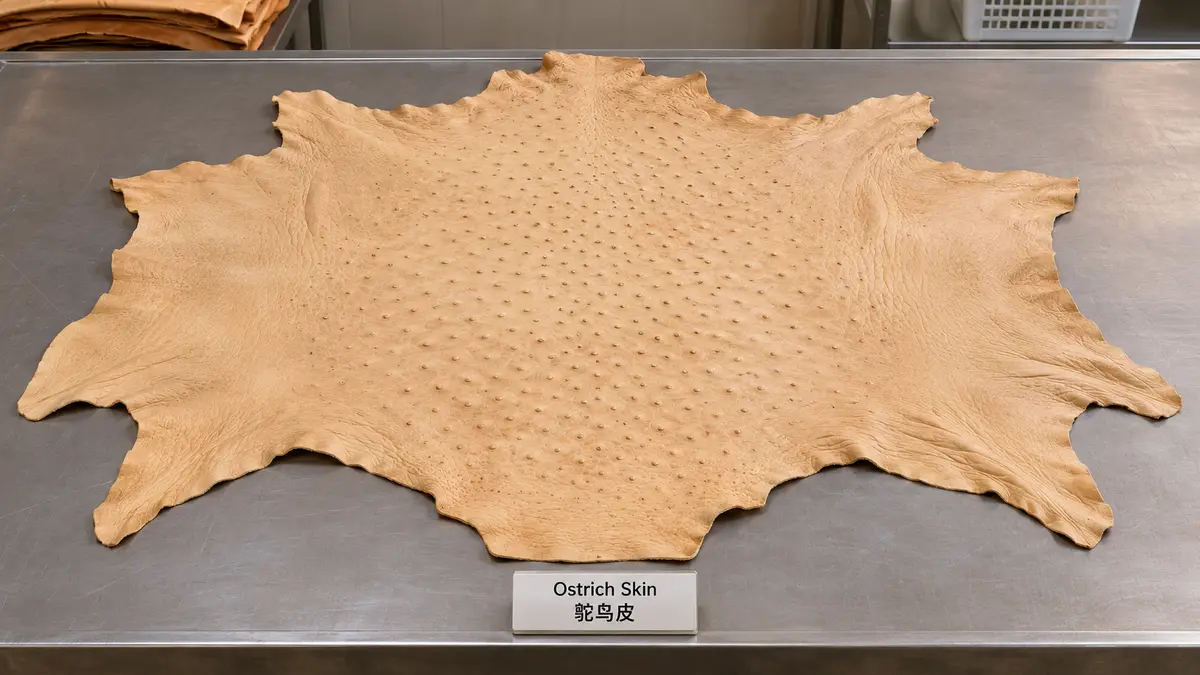
Duty and import controls for raw ostrich skins
Read from the UK Trade Tariff on 29 September 2026, heading 4103 covers other raw hides and skins, including preserved skins, but excludes tanned, parchment-dressed or further-prepared material. The relevant supplied line is 4103 90 00 00, “Other”. The table separates buying forms within that same line; these are not separate commodity codes.
The supplied China duty is 0%, with no anti-dumping duty, countervailing duty or suspension recorded. The line attaches veterinary control, a restriction on entry into free circulation, CITES import and export controls, cat and dog fur import and export controls, and seal-product import control. Ask your customs broker to confirm which measures apply to the identified ostrich skins and what documents are required.
The official animal-health route for these ostrich skins from China remains unverified here. Ask your broker to confirm it with the Animal and Plant Health Agency before ordering. Where no import information note exists, a general licence or authorisation may be needed. Confirm preservation, feather removal and processing status through commodity classification. For wider heading context, see raw deerskins.
| Goods | Commodity code | Duty | Anti-dumping or countervailing duty on China |
|---|---|---|---|
| Fresh raw ostrich skins, subject to classification confirmation | 4103 90 00 00 | 0% | None |
Specify the skin and its preservation
Name the species and record the country where the birds were raised, the skin supplier and the Chinese processing site. Specify body skins or leg skins, whole skins or pieces, feather removal, preservation method and intended tanning process. Ask for treatment records rather than accepting “raw” or “preserved” as a complete description.
Agree how usable area will be measured, the required quill-pattern area, trimming boundaries and acceptable cuts, scars and holes. Use photographs showing both surfaces and a marked defect map. Have the receiving tannery review a representative skin and the preservation method before approving the batch.
Check the species and population-specific CITES position. Official guidance requires a permit for species listed on the relevant annexes; do not assume that a Chinese dispatch address settles the wildlife-control question.
Worked duty example
Illustrative example, not a quote: Illustrative small tannery batch of salted raw ostrich skins under 4103 90 00 00, invoiced at £4,103 free on board, with £390 of freight and insurance to the UK. The customs value is £4,493. Duty at 0% is £0. Import VAT at 20% is charged on the customs value plus duty, £4,493, so it is £898.60. With no duty, the only import tax is the VAT, which a VAT-registered importer can usually reclaim. The import duty and VAT guide explains each step.
Inspection checklist
Identity: match species, body or leg skin, preservation description and batch marks to the order and supplier records.
Usable area: check measurements, trimming, quill-pattern coverage, flaying cuts, scars and holes against the agreed defect map.
Condition: check for mould, decay, insect damage, uneven preservation and leaking packs; photograph affected skins before further handling.
Batch reconciliation: compare skin counts, bundle marks and treatment records with the packing list, and record discrepancies on arrival.
Working out your own order? Send us the product on WhatsApp and we reply the same working day: WhatsApp us
What goes wrong
A supplier may quote total skin area while the buyer needs an intact quill-pattern cutting area. Deep cuts, scars and excessive trimming can make an apparently acceptable skin unsuitable for the intended panels. Define acceptance around usable sections and agree how disputed skins will be assessed.
Another failure is approving a preserved sample while ordering a differently treated bulk batch. Keep the treatment description consistent across the purchase order, inspection brief and shipment records. Treat the unverified import route as an unresolved buying decision, even where the tariff duty is zero.
Cambridge China Bridge sources these products for UK businesses, checking the factory and the documents before shipment. See factory verification. For repeat volumes, see container programmes.
Frequently asked questions
What is the UK import duty on raw ostrich skins from China?
The supplied tariff data records 0% for 4103 90 00 00, with no anti-dumping duty, countervailing duty or suspension recorded. Import controls still need checking.
Can I import raw ostrich skins from China into Great Britain?
This guide has not verified an animal-health route for the specified skins. Ask your customs broker to confirm admissibility, treatment conditions and documentation with the Animal and Plant Health Agency before ordering.
Do raw ostrich skins need CITES documents?
Check the exact species and population. Official guidance requires a permit for species listed on the relevant annexes. Ask the Animal and Plant Health Agency to confirm the position for your skins.
What should I specify when buying salted ostrich skins?
Specify body or leg skins, usable area, quill-pattern coverage, trimming, cuts and scars, feather removal, preservation method and batch identification. Ask your tannery to review a representative skin.