Sourcing quartz and other glass articles from China
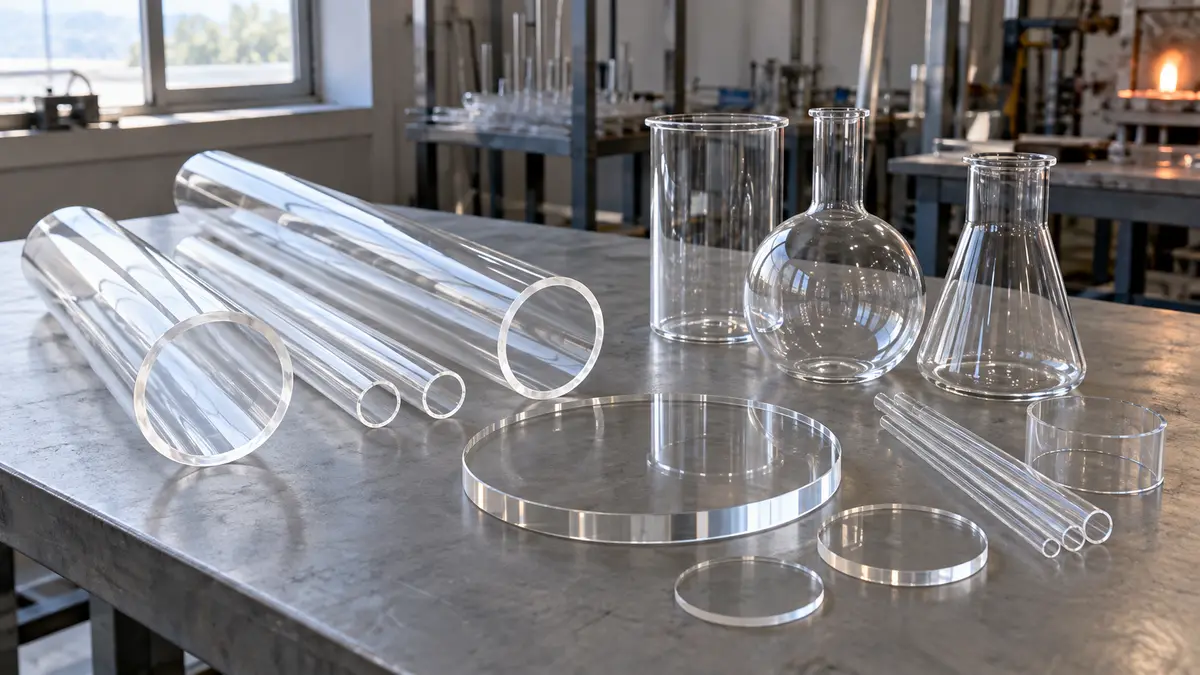
Glass articles of heading 7020 from China, including quartz reactor tubes, fused quartz and silica parts, glass inners for vacuum flasks, low-expansion borosilicate articles and other glass articles, pay 0% UK duty, with no anti-dumping duty. Purity, dimensions and thermal shock are where orders go wrong. Cambridge China Bridge sources industrial and decorative glass articles.
Buying from China for a business? How our UK China sourcing agent service works · China sourcing agent for small orders and first imports
Zero duty
Read from the UK Trade Tariff on 25 September 2026, every line of heading 7020 carried 0% duty on goods from China, with no anti-dumping measure. The heading is a residual one: glass that is tableware, laboratory glassware, lighting glass, beads or safety glass has its own heading. For drinking vessels, see sourcing drinking glasses from China. For cake stands, see our glass cake stand sourcing guide.
So check first that the article is not covered elsewhere; the commodity code guide explains how.
| Goods | Commodity code | Duty | Anti-dumping duty on China |
|---|---|---|---|
| Quartz reactor tubes and holders for semiconductor furnaces | 7020 00 05 00 | 0% | None |
| Glass inners for vacuum flasks, finished | 7020 00 08 00 | 0% | None |
| Other articles of fused quartz or fused silica | 7020 00 10 90 | 0% | None |
| Low-expansion glass articles, such as borosilicate | 7020 00 30 00 | 0% | None |
| Other glass articles | 7020 00 80 00 | 0% | None |
Quartz and silica specification
For quartz tubes and fused silica parts, specify purity, hydroxyl content, outside diameter, wall thickness, length, straightness and end finish, and ask for the material certificate. Semiconductor and UV buyers should also agree bubble and inclusion grades.
Borosilicate articles should come with the coefficient of expansion and a thermal shock test on samples. For ovenware, see our borosilicate glass oven dish sourcing guide.
Food contact and safety
A glass article that holds food or drink needs food contact evidence, and decorated glass should be tested for lead and cadmium release. Consumer glass must be safe under general product safety law.
Worked duty example
Take a hypothetical order of 20,000 borosilicate glass sight tubes, entered under 7020 00 30 00: £15,000 free on board plus £1,200 of freight and insurance gives a customs value of £16,200. Borosilicate glass articles carry no duty, so import VAT of 20% on £16,200, £3,240, is the only tax. A VAT-registered importer normally reclaims it, so the border adds no lasting cost. Step by step: UK import duty and VAT.
Inspection checklist
Material: borosilicate articles checked against the properties of borosilicate glass 3.3 in ISO 3585, including the coefficient of expansion on the certificate, quartz and fused silica checked for metallic impurities by an ICP method and for hydroxyl content by infrared spectroscopy where UV or furnace use depends on it, and bubbles and inclusions graded against the agreed limits.
Stress and thermal shock: residual stress examined with a polariscope by the method of ASTM C148 on samples from each firing, and thermal shock tested by a method that matches the service, such as the hot and cold water method of ASTM C149 for containers, with every cracked sample recorded against its lot.
Food contact and packing: glass that holds food or drink tested for lead and cadmium release to the ISO 7086 series where it is decorated, dimensions and end finish measured on samples chosen to ISO 2859-1, and packed cartons drop-tested so the breakage allowance is agreed before shipment.
Working out your own order? Send us the product on WhatsApp and we reply the same working day: WhatsApp us
What goes wrong
Technical glass fails on material, stress and dimensions. Soda-lime glass supplied as borosilicate cracks on the first hot fill or thermal cycle, and quartz sold as high purity carries bubbles, inclusions or a hydroxyl content that spoils it for UV or furnace use. Glass that is not properly annealed keeps internal stress and shatters later, and tube ends that are not fire-polished or ground chip at the seals.
Check stress with a polariscope on samples, run a thermal shock test that matches the use, measure outside diameter, wall thickness and straightness with gauges, inspect for bubbles and inclusions against the agreed grade, and ask for the material certificate showing expansion coefficient or purity. Pack each piece separately and drop-test the packed carton.
Packing and inspection
Breakage in transit is the usual loss. Agree individual packing, drop tests and a breakage allowance, and at inspection measure dimensions and check chips, bubbles and cracks.
Cambridge China Bridge sources quartz tubes, silica parts and other glass articles, with specification, packing and testing settled before the order. See how our sourcing service works.
Related guides: Crucibles and kiln furniture from China.
Frequently asked questions
What is the UK import duty on quartz tubes from China?
Read from the UK Trade Tariff on 25 September 2026, quartz tubes and other heading 7020 glass articles carried 0% duty from China, with no anti-dumping duty.
What is heading 7020?
The residual heading for glass articles not covered elsewhere; tableware, laboratory glassware, lighting glass and beads have their own headings.
What should a quartz tube specification include?
Purity, hydroxyl content, diameters, wall thickness, length, straightness, end finish and bubble grade, with a material certificate.
How do I reduce breakage?
Agree individual packing, drop tests and a breakage allowance before shipment.