Sourcing propellers and machinery parts from China
Ships' or boats' propellers and blades, and machinery parts not specified elsewhere and without electrical connectors, coils or contacts, such as castings, forgings and machined parts made to drawing, pay 0% UK duty from China, with no anti-dumping duty. Material certificates and dimensional reports matter most. Cambridge China Bridge sources propellers and machinery parts.
Buying from China for a business? How our UK China sourcing agent service works · China sourcing agent for UK manufacturers and engineering firms
Zero duty
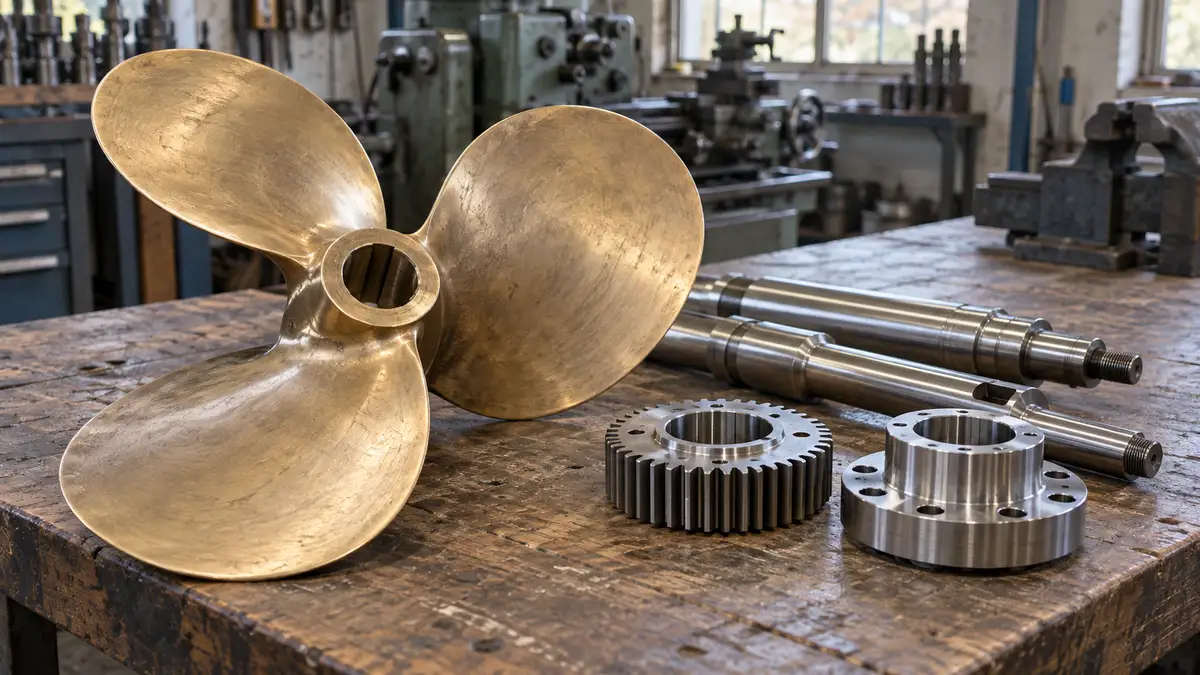
Read from the UK Trade Tariff on 26 September 2026, ships' or boats' propellers and blades of bronze or other materials, and other machinery parts of heading 8487 of cast iron, cast steel, open-die or closed-die forged iron or steel, other iron or steel and other materials, carried 0% duty on goods from China, with no anti-dumping measure. Parts for certain aircraft have their own lines.
Heading 8487 is a residual heading: parts identifiable as parts of a particular machine go with that machine, and bearings, gears and valves have their own headings. Confirm the commodity code before you rely on it. For textile equipment spares, see our guide to textile machinery parts and needles.
| Goods | Commodity code | Duty | Anti-dumping duty on China |
|---|---|---|---|
| Propellers and blades of bronze | 8487 10 10 00 | 0% | None |
| Other propellers and blades | 8487 10 90 00 | 0% | None |
| Other parts of cast iron | 8487 90 40 90 | 0% | None |
| Other parts of cast steel | 8487 90 51 90 | 0% | None |
| Other parts of forged iron or steel | 8487 90 57 90 | 0% | None |
| Other parts of other iron or steel | 8487 90 59 90 | 0% | None |
| Other parts of other materials | 8487 90 90 90 | 0% | None |
Drawings, certificates and propeller tolerances
Made-to-drawing parts are only as good as the drawing: give material grade, heat treatment, tolerances, surface finish and critical dimensions, and ask for an inspection certificate type 3.1 to EN 10204 for the material, plus a dimensional report on first articles. Castings should state the casting standard and allowed defects, and forgings the grain flow and hardness.
Marine propellers are made to a manufacturing tolerance class under ISO 484, which sets allowable deviations in pitch, blade thickness and balance, so name the class on the order and ask for the inspection record for each propeller.
Worked duty example
Take a hypothetical order of 3,000 closed-die forged steel machinery parts, entered under 8487 90 57 90: £27,000 free on board plus £2,000 of freight and insurance gives a customs value of £29,000. Forged machinery parts carry no duty, so import VAT of 20% on £29,000, £5,800, is the only tax. A VAT-registered importer normally reclaims it, so the border adds no lasting cost. Step by step: UK import duty and VAT.
Inspection checklist
Castings: surface defects checked by penetrant testing to BS EN 1371-1 or magnetic particle testing to BS EN 1369, internal soundness of critical castings by radiography to BS EN 12681 or ultrasonic testing to BS EN 12680 for steel, each at the severity level named on the drawing, and chemistry checked by spark emission spectrometry on a test bar from the same melt.
Material and forgings: tensile tests to ISO 6892-1, hardness to ISO 6506-1 and impact tests to ISO 148-1 where the specification calls for them, forgings ultrasonically tested to BS EN 10228-3 for internal defects, and bronze propellers checked with a handheld XRF analyser so a manganese bronze is not supplied in place of nickel aluminium bronze.
Dimensions and propellers: first articles measured on a coordinate measuring machine against every drawing dimension and the geometrical tolerances to ISO 1101, surface roughness measured with a profilometer where specified, propeller pitch, blade thickness and balance checked against the ISO 484 class ordered, and machined faces protected with rust preventive before packing.
Working out your own order? Send us the product on WhatsApp and we reply the same working day: WhatsApp us
What goes wrong
Castings and forgings fail below the surface. Porosity, shrinkage cavities and inclusions in castings open up during machining or under load, forgings without the right heat treatment are too soft or brittle, and machined features drift out of tolerance between batches. Propellers with pitch errors or poor balance cause vibration and lose efficiency, and bronze alloys are sometimes substituted.
Approve first articles with a full dimensional report before bulk, ask for material certificates and hardness tests per heat, use dye penetrant, magnetic particle or X-ray testing on critical castings and forgings, balance-test and check pitch on propellers, and check surface protection so machined faces do not rust in transit.
Cambridge China Bridge sources propellers, castings, forgings and machined parts to drawing, with material certificates, first article inspection and testing agreed before the order. Read how we source engineered components.
Related guides: Sourcing anchors and grapnels from China.
Frequently asked questions
What is the UK import duty on boat propellers from China?
Read from the UK Trade Tariff on 26 September 2026, propellers and blades and other machinery parts of heading 8487 carried 0% duty from China.
Which standard covers propeller tolerances?
ISO 484 sets manufacturing tolerance classes for pitch, thickness and balance.
What material certificate should parts come with?
An inspection certificate type 3.1 to EN 10204, tied to the heat of material.
Is heading 8487 for all machinery parts?
No. It is residual; parts identifiable to a particular machine go with that machine.