Sourcing promotional merchandise and branded goods
Merchandise is given away rather than sold, and buyers assume that removes the compliance duty. It does not — placing a product on the UK market includes supplying it free of charge — and you are often putting a client's brand on it rather than your own. Cambridge China Bridge sources this for UK and overseas buyers, from a first trial order to full containers.
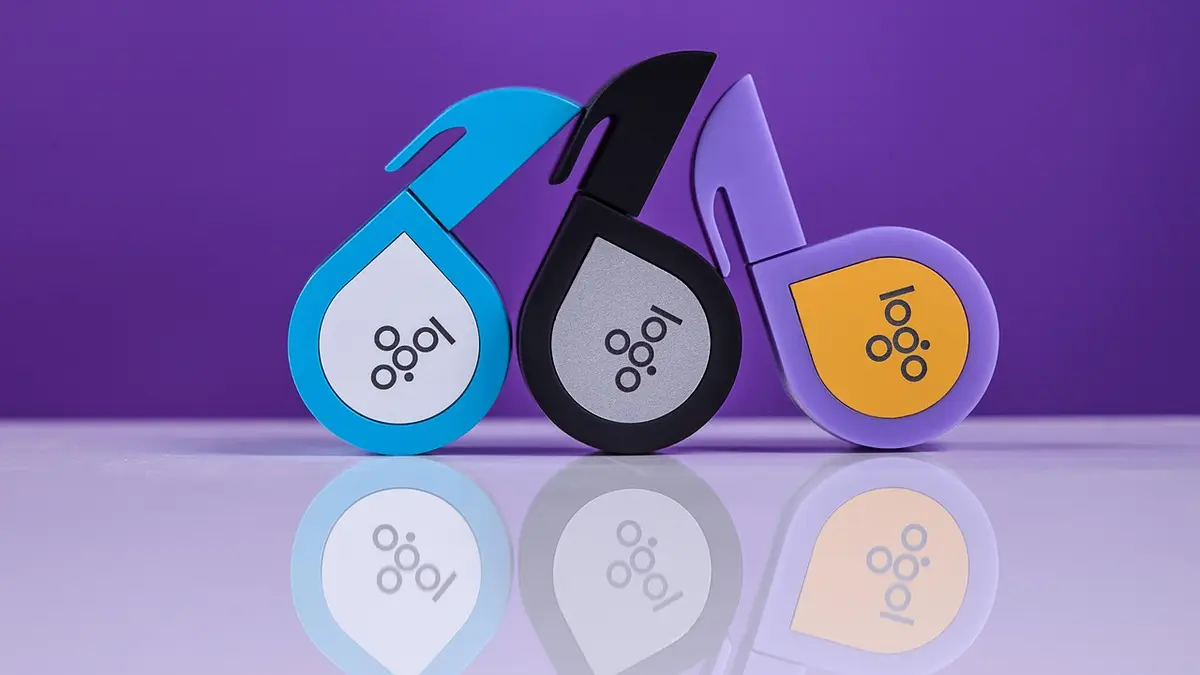
Branded merchandise has an unusual risk profile
Promotional products are bought for a date and a purpose rather than for a shelf. That changes the risks: the deadline is usually immovable, the print has to be right first time, and the buyer is often putting a client's brand on the product rather than their own.
It also changes the compliance question, because merchandise is given away rather than sold, and a lot of buyers assume that removes their obligations. It does not. Placing a product on the UK market covers making it available in the course of a commercial activity, whether or not money changes hands.
Branding is a compliance event, not just artwork
Under most UK product regimes, placing goods on the market under your own name or trade mark makes you the manufacturer in law rather than the importer. That is exactly what promotional merchandise is: someone's brand applied to a product. Where a product falls only under general product safety rules the term is producer rather than manufacturer, but the direction is the same, and the branded item is where responsibility settles.
The consequence is that the technical documentation, the declaration of conformity and responsibility for any marking sit with whoever's brand is on it. If you are an agency buying on behalf of a client, establish in writing whose name goes on the product and who therefore carries those obligations, because the answer decides who is exposed if something goes wrong.
This is worth settling before the order, not in the post-mortem after a complaint.
Watch for merchandise that is legally something else
A branded item can fall into a stricter regime than anyone expected. Anything intended for play by children under fourteen is a toy, with the full toy safety requirements including your name and address on the product itself or, where its size or nature makes that impossible, on its packaging or in an accompanying document. Anything touching food or drink, such as branded mugs, bottles and lunchboxes, is a food contact product with declarations and testing behind it.
Powered items are electrical products, with waste electrical obligations, and if there are cells in the box you are normally a battery producer too. Power banks and cables bring their own safety considerations, and lithium cells carry air freight restrictions that a tight deadline may depend on.
Chemical restrictions under UK REACH cover a great deal of merchandise, particularly coated, printed, plated and soft plastic items.
Getting the print right
Specify the print process, the colour to a recognised colour system with a physical approved proof, position with dimensions, and size. Then specify durability: how many washes, how much abrasion, whether it survives a dishwasher if the item is a mug.
Require a printed pre-production sample and approve it in writing. Screen proofs do not represent printed output, and colour on a coated surface behaves differently from colour on fabric. For printed matchboxes, see our matches and branded matchboxes guide.
Specify what happens to the print on the seconds. Merchandise runs generate misprints, and agreeing the acceptable defect rate and what happens to rejects avoids an argument at delivery.
Deadlines, which are the whole business
Merchandise orders are usually tied to an event, and an event does not move. Build the plan backwards from the date with the whole chain in it, and put explicit buffer at sample approval, which is where most merchandise orders lose their slack.
Keep a decision point where air freight is still possible, and know the cost in advance so the decision can be made quickly rather than debated. On a low-value bulky item air can be prohibitive, which is an argument for ordering earlier rather than for hoping.
Chinese New Year is the recurring trap here. Orders for spring events routinely get planned into the shutdown, and no amount of goodwill from the factory recovers weeks of closed production.
Working out your own order? Send us the product on WhatsApp and we reply the same working day: WhatsApp us
Practical order discipline
Confirm what the item legally is before you price it. Put the compliance evidence, whose name it must be in, and the branding position into the specification. For sourcing costs, see our branded merchandise cost comparison.
Approve a printed pre-production sample, inspect before shipment including print position and colour against the approved sample, and check any required markings and warnings.
And keep the file. If you are supplying a client, the evidence you can produce is what protects the relationship when someone asks a question you did not anticipate. What we source for branded merchandise is on the promotional merchandise page.
Logo golf umbrellas are one of the most common branded items; our umbrellas and parasols guide covers canopy size, windproof frames, panel printing and the printed sample.
Related guides: Is branded merchandise cheaper direct from China?.
Frequently asked questions
Do compliance rules apply to free promotional items?
Yes. Giving merchandise away does not remove the obligations.
Who is responsible when I put a client's brand on a product?
Whoever's name or trade mark is on the product is normally treated as the manufacturer in law, which brings the technical documentation, declaration of conformity and marking responsibility. Settle in writing whose name goes on it before ordering.
Can promotional merchandise count as a toy?
Yes, if it is designed or intended for play by children under fourteen. That brings the full toy safety requirements, including your name, registered trade name or trade mark and address on the product itself or, where its size or nature makes that impossible, on its packaging or in an accompanying document, which needs planning into the specification.
What about branded mugs and water bottles?
They are food contact products, so they need to meet food contact requirements with a declaration of compliance and supporting evidence where the applicable material-specific rules require one, in addition to any print durability requirements you set.
How do I stop print colour coming out wrong?
Specify colour against a recognised system with a physical approved proof rather than a screen, require a printed pre-production sample approved in writing, and inspect print position and colour against that sample before shipment.
Sources
- legislation.gov.uk — Toys (Safety) Regulations 2011, regulation 3
- GOV.UK (OPSS) — Toys (Safety) Regulations 2011: Great Britain
- legislation.gov.uk — Regulation (EC) No 1935/2004, Article 16 (declaration of compliance)
- GOV.UK — Waste batteries: producer responsibility
- GOV.UK — eur_20041935_2009 08 07_en.pdf