Sourcing anti-reversion additives from China
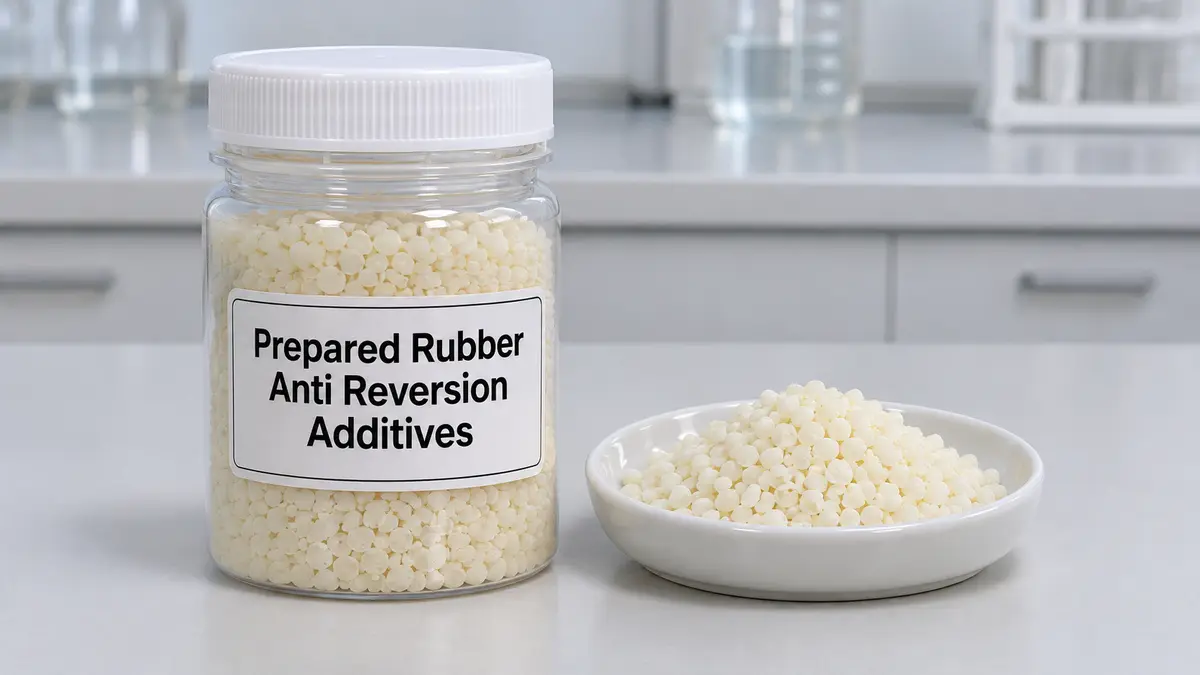
Prepared rubber anti-reversion additives classified within heading 3812 carry 0% UK duty from China. For Great Britain, check UK REACH obligations for the constituent substances and arrange competent hazard classification and labelling. Cambridge China Bridge sources prepared rubber anti-reversion additives.
Buying from China for a business? How our UK China sourcing agent service works · China sourcing agent for UK manufacturers and engineering firms
0% duty, with composition-based classification
Read from the UK Trade Tariff on 1 October 2026, heading 3812 covers prepared rubber accelerators, compound plasticisers and anti-oxidising preparations and other compound stabilisers for rubber or plastics. Every supplied line carries 0% duty for goods from China. The supplied data lists no anti-dumping or countervailing duty, suspensions or attached import controls.
For a prepared anti-reversion additive, ask your customs broker to assess the residual other compound stabilisers line, 3812 39 90 90, against the complete formulation. The table shows purchasing forms against that same candidate code, rather than separate tariff subheadings. The supplied tariff descriptions do not expressly name anti-reversion additives.
Heading 3812 covers preparations and mixtures; a single chemically defined substance can fall outside it. Confirm the commodity code using the composition and safety data sheet. For neighbouring product families, see rubber and plastic additives.
| Goods | Commodity code | Duty | Anti-dumping or countervailing duty on China |
|---|---|---|---|
| Other compound rubber stabilisers: prepared powder | 3812 39 90 90 | 0% | None |
Specify anti-reversion performance in your rubber compound
Specify the active chemistry, active content, carrier identity, powder or granule form, moisture and dispersion criteria. Name the existing grade and rubber formulation used for comparison. For a pre-dispersed preparation, agree how the carrier enters your recipe and compare additions on active content rather than total preparation weight.
Agree a trial using your own compound, mixing sequence and cure conditions. Compare the cure curve through an extended cure, then check the resulting rubber properties against your existing grade. Define acceptance criteria before ordering; a supplier's test in a different compound does not establish performance in yours.
UK REACH registration applies to substances in mixtures, so check the registration obligations for the constituent substances. Classification and labelling must be carried out by someone with scientific competence. Arrange that review using the complete formulation and request an English safety data sheet matching the supplied grade.
Worked duty example
Illustrative example, not a quote: Illustrative order: 600 kilograms of prepared rubber anti-reversion additive, subject to classification confirmation under 3812 39 90 90, invoiced at £3,000 free on board, with £1,600 of freight and insurance to the UK. The customs value is £4,600. Duty at 0% is £0. Import VAT at 20% is charged on the customs value plus duty, £4,600, so it is £920. With no duty, the only import tax is the VAT, which a VAT-registered importer can usually reclaim. The import duty and VAT guide explains each step.
Inspection checklist
Identity: match the grade, formulation statement, batch number and certificate of analysis to the approved sample.
Composition: check active content, carrier identity and moisture against the agreed specification; investigate unexplained differences.
Performance: compare dispersion and the extended cure curve in your reference compound, then check agreed properties of the cured rubber.
Packing: inspect seals, moisture damage and caking, and reconcile bag labels with the safety data sheet. Supply-chain businesses are responsible for correct labelling and packaging before market placement.
Working out your own order? Send us the product on WhatsApp and we reply the same working day: WhatsApp us
What goes wrong
A carrier or active-content change can make the same weighed addition behave differently. Poor dispersion or caking can undermine the trial. A short cure test may also miss the behaviour you intended the anti-reversion additive to address. Keep a retained sample and compare incoming batches with the approved material.
A trade name alone leaves both the formulation and customs classification uncertain. Obtain the composition before shipment and agree that substitutions need your approval. Set the batch checks in your inspection brief, including the compound and cure conditions used for acceptance.
Cambridge China Bridge sources these products for UK businesses, checking the factory and the documents before shipment. See factory verification. For repeat volumes, see container programmes.
Frequently asked questions
What is the UK import duty on prepared rubber anti-reversion additives from China?
The supplied tariff data shows 0% on every line of heading 3812, with no anti-dumping or countervailing duty. Confirm that the actual preparation belongs in this heading.
Which commodity code should I use for an anti-reversion preparation?
Ask your broker to assess 3812 39 90 90 against the complete composition. The supplied data does not expressly name anti-reversion additives; the trade name alone cannot settle classification.
Does UK REACH apply to a prepared rubber additive?
UK REACH registration applies to substances in mixtures. Check the obligations for the constituent substances rather than treating the preparation's trade name as the registration identity.
How do I compare a Chinese anti-reversion additive with my current grade?
Compare active content and carrier, then trial both in your own compound. Check dispersion, the extended cure curve and agreed cured-rubber properties under matching conditions.