Sourcing PVC heat stabilisers from China
Prepared PVC heat stabilisers from China carry 0% UK duty across the relevant lines of heading 3812, with no listed trade remedies. Before supply in Great Britain, check correct chemical labelling and packaging; approve the grade in your own PVC formulation. Cambridge China Bridge sources prepared PVC heat stabilisers.
Buying from China for a business? How our UK China sourcing agent service works · China sourcing agent for small orders and first imports
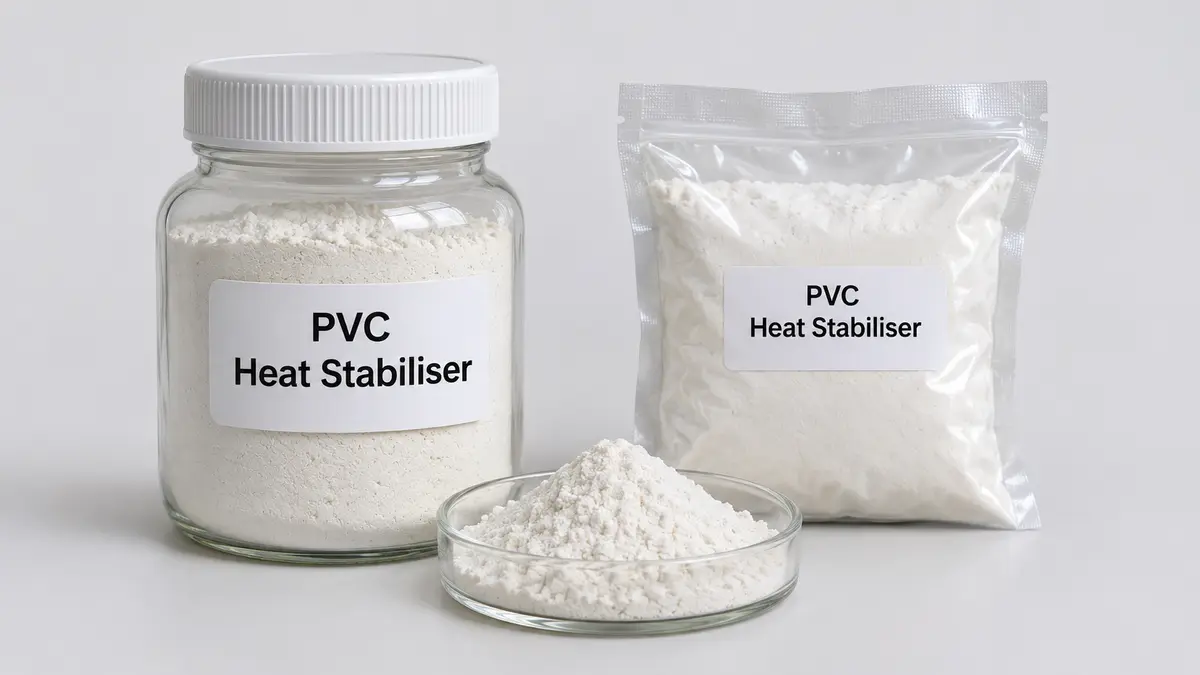
Duty on prepared PVC heat stabilisers
Read from the UK Trade Tariff on 6 November 2026, heading 3812 covers prepared rubber accelerators, compound plasticisers and compound stabilisers for rubber or plastics. This guide covers prepared PVC heat stabilisers; see the rubber and plastic additives guide for the wider heading.
The selected stabiliser lines carry 0% duty for goods from China. The supplied tariff record lists no anti-dumping or countervailing duty, suspension or attached import control for these lines. This does not replace checking chemical supply obligations.
Match the full composition to the commodity code, including the named ingredients and composition conditions of any specific tin stabiliser line. The residual line is for preparations that do not fit a more specific description. Use the safety data sheet and composition statement rather than the supplier's grade name alone.
| Goods | Commodity code | Duty | Anti-dumping or countervailing duty on China |
|---|---|---|---|
| Specified methyl tin stabiliser mixture | 3812 39 90 40 | 0% | None |
| Specified octyl tin stabiliser reaction mixture | 3812 39 90 50 | 0% | None |
| Specified methyl tin stabiliser with mercaptoacetate | 3812 39 90 65 | 0% | None |
| Other prepared heat stabilisers, including suitable calcium-zinc blends | 3812 39 90 90 | 0% | None |
Specify the stabiliser chemistry and PVC formulation
State whether you need a calcium-zinc blend or an organotin preparation, its powder, granule or liquid form, and the existing grade it replaces. Specify active content, metal content, moisture and any carrier or lubricant package. Identify rigid or flexible PVC, resin grade, fillers, pigments and the intended extrusion or moulding process.
Agree a trial in your own formulation, comparing initial colour, heat ageing, blackening, dispersion and deposits on processing equipment. Record the addition rate and processing conditions in the purchase specification. Approve formulation changes before shipment.
Everyone in the supply chain must ensure correct chemical labelling and packaging before placing substances or mixtures on the Great Britain market. Check your UK REACH position before ordering; HSE states that registration is per substance, per legal entity. For plastic food packaging, confirm the applicable requirements for stabiliser additives with the relevant authority; consult the site's wider additives guide.
Worked duty example
Illustrative example, not a quote: Illustrative order: 16 tonnes of prepared PVC heat stabiliser under 3812 39 90 90, invoiced at £32,000 free on board, with £1,600 of freight and insurance to the UK. The customs value is £33,600. Duty at 0% is £0. Import VAT at 20% is charged on the customs value plus duty, £33,600, so it is £6,720. With no duty, the only import tax is the VAT, which a VAT-registered importer can usually reclaim. The import duty and VAT guide explains each step.
Inspection checklist
Identity: compare batch numbers, composition statements and certificates of analysis with the approved grade; check metal and active content against the agreed specification.
Performance: trial the incoming batch in the approved PVC formulation and compare colour retention, heat ageing and processing deposits with the retained reference sample.
Condition: inspect powders for moisture and caking, granules for inconsistent form, and liquids for separation or sediment; check seals and leakage.
Documents: check the English safety data sheet, chemical labels and batch traceability. Retain a sample from each delivered batch and use the quality inspection guide to organise checks.
Working out your own order? Send us the product on WhatsApp and we reply the same working day: WhatsApp us
What goes wrong
A substituted metal system or changed lubricant package can pass a basic appearance check but perform differently during processing. Watch for early yellowing, blackening, poor dispersion and deposits. A supplier's claim that a grade is equivalent should trigger a formulation trial before bulk acceptance.
Moisture, damaged seals and mixed batch labels make arrival checks harder. Keep suspect material separate while you compare documents and test results. A tariff code or a satisfactory heat trial does not establish that the formulation is suitable for every end use.
Cambridge China Bridge sources these products for UK businesses, checking the factory and the documents before shipment. See factory verification. For repeat volumes, see container programmes.
Frequently asked questions
What is the UK import duty on PVC heat stabilisers from China?
The relevant prepared stabiliser lines in heading 3812 carry 0% duty in the supplied tariff record, with no listed anti-dumping or countervailing duty.
Which commodity code covers a calcium-zinc PVC stabiliser?
Consider 3812 39 90 90 for a prepared blend that does not match a more specific line. Confirm the full composition rather than relying on the grade name.
Can I replace my current PVC heat stabiliser with a Chinese grade?
Trial it in your own PVC formulation first. Compare initial colour, heat ageing, dispersion and processing deposits, and agree the chemistry and lubricant package.
What paperwork should I request for a PVC stabiliser batch?
Request the composition statement, English safety data sheet and batch certificate of analysis. Match these to the approved specification and delivered batch labels.