Sourcing surgical compression bras from China
Post-surgical compression bras classified as brassières pay a flat 6% UK duty from China, with no trade remedies listed. Decide whether the product is a medical device before following the compliance process, and agree fit and compression evidence before production. Cambridge China Bridge sources post-surgical compression bras.
6% duty on brassières from China
Read from the UK Trade Tariff on 30 September 2026, heading 6212 covers brassières and related corsetry, whether knitted or otherwise. This guide focuses on post-surgical compression bras. The table repeats the other-brassières line for different closure and strap designs; these are product variants rather than separate tariff subdivisions.
The supplied tariff lines carry 6% duty for goods from China, with no anti-dumping or countervailing measures, suspensions or attached import controls recorded. A brassière sold separately uses 6212 10 90 00; a retail set containing a brassière and briefs uses 6212 10 10 00, subject to confirming the actual goods.
Confirm the commodity code against the construction and presentation before ordering. See the bras and lingerie guide for the wider heading. Tariff classification and the decision about medical-device status should be checked separately. For adhesive styles, see our adhesive backless bra sourcing guide. For mastectomy styles, see our mastectomy bra sourcing guide.
| Goods | Commodity code | Duty | Anti-dumping or countervailing duty on China |
|---|---|---|---|
| Post-surgical compression bras with front hooks | 6212 10 90 00 | 6% | None |
| Post-surgical compression bra and briefs in a retail set | 6212 10 10 00 | 6% | None |
Specify compression, fit and intended use
Write down the intended use and proposed packaging claims. Official guidance requires deciding whether the product is a medical device before following the compliance process. If it is a device, manufacturers must meet the relevant marking and conformity assessment requirements, and MHRA must be informed before it is placed on the Great Britain market. For surgical garments, see our disposable surgical gown sourcing guide.
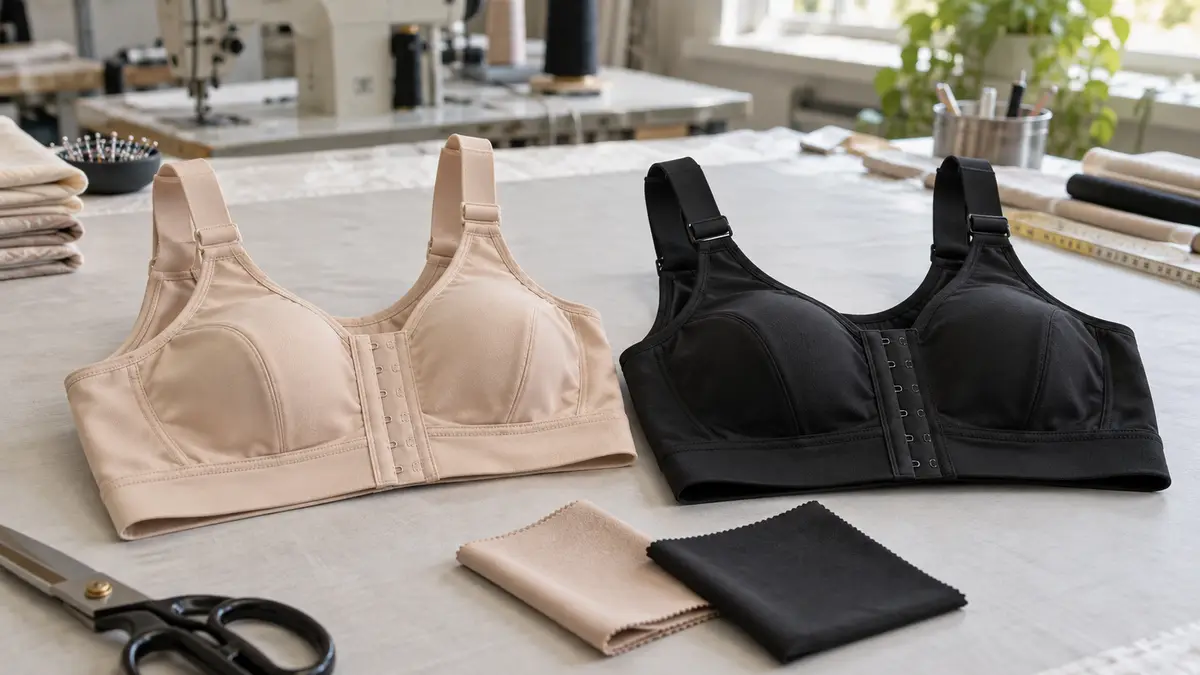
Specify fabric composition, stretch direction, recovery, cup shape, band measurements, strap adjustment, closure position and backing over hooks or zips. Agree how compression will be measured on the finished garment across the size range, including after washing. Ask for evidence supporting the intended use rather than accepting a fabric stretch result as proof of garment performance.
For fibre labelling, confirm with Trading Standards whether to state the composition of the whole bra, or the outside and inside fabric of the cups and back, together or separately. Choose the label format before approving artwork and reconcile it with the component fabric information.
Worked duty example
Illustrative example, not a quote: Illustrative order of 500 post-surgical compression bras under 6212 10 90 00, invoiced at £5,000 free on board, with £800 of freight and insurance to the UK. The customs value is £5,800. Duty at 6% is £348. Import VAT at 20% is charged on the customs value plus duty, £6,148, so it is £1,229.60. Import taxes total £1,577.60; a VAT-registered importer can usually reclaim the VAT, so the lasting cost is the £348 of duty. The import duty and VAT guide explains each step.
Inspection checklist
Fit and compression: measure production garments against the approved size chart and compare compression results with the agreed method and acceptance criteria.
Skin-facing surfaces: check seams, labels, zip backing and hook guards for rough edges, exposed hardware and bulky joins.
Closures and recovery: operate hooks and zips, pull-check strap joints, then wash samples and recheck band recovery, shape and closure function.
Labels and records: match fibre composition, size, care instructions and intended-use wording to the approved documents. Use quality inspection to record discrepancies before shipment.
Working out your own order? Send us the product on WhatsApp and we reply the same working day: WhatsApp us
What goes wrong
A sample can fit while production grading creates tight bands, loose cups or uneven pressure in other sizes. Fabric substitutions and poor elastic recovery can change compression after washing. Front closures can snag, open under tension or leave hard edges against the skin.
Treat inconsistent compression, uncomfortable seams and unsupported recovery claims as separate issues. Hold affected goods for investigation and compare them with the approved garment and documents. For a medical-device product, a garment inspection alone does not establish that the relevant conformity assessment and marking requirements have been met.
Cambridge China Bridge sources these products for UK businesses, checking the factory and the documents before shipment. See factory verification. For own-brand ranges, see sourcing for brands.
Frequently asked questions
What is the UK import duty on post-surgical compression bras from China?
The supplied tariff shows a flat 6% duty for brassières, including retail bra-and-brief sets, with no trade remedies or suspensions recorded.
Are post-surgical compression bras medical devices?
Decide the status of the actual product before following the compliance process. Give your adviser the intended use, packaging claims and supporting performance evidence.
How should I specify compression?
Agree a finished-garment measurement method, size coverage and acceptance criteria, including after washing. Fabric stretch alone does not demonstrate the pressure delivered by the finished bra.
What fibre label does a compression bra need?
Confirm with Trading Standards whether to state whole-product composition, or the outside and inside fabric composition of the cups and back, together or separately. Match the label to the actual fabrics.