Sourcing plastic security seals from China
Plastic pull-tight security seals entered under heading 3926 carry 6% UK duty from China, with no anti-dumping duty recorded. Confirm classification and obtain UK REACH substance information before ordering; agree locking and numbering checks against a retained sample. Cambridge China Bridge sources plastic pull-tight security seals.
UK duty on plastic pull-tight security seals
Read from the UK Trade Tariff on 30 September 2026, heading 3926 covers other articles of plastics. For ordinary plastic pull-tight security seals, use 3926 90 97 90 as a classification starting point, subject to confirmation. The table shows product variants sharing that residual code, rather than separate tariff classifications. The recorded duty is 6%, with no anti-dumping or countervailing duty recorded. Suspensions are limited to named goods; do not assume a security seal qualifies.
The supplied tariff record attaches veterinary control, an import prohibition on goods for torture and repression, and an export restriction on goods for torture and repression to this code. For seals from China, ask your customs broker to confirm the requirements against the material and intended use. The tariff record alone does not establish whether these controls apply to your seal. If subsequently exporting, check whether the goods are controlled and require a licence.
Send the broker the resin specification, drawing, locking mechanism details and intended use. Confirm the commodity code before costing. For classification certainty, ask HMRC or your customs broker whether an Advance Tariff Ruling is appropriate and what legal effect it would have. The import duty and VAT guide explains the calculation.
| Goods | Commodity code | Duty | Anti-dumping or countervailing duty on China |
|---|---|---|---|
| Plain plastic pull-tight security seals, subject to classification | 3926 90 97 90 | 6% | None |
Specify the strap, lock and numbering
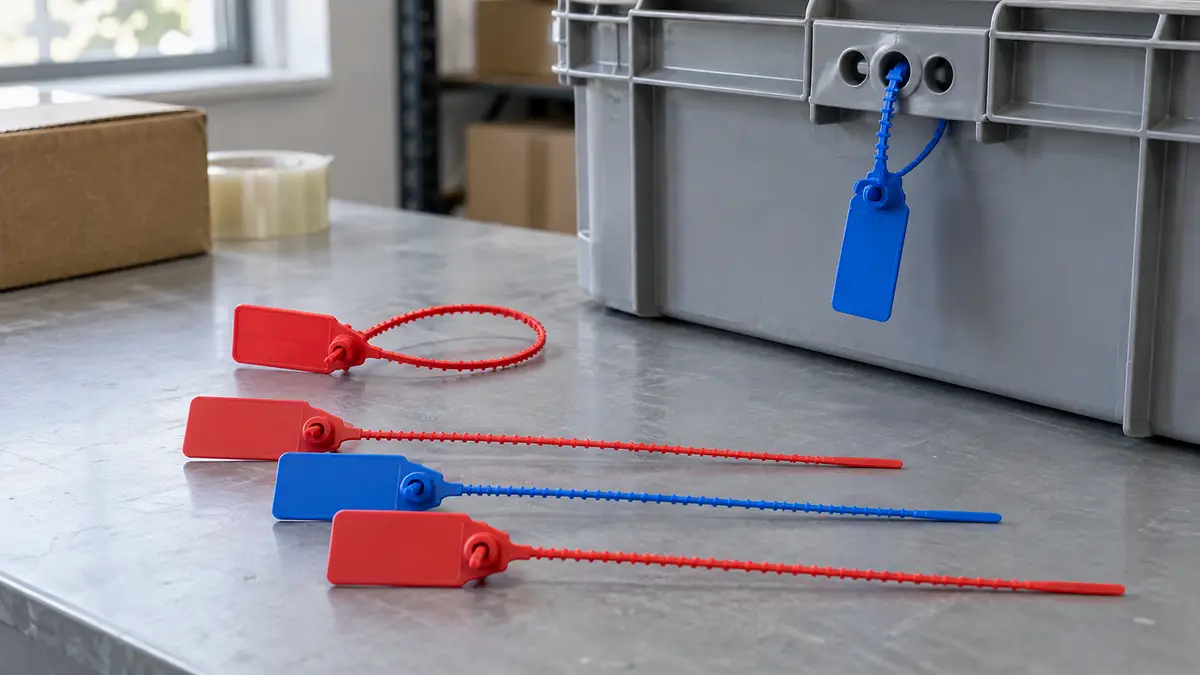
Specify the resin grade, colour, usable strap length, strap width, locking-head dimensions and intended closure opening. State whether the lock uses a metal insert and whether removal uses a tear-off tab or a cutting tool. Approve samples on the actual bag, tote or closure rather than checking loose seals alone.
Agree the pull-test method, acceptance criteria and visible evidence of opening. Define serial-number allocation, prefixes, print position, barcode format and carton number ranges. Ask for UK REACH substance information covering resin, colourants and additives. Confirm with the relevant authority or your customs broker whether candidate-list substances trigger supplier safe-use information obligations, including disclosure of their names.
Worked duty example
Illustrative example, not a quote: Illustrative order: 50,000 numbered plastic pull-tight security seals under 3926 90 97 90, invoiced at £6,000 free on board, with £400 of freight and insurance to the UK. The customs value is £6,400. Duty at 6% is £384. Import VAT at 20% is charged on the customs value plus duty, £6,784, so it is £1,356.80. Import taxes total £1,740.80; a VAT-registered importer can usually reclaim the VAT, so the lasting cost is the £384 of duty. The import duty and VAT guide explains each step.
Inspection checklist
Lock: tighten samples through the intended closure and check reverse movement, strap breakage and evidence left by attempted opening.
Marking: reconcile printed numbers with the order and carton ranges; check for duplicates, missing characters and barcode scanning failures.
Material: compare colour and flexibility with the retained sample; inspect straps and heads for cracks, flash and incomplete moulding.
Packing: check quantities, mixed number ranges and bent straps on arrival. Agree equivalent checks before shipment through the quality inspection guide.
Working out your own order? Send us the product on WhatsApp and we reply the same working day: WhatsApp us
What goes wrong
A seal can look correct while its strap slips backwards through the head or snaps during tightening. Resin substitution, moulding defects and inconsistent locking inserts can undermine the approved sample. Keep the approved construction in the purchase specification and investigate failures before accepting the affected stock.
Duplicate numbers, rubbed-off print and mixed carton ranges undermine seal tracking even when the lock works. Test marking after handling and reconcile ranges before dispatch. For shipment discrepancies, see container seal number mismatch; agree separately which seal construction the shipment needs.
Cambridge China Bridge sources these products for UK businesses, checking the factory and the documents before shipment. See factory verification. For repeat volumes, see container programmes.
Frequently asked questions
What is the UK import duty on plastic security seals from China?
The supplied tariff record gives 6% under 3926 90 97 90, with no anti-dumping or countervailing duty recorded. Confirm that your plastic pull-tight seal belongs in this code.
Can plastic pull-tight seals claim a duty suspension?
The code has suspensions for named goods. A plastic security seal does not qualify simply because it shares the code; check the exact description with your broker.
What should I test on a pull-tight seal?
Test tightening on the actual closure, reverse strap movement, breakage and visible opening damage. Check number uniqueness, print durability and barcode readability against the approved specification.
What chemical information should I request?
Ask for UK REACH information for the resin, colourants and additives. Confirm with the relevant authority or your customs broker whether candidate-list substances trigger supplier safe-use information obligations, including disclosure of the substance name.