Sourcing plastic IBCs from China
Plastic intermediate bulk containers and the relevant separately supplied closures carry 6% UK duty from China in the supplied tariff lines. Confirm classification from the complete construction; dangerous-goods packaging generally needs design testing and certification for its contents. Cambridge China Bridge sources plastic intermediate bulk containers.
UK duty on plastic bulk containers
Read from the UK Trade Tariff on 29 September 2026, heading 3923 covers plastic articles for conveying or packing goods and plastic closures. For plastic intermediate bulk containers, the candidate lines shown depend on the container's construction and whether closures are supplied separately. They are alternatives and associated components, rather than interchangeable codes for an assembled container.
All the selected lines carry 6% duty on goods from China. The supplied facts show no anti-dumping or countervailing duty, suspension or attached import control for these lines. The wider heading contains specialised suspensions and a waste control on a spool line; these do not establish relief or a control for the containers shown here. Import VAT is 20%.
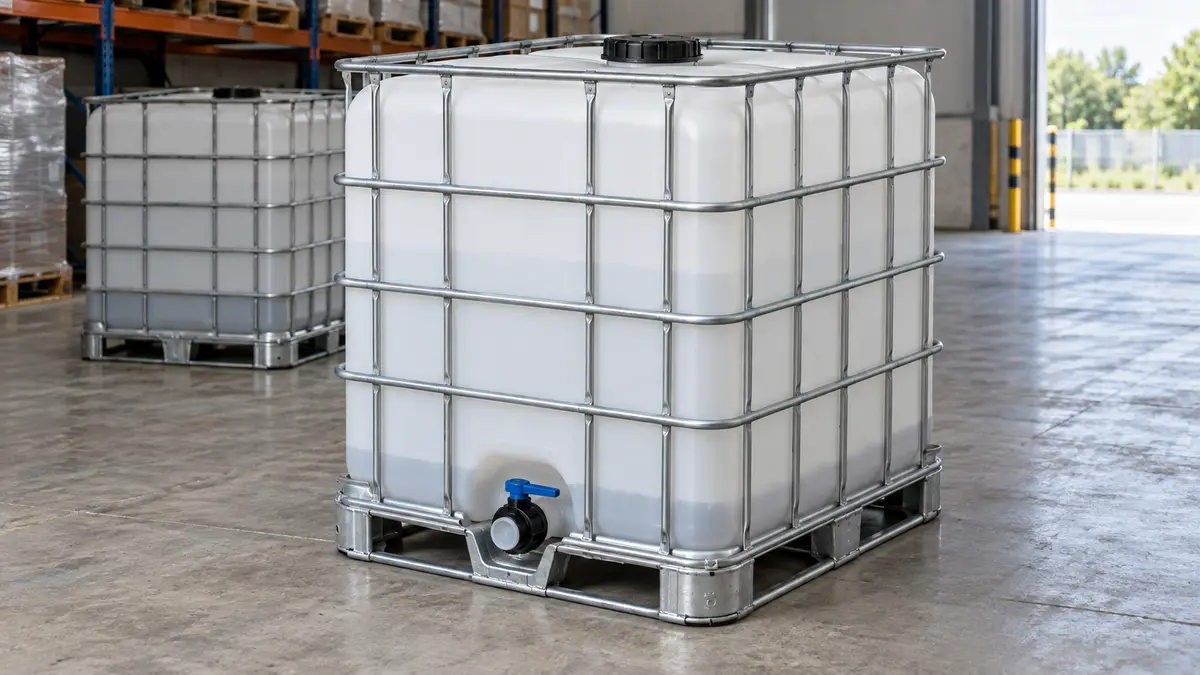
Send your broker drawings, material details and photographs showing the inner bottle, cage, pallet and closures to confirm the commodity code. For the wider product family, see plastic packaging drums. For carboys, see our guide to sourcing plastic carboys.
| Goods | Commodity code | Duty | Anti-dumping or countervailing duty on China |
|---|---|---|---|
| Plastic bulk liquid containers, subject to construction | 3923 30 90 00 | 6% | None |
| Other plastic packing containers, subject to construction | 3923 90 00 00 | 6% | None |
| Separately supplied plastic filling lids and other closures | 3923 50 90 00 | 6% | None |
| Separately supplied bottle caps for compatible inner bottles | 3923 50 10 00 | 6% | None |
Specify the bottle, valve and intended contents
Specify usable capacity, resin, bottle weight, wall distribution, filling opening, venting, outlet thread, valve bore and gasket material. Define the intended liquid, filling temperature, storage conditions and cleaning method. Agree cage construction, pallet material, fork access and loaded stacking conditions. State whether the bottle and frame are new or reconditioned, and approve an assembled sample with your actual discharge fittings.
For food use, obtain the supplier's declaration of compliance and migration evidence covering the bottle, valve and seals under the intended conditions. For dangerous goods, most packaging types need design testing and certification for particular contents; the packaging materials must also be compatible with those contents. Ask for evidence matching the assembled design before ordering, using testing and certification support.
HMRC's transport-packaging exemption from Plastic Packaging Tax does not cover unfilled packaging or intermediate bulk containers used to transport commodities in bulk. Do not assume that a reusable cage makes the plastic bottle exempt. Record component materials, weights and recycled-content evidence for a separate tax assessment.
Worked duty example
Illustrative example, not a quote: 50 empty plastic intermediate bulk containers, illustrative only under 3923 30 90 00, invoiced at £4,000 free on board, with £1,200 of freight and insurance to the UK. The customs value is £5,200. Duty at 6% is £312. Import VAT at 20% is charged on the customs value plus duty, £5,512, so it is £1,102.40. Import taxes total £1,414.40; a VAT-registered importer can usually reclaim the VAT, so the lasting cost is the £312 of duty. The import duty and VAT guide explains each step.
Inspection checklist
Bottle: compare material records, weight and dimensions with the approved sample; inspect moulding seams, corners and the outlet boss for thinning, cracks and contamination.
Valve and lid: check threads against your fittings, gasket identity and valve operation; run the agreed leak test with closures fitted and record seepage at the outlet and filling neck.
Cage and pallet: inspect welds, sharp edges, distortion, bottle restraint and fork openings; check the agreed loaded handling and stacking performance.
Documents and arrival: match batch identification and intended-use evidence to the delivered design; photograph damage, check cleanliness and quarantine leaking or unexplained reconditioned bottles.
Working out your own order? Send us the product on WhatsApp and we reply the same working day: WhatsApp us
What goes wrong
A valve can fit the bottle yet fail to connect to the buyer's hose. A substituted gasket may swell in the intended liquid, while a thin outlet boss cracks during handling. Bent cage members can rub against the bottle, and a distorted pallet can obstruct fork entry. Inspect the complete assembly rather than accepting separate component samples.
Generic food-grade claims or a certificate for a different bottle and valve combination leave the actual order unverified. Reconditioned bottles with unknown previous contents create a contamination concern. Specify permitted substitutions and previous-use evidence before manufacture, and resolve mismatched documents before accepting the shipment.
Cambridge China Bridge sources these products for UK businesses, checking the factory and the documents before shipment. See factory verification. For repeat volumes, see container programmes.
Frequently asked questions
What is the UK import duty on plastic IBCs from China?
The selected container and closure lines carry 6% duty from China, with no trade remedy or suspension shown in the supplied facts. Confirm the assembled container's classification before shipping.
Can I use a plastic IBC for food ingredients?
Obtain a declaration of compliance and migration evidence for the actual bottle, valve and seals under your intended food-contact conditions. A generic food-grade claim is insufficient purchasing evidence.
Can a Chinese plastic IBC carry dangerous goods?
Most dangerous-goods packaging needs design testing and certification for particular contents. Check the exact assembled design and material compatibility before buying it for that use.
Are reusable plastic IBCs exempt from Plastic Packaging Tax?
Reusability alone does not establish exemption. HMRC excludes unfilled packaging and IBCs transporting bulk commodities from the transport-packaging exemption; assess the plastic components separately.