Sourcing plastic card embossers from China
Plastic card embossing machines classified under heading 8472 carry 0% UK duty from China, with no listed trade remedies. Confirm the code and distinguish hand-operated models from powered equipment when checking safety obligations. Cambridge China Bridge sources plastic card embossing machines.
Buying from China for a business? How our UK China sourcing agent service works · China sourcing agent for small orders and first imports
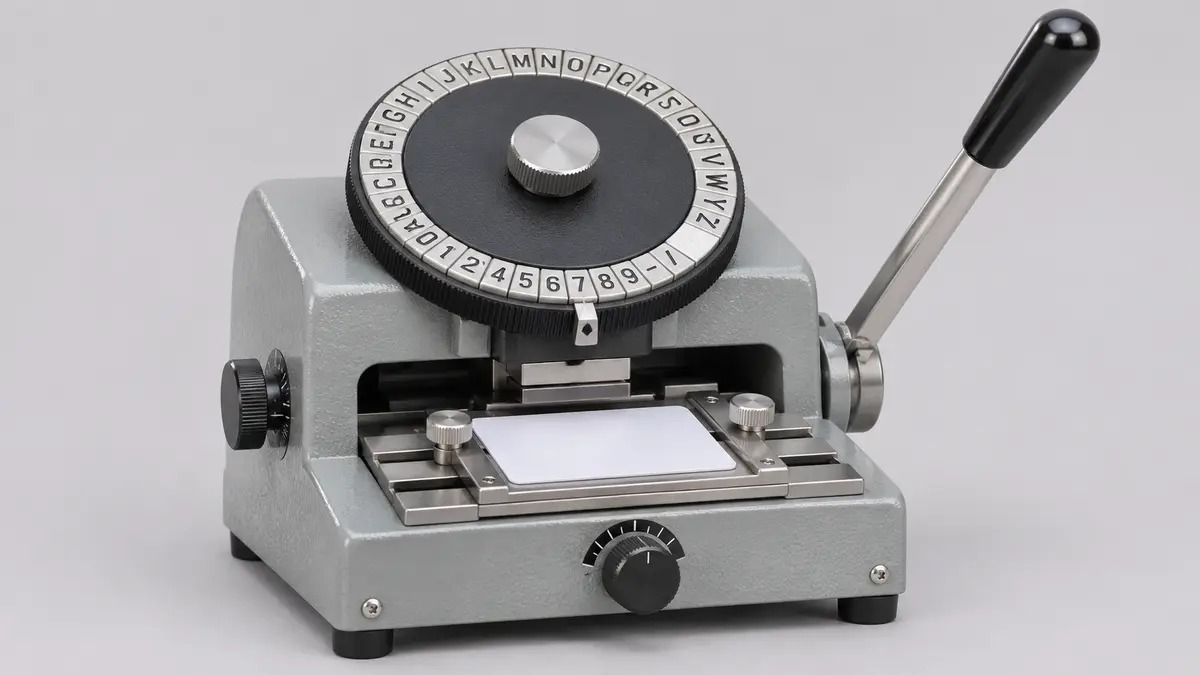
UK duty on plastic card embossing machines
Heading 8472 covers other office machines. For a standalone plastic card embosser, use the residual line 8472 90 80 00 as a classification candidate, subject to confirmation against the specification. The table shows buying configurations under that same candidate line, rather than separate tariff subdivisions.
Read from the UK Trade Tariff on 30 September 2026, all supplied lines of heading 8472 carried 0% duty for goods from China. The supplied facts list no anti-dumping or countervailing duties, suspensions or attached import controls. Import VAT is normally 20%; see UK import duty and VAT.
Send the broker the operating method, card material, embossing function and details of any printing or encoding modules to confirm the commodity code. Do not assume a combined card-personalisation system belongs in the same line. See paper shredders and office machines for the wider heading.
| Goods | Commodity code | Duty | Anti-dumping or countervailing duty on China |
|---|---|---|---|
| Hand-operated plastic card embossers with numeric characters | 8472 90 80 00 | 0% | None |
Character sets, card blanks and operating method
Specify the complete character set, typeface, character size, spacing, line positions and embossing depth. Send the factory your actual card blanks and a sample layout. Agree the card material, thickness, surface finish and acceptable distortion. State whether the machine must accommodate cards containing chips or magnetic stripes, and identify areas that must remain untouched.
For hand-operated models, check selector indexing, lever effort, carriage travel and the clamp. For powered models, specify the feed arrangement, controls, software access and replacement dies. Test colour tipping separately if included. Agree an accepted sample and repeat-run acceptance criteria before ordering.
For Great Britain, confirm with the relevant authority whether the mains-powered model falls under the Electrical Equipment (Safety) Regulations 2016. Human-powered machinery is generally excluded from machinery supply rules, except lifting machinery. Assess powered models against the applicable machinery rules. Electrical equipment liable to generate electromagnetic disturbance is covered by the Electromagnetic Compatibility Regulations 2016, subject to exceptions.
For electrical models in scope, the importer must be able to demonstrate compliance with hazardous-substance restrictions. Office electrical equipment also falls within waste electrical equipment rules. Producers must register annually; check the applicable producer arrangements before selling.
Worked duty example
Illustrative example, not a quote: Illustrative order: 40 powered plastic card embossing machines under 8472 90 80 00, invoiced at £28,000 free on board, with £4,000 of freight and insurance to the UK. The customs value is £32,000. Duty at 0% is £0. Import VAT at 20% is charged on the customs value plus duty, £32,000, so it is £6,400. With no duty, the only import tax is the VAT, which a VAT-registered importer can usually reclaim. The import duty and VAT guide explains each step.
Inspection checklist
Characters: emboss your agreed layout and check every supplied character for correct shape, orientation, alignment and consistent relief. Compare the output with the accepted sample.
Cards and feeding: use the agreed blanks to check clamping, carriage movement and powered feeding. Look for cracking, whitening, bowing, scratches and damage around chips or magnetic stripes.
Mechanism and safety: check selector locking, lever return, die alignment and loose fasteners. On powered models, check guards, stopping controls and any interlocks using an agreed safe test procedure.
Documents and arrival condition: match the model, electrical rating and supplied accessories to the order. Check English instructions and applicable conformity documents. Inspect the frame and carriage for transit damage before running the machine; arrange quality inspection against the agreed sample.
Working out your own order? Send us the product on WhatsApp and we reply the same working day: WhatsApp us
What goes wrong
A sample embossed on the factory's own blank can conceal incompatibility with your cards. Excessive pressure can crack or bow a card; uneven dies can leave shallow characters. Selector play and carriage backlash can produce misplaced text. Check repeated layouts on your actual blanks before accepting production.
A character-wheel photograph does not establish that every character is usable. Confirm the supplied set physically, test awkward combinations and agree how worn dies are replaced. For powered machines, match safety and electrical documents to the delivered configuration, including any feeder or tipping unit.
Cambridge China Bridge sources these products for UK businesses, checking the factory and the documents before shipment. See factory verification. For machinery and equipment, see machinery imports.
Frequently asked questions
What is the UK import duty on plastic card embossers from China?
The supplied tariff facts show 0% duty under 8472 90 80 00, with no listed trade remedies. Confirm that this residual office-machine code covers your exact model.
Can a plastic card embosser print or encode cards?
Specify each function separately. Raised characters, printed artwork, magnetic encoding and chip encoding need separate acceptance checks. Confirm the commodity code for a combined machine.
Do hand-operated card embossers need machinery conformity marking?
Do not assume the same treatment applies to a powered embosser; assess the exact design.
What should I send the factory for a sample test?
Send your actual card blanks, the required character set and a layout showing text positions. Ask for the embossed cards back so you can check relief, alignment, distortion and surface damage.
Sources
- UK Trade Tariff — commodity codes and duty
- HSE equipment and machinery frequently asked questions
- Supply of Machinery (Safety) Regulations: Great Britain guidance
- Electromagnetic Compatibility Regulations: Great Britain guidance
- RoHS Regulations: Great Britain guidance
- Electrical and electronic equipment: producer responsibilities