Sourcing phthalocyanine pigments from China
Phthalocyanine pigments from China carry a standard UK duty of 6%, with eligible named grades suspended to 0%. Check the exact pigment and suspension conditions, then establish UK REACH registration coverage and the required chemical labels before supply in Great Britain. Cambridge China Bridge sources phthalocyanine pigments.
Buying from China for a business? How our UK China sourcing agent service works · China sourcing agent for UK manufacturers and engineering firms
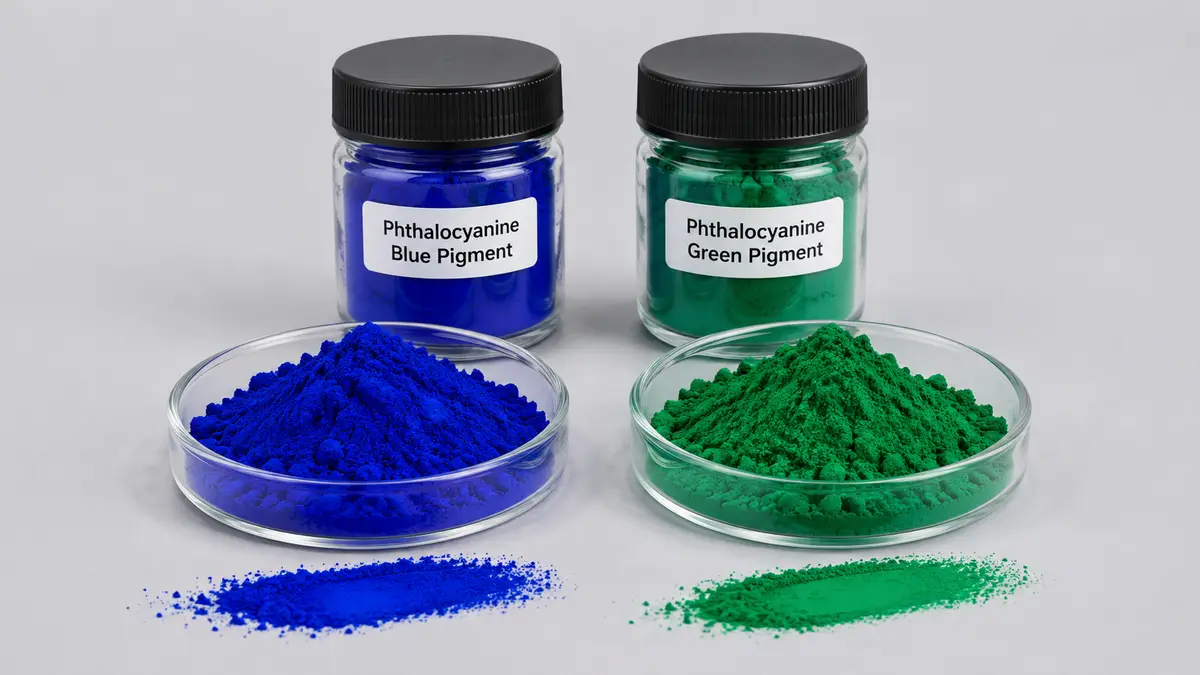
Phthalocyanine pigment duty and suspensions
Read from the UK Trade Tariff on 1 October 2026, heading 3204 covers synthetic organic colouring matter, including pigments and preparations based on them. This guide concerns phthalocyanine blue and green pigments. See the wider dyes and organic colourants guide. The table distinguishes buying forms that can share a code; confirm the commodity code using the chemical identity, pigment content and complete formulation.
The supplied tariff data shows 6% standard duty and no anti-dumping or countervailing duty on the selected lines. Pigment Blue 15:4 has a named line at 35% or more by weight and a 0% suspension, whose footnote excludes mixtures, preparations or products made up of different components containing the pigment. Do not assume a dispersion qualifies. The suspension footnote for 3204 17 00 90 is incomplete in the supplied data; confirm any claimed relief for other phthalocyanine grades with your customs broker.
The UK Trade Tariff attaches veterinary control and import and export waste controls to these lines. Confirm the veterinary requirement for the exact Chinese formulation with your customs broker, particularly if it contains animal-derived ingredients. If pigment residues are shipped as waste under notification controls, the authorities of dispatch, destination and transit must consent before shipment. Ask your broker to confirm whether waste controls apply to the consignment. Budget separately for import VAT using the duty and VAT guide.
| Goods | Commodity code | Duty | Anti-dumping or countervailing duty on China |
|---|---|---|---|
| Pigment Blue 15:4 and preparations containing at least 35% by weight | 3204 17 00 21 | 6% | None |
| Other phthalocyanine blue pigment powders | 3204 17 00 90 | 6% | None |
Specify the phthalocyanine grade and application
Specify the Colour Index identity, chemical identity, blue or green shade, crystal form where relevant, surface treatment and powder or dispersion form. For a dispersion, identify the carrier and pigment content. Agree shade and tinting strength against a retained sample, plus dispersion performance in your actual ink, coating or plastic. Set acceptance criteria for moisture, coarse particles, heat exposure and colour migration where relevant to the application.
For Great Britain, confirm UK REACH registration requirements and any coverage through the manufacturer's GB-based only representative with HSE, including for substances within mixtures. Confirm safety data sheet requirements and the required language with HSE. Before supply, check chemical classification and ensure labels and packaging meet the applicable requirements. Use testing and certification support to define the evidence needed for your intended application.
Worked duty example
Illustrative example, not a quote: Illustrative order: 5 tonnes of phthalocyanine green pigment powder under 3204 17 00 90, invoiced at £30,000 free on board, with £2,000 of freight and insurance to the UK. The customs value is £32,000. Duty at 6% is £1,920. Import VAT at 20% is charged on the customs value plus duty, £33,920, so it is £6,784. Import taxes total £8,704; a VAT-registered importer can usually reclaim the VAT, so the lasting cost is the £1,920 of duty. The import duty and VAT guide explains each step.
Inspection checklist
Identity: match the bag labels, batch certificate and order to the agreed pigment identity, crystal form and surface treatment; verify the carrier and pigment content for dispersions.
Shade and strength: compare batch samples with the retained standard using the same binder, pigment loading and preparation method; assess both full shade and tint.
Dispersion: trial the pigment in your production medium and check for specks, coarse particles, settling and changes after storage; record the preparation conditions.
Packing and paperwork: check liners, seals, moisture damage, caking and sampled bag weights; match batch references across labels and certificates, and review the safety data sheet and chemical labels.
Working out your own order? Send us the product on WhatsApp and we reply the same working day: WhatsApp us
What goes wrong
A blue pigment can match the approved sample in full shade but differ when tinted. A change in crystal form or surface treatment can alter performance in the buyer's binder. Poor dispersion leaves specks in coatings or weak colour development in inks; damp powder cakes, while an unsuitable carrier can destabilise a pigment preparation.
Approve samples in the intended production medium and retain material from each accepted batch. Put agreed tests and rejection criteria in the purchase specification. A generic safety data sheet or a certificate for a different grade cannot establish the identity of the delivered batch. Resolve formulation and suspension eligibility before shipment rather than relying on the supplier's description of the goods as blue pigment.
Cambridge China Bridge sources these products for UK businesses, checking the factory and the documents before shipment. See factory verification. For repeat volumes, see container programmes.
Frequently asked questions
What is the UK import duty on phthalocyanine pigments from China?
The supplied tariff data shows 6% standard duty, with 0% for eligible suspended grades. The selected lines show no anti-dumping or countervailing duty.
Does Pigment Blue 15:4 qualify for zero duty?
Its named line covers content of at least 35% by weight and shows a 0% suspension. The suspension excludes specified multi-component mixtures and preparations, so confirm eligibility for the exact formulation.
Do I need UK REACH registration for pigment imports?
Ask HSE to confirm registration requirements for your annual imports and whether the manufacturer's GB-based only representative covers you. Include substances within mixtures as well as pigment supplied on its own when requesting advice.
How do I check phthalocyanine pigment quality?
Compare shade and tinting strength with a retained standard, then trial dispersion in your actual binder or polymer. Check batch identity, moisture, coarse particles and packaging condition.