Sourcing petrol engines and outboards from China
Before paying a deposit, decide whether you are buying a bare engine for machinery or an outboard for recreational craft, and get the matching Stage V and GB type-approval evidence or the model's conformity declaration. Budget 2% duty for other petrol engines up to 250 cc, 6% for outboards up to 325 cc and 4% above 325 cc up to 30 kW, plus 20% VAT.
Buying from China for a business? How our UK China sourcing agent service works · China sourcing agent for small orders and first imports
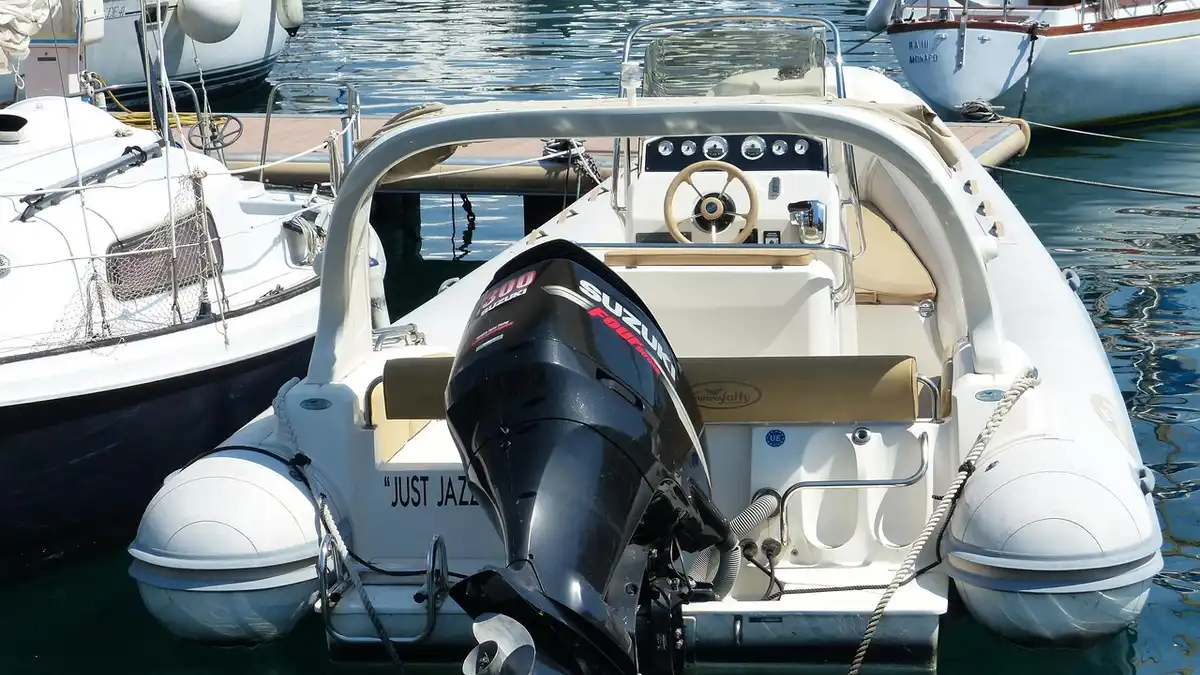
Start with the application and mechanical interface
Put the intended application on the enquiry: generator, pump, mower or recreational boat. Then specify displacement, rated output at its stated speed, starting system and the exact model variant. Treat the approval documents as part of the specification, rather than something to collect after manufacture. For diesel alternatives, see our diesel engine sourcing guide.
For a bare engine, attach a drawing of the mounting holes, output-shaft diameter and length, keyway or taper, rotation viewed from the output end, and coupling. Ask the supplier to identify the shaft option on its quotation. Loncin's engine catalogue separates horizontal and vertical shaft families; a photograph and a horsepower headline are insufficient for approving a replacement.
For an outboard, specify transom compatibility, shaft configuration, tiller or remote controls, starting system and the supplied propeller. Request an installation drawing and a complete packing list. Use the product specification guide to turn these choices into contractual acceptance criteria.
Where to look in China
For general-purpose engines, start enquiries in Chongqing's Jiulongpo District. Loncin's engine catalogue gives its address as No.99 Hualong Road, Jiulongpo District, Chongqing, and lists small vertical-shaft and twin-cylinder engine families. This is a documented manufacturing lead; it does not establish that every nearby supplier makes engines or has the approval your application needs.
For outboards, investigate Suzhou in Jiangsu. Parsun's published contact address identifies Xushuguan Development Zone, Suzhou City. Confirm the current production and inspection address directly before arranging a visit, particularly when a brand's sales office and factory differ.
The China (Shanghai) International Boat Show, CIBS, is a relevant supplier-discovery event: its organiser lists Boat Power Equipment among the exhibit categories and Hidea among selected exhibitors. Check the exhibitor list for the edition you intend to attend. Use meetings to request model-specific documents and running-test arrangements, then compare factories on the same specification.
Two different compliance routes for the UK
For Great Britain, VCA guidance says engines for non-road mobile machinery require Stage V type approval, subject to transition provisions, including engines supplied before installation. Its published guidance also requires Provisional GB type approval for placing NRMM engines on the GB market. Before ordering, ask VCA to confirm the applicable route for your delivery date and obtain the certificate covering the precise engine family, together with photographs of the production engine's approval markings. The UK enforcement instrument is the Non-Road Mobile Machinery (Type-Approval and Emission of Gaseous and Particulate Pollutants) Regulations 2018.
Recreational outboards follow the Recreational Craft Regulations 2017. OPSS guidance requires importers to check conformity assessment, technical documentation, marking and accompanying documents, and to supply English instructions. Request the declaration covering your actual model and ask the conformity-assessment provider to identify the applicable exhaust/noise requirements and supporting assessment documents before accepting stock.
The legislation.gov.uk record checked on 3 October 2026 shows the NRMM instrument as continuing legislation, rather than a wholly revoked instrument. Northern Ireland has different approval arrangements: VCA specifies EU or UK(NI) approval for NRMM engines, and OPSS publishes separate recreational-craft guidance for NI.
UK duty on the engine you actually import
These ordinary third-country rates were read from the UK Trade Tariff on 3 October 2026 for imports into Great Britain. No anti-dumping measure was listed on these three commodity pages. The rates assume no conditional suspension or relief is claimed; recheck the declaration date and exact specification before shipment.
The 325 cc boundary includes 325 cc in the first outboard row. The second row requires both displacement above 325 cc and power no greater than 30 kW. The small-engine row is the 'other' subdivision, not a blanket code for every engine up to 250 cc.
This table does not cover complete generators, complete mowers, road-vehicle engines, diesel engines or engine parts. For separate replacement components, consult the engine parts guide.
| Goods | Commodity code | Duty | Anti-dumping duty on China |
|---|---|---|---|
| Petrol outboard motors, cylinder capacity not exceeding 325 cc | 8407211000 | 6% | None listed |
| Petrol outboard motors, cylinder capacity exceeding 325 cc, power not exceeding 30 kW | 8407219100 | 4% | None listed |
| Other spark-ignition engines, cylinder capacity not exceeding 250 cc, other subdivision | 8407901090 | 2% | None listed |
Worked landed-tax example
Hypothetical example only, not a supplier price: recreational petrol outboards correctly classified under 8407211000 have an accepted customs value of £10,000, including transport and insurance to the UK border. Assume another £500 of transport and incidental costs to the first UK destination, no further known destination and no relief.
Duty is £10,000 × 6% = £600. The import VAT base is £10,000 + £600 + £500 = £11,100. At the tariff's standard 20% VAT rate, import VAT is £2,220. Duty plus import VAT is £2,820; goods, the stated logistics costs and these taxes total £13,320.
The £500 is included once in the VAT calculation, not added to the stated customs value. Import VAT valuation includes duty and relevant destination expenses that are not already included. Use the UK duty and VAT guide when building your own calculation.
Working out your own order? Send us the product on WhatsApp and we reply the same working day: WhatsApp us
Inspect for cooling, fuel and control failures
Recommended purchase checks for outboards include cooling-water delivery, temperature or warning behaviour, and restart performance. Require a correctly supplied tank or test rig and follow the model's operating instructions. Agree when the inspector must stop the test if cooling is inadequate.
Recommended inspection points include fuel leaks, fuel-line connections and binding controls. Have the inspector examine the supplied fuel system, check throttle, shift and steering through their permitted range, and record defects rather than merely writing 'engine runs'.
Recommended purchase tests for bare engines: cold start and hot restart, stable idle, repeated starter operation, oil and fuel leak checks, and a load test against the contracted output and speed. Agree the test duration, sample selection and rejection criteria before production. These are proposed acceptance checks, not claims about a universal failure rate.
Agree a named power-test method and ask the test laboratory to confirm the applicable standard, edition and setup for the engine and its intended use. A power-test report does not replace emissions approval. Build the witnessed test into your quality inspection plan.
Make the first order serviceable
Before releasing the balance, reconcile model and serial records with the approval documents, inspection report and packing list. Agree an illustrated parts catalogue, English operating and maintenance instructions, spare-part numbers and warranty responsibility.
For outboards, request a priced spare-parts schedule covering the cooling pump, seals, ignition components, starter and propeller options. For bare engines, include the carburettor, recoil starter, ignition and governor components appropriate to the purchased variant. Specify the packing and transport preparation in writing and have the carrier confirm its requirements.
Cambridge China Bridge's machinery sourcing service can help organise the specification, document review and inspection brief. Factory checks and inspections are normally included in our quote; anything complex enough to need a third party is charged separately and agreed in advance.
Related help: our services.
Frequently asked questions
Is a successful factory running test enough to approve an engine?
No. Use it to assess the contracted performance and operation. Obtain the separate approval or conformity evidence for the intended application and match it to the production model.
Does a 325 cc petrol outboard fall into the 4% duty row?
No. The 6% row includes cylinder capacity not exceeding 325 cc. The 4% row shown here covers capacity exceeding 325 cc and power not exceeding 30 kW.
Should I order by advertised horsepower?
Specify rated output, speed, test method and mechanical interface. For an outboard, also settle installation compatibility and controls before approving the sample.
Sources
- UK Trade Tariff: outboards not exceeding 325 cc
- UK Trade Tariff: larger outboards not exceeding 30 kW
- UK Trade Tariff: other engines not exceeding 250 cc
- VCA: NRMM approval requirements
- NRMM Regulations 2018: current legislation
- OPSS: recreational craft in Great Britain
- Import VAT valuation: VAT Act, section 21
- Loncin: engine catalogue and Chongqing address
- Parsun: published Suzhou address
- CIBS: exhibit categories and selected exhibitors