Sourcing optical Faraday rotators from China
Optical Faraday rotators entered under the relevant optical-appliance or parts lines of heading 9013 carry 0% UK duty from China. Conformity marking depends on the applicable product regulations. Confirm the classification and specify rotation at the intended wavelength and temperature. Cambridge China Bridge sources optical Faraday rotators.
Buying from China for a business? How our UK China sourcing agent service works · China sourcing agent for small orders and first imports
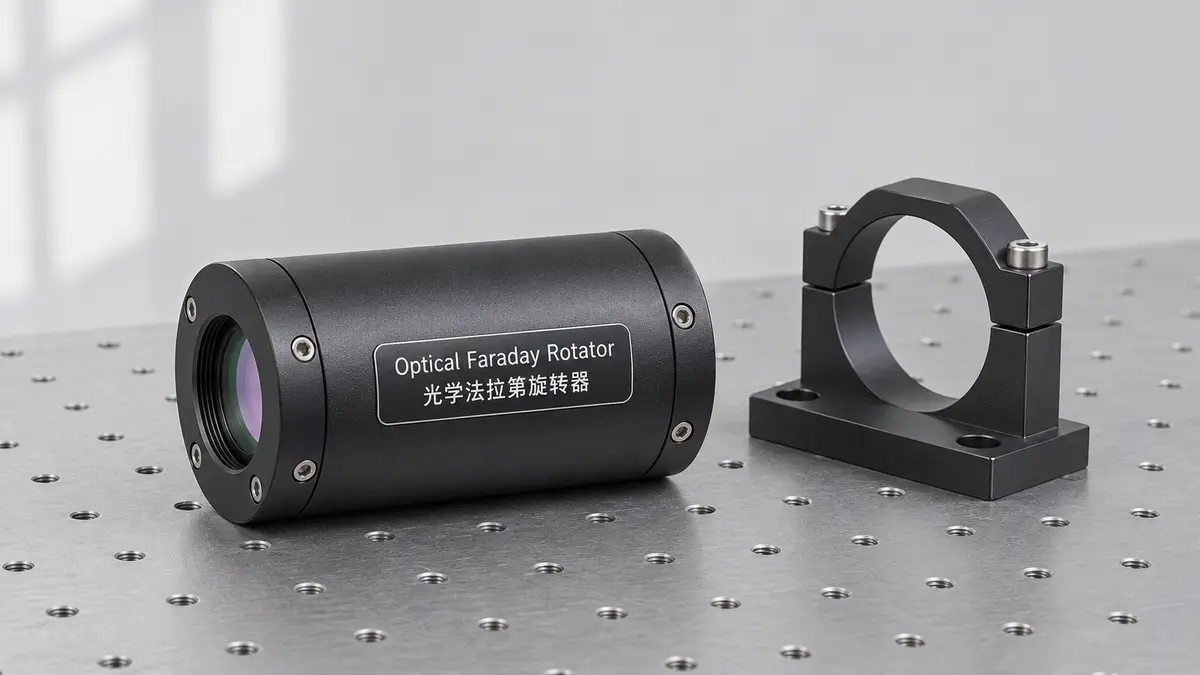
Optical Faraday rotator duty and classification
Read from the UK Trade Tariff on 1 October 2026, heading 9013 covers lasers other than laser diodes and other optical appliances and instruments not specified elsewhere in the chapter. The relevant candidate lines are 9013 80 80 00 for other optical appliances and 9013 90 80 00 for other parts. The table shows product variants sharing these lines, rather than separate tariff subdivisions.
Both candidate lines carry 0% duty for goods from China. The supplied tariff record lists no anti-dumping or countervailing duty and no suspensions. It attaches a DCMS Export Licence control to 9013 80 80 00; ask your customs broker to confirm its relevance and any documentation. Official guidance says cultural objects have no import licensing requirement in Great Britain, but that statement alone does not determine this shipment's treatment.
Confirm the commodity code using the construction, mounting and intended function, especially for loose optical elements or incomplete assemblies. The import declaration must include the commodity code. For related assemblies and the wider heading, see fibre optic isolators.
| Goods | Commodity code | Duty | Anti-dumping or countervailing duty on China |
|---|---|---|---|
| Mounted free-space optical Faraday rotators | 9013 80 80 00 | 0% | None |
| Other parts and accessories for optical Faraday rotators | 9013 90 80 00 | 0% | None |
Specify wavelength, rotation and mounting
Specify the operating wavelength or wavelength band, required polarisation rotation and tolerance, clear aperture, transmission, coating, optical power conditions and operating temperature range. State the viewing direction used to describe rotation. Ask for measured results under your intended conditions rather than a catalogue value without a test method.
Agree the magnet arrangement, housing dimensions, mounting interface and whether delivery includes fibre coupling or only the rotator assembly. A rotator alone is not a complete optical isolator: agree which polarising elements are included and which performance tests belong to the finished assembly.
Conformity marking is required only where sector-specific regulations require it. Check the supplied configuration before asking for CE or UKCA documentation. Use testing and certification to define the evidence appropriate to the actual product.
Worked duty example
Illustrative example, not a quote: Illustrative order: 50 mounted optical Faraday rotators under 9013 80 80 00, invoiced at £10,000 free on board, with £900 of freight and insurance to the UK. The customs value is £10,900. Duty at 0% is £0. Import VAT at 20% is charged on the customs value plus duty, £10,900, so it is £2,180. With no duty, the only import tax is the VAT, which a VAT-registered importer can usually reclaim. The import duty and VAT guide explains each step.
Inspection checklist
Rotation: measure polarisation rotation at the agreed wavelength and temperature, recording the viewing direction and test arrangement.
Optical surfaces: check for chips, scratches, coating defects and contamination; measure transmission against the approved sample.
Assembly: check aperture alignment, mounting dimensions, magnet orientation and housing security; test fibre coupling where supplied.
Traceability: match model and batch identification to drawings and measured results; inspect protective packaging on arrival. Agree sampling through quality inspection.
Working out your own order? Send us the product on WhatsApp and we reply the same working day: WhatsApp us
What goes wrong
A rotator can pass the supplier's test but miss your target when the wavelength, temperature or viewing convention changes. Other failure points include coating loss, contaminated faces, loose housings and misaligned fibre coupling. Put the test conditions and acceptance criteria in the purchase specification.
Confusing rotation performance with finished-isolator performance leaves gaps in acceptance testing. Approve the complete optical arrangement where isolation is the buying objective, and retain batch measurements so arrival results can be compared with the supplier's results.
Cambridge China Bridge sources these products for UK businesses, checking the factory and the documents before shipment. See factory verification. For components and parts, see sourcing for manufacturers.
Frequently asked questions
What is the UK import duty on optical Faraday rotators from China?
The supplied tariff record shows 0% for 9013 80 80 00 and 9013 90 80 00, with no anti-dumping or countervailing duty. Confirm which line describes your shipment.
Do optical Faraday rotators need CE or UKCA marking?
Check the actual configuration and applicable product rules before requesting marking documentation.
What should I specify when ordering a Faraday rotator?
Specify wavelength, rotation and tolerance, viewing direction, clear aperture, transmission, coating, optical power conditions, temperature range and mounting or fibre interfaces.
Is a Faraday rotator the same as an optical isolator?
A rotator changes polarisation. A complete isolator also uses polarising elements to control reverse transmission. Agree whether you are buying the rotator or the complete assembly.