NPK, DAP and MAP fertilisers from China
Compound fertilisers from China pay 6% UK duty for NPK, DAP and MAP, 6.5% for lines with more than 80% ammonium nitrate and 2% for PK and some other mixes, with no anti-dumping duty. They are sold under retained Regulation (EC) No 2003/2003 or the Fertilisers Regulations 1991, and high-nitrogen ammonium nitrate needs a detonation test. Cambridge China Bridge sources fertilisers.
Buying from China for a business? How our UK China sourcing agent service works · China sourcing agent for small orders and first imports
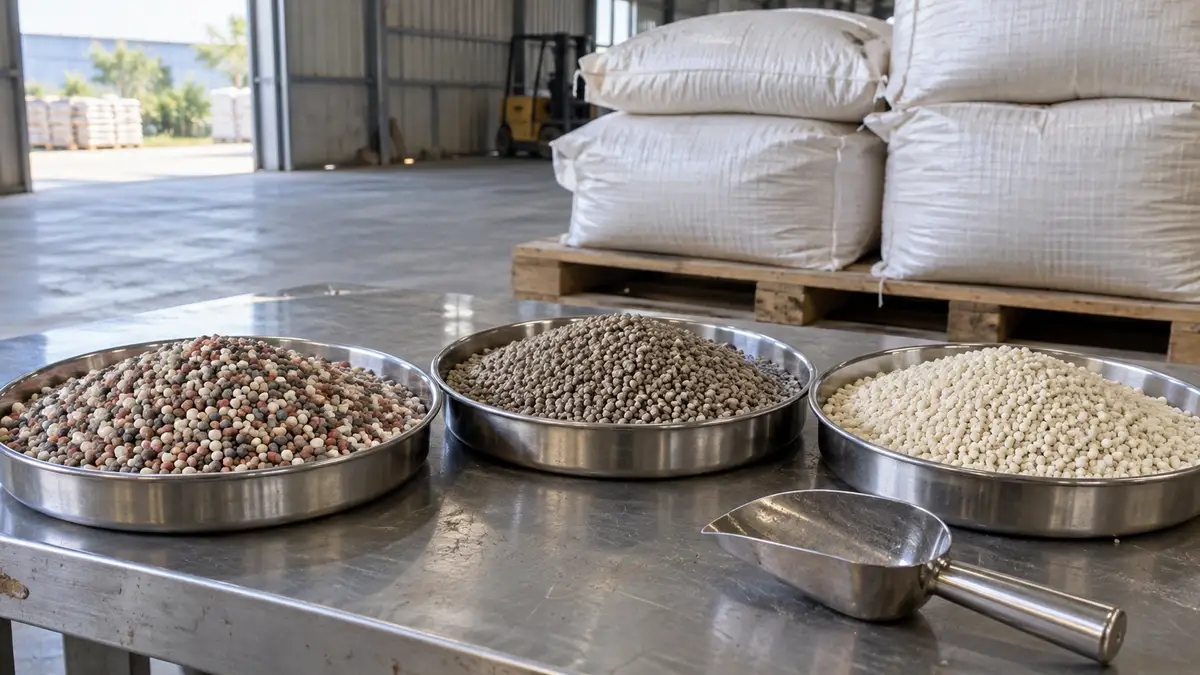
6% for most, 2% for PK, 6.5% for high ammonium nitrate
Read from the UK Trade Tariff on 26 September 2026, NPK fertilisers, diammonium phosphate (DAP), monoammonium phosphate (MAP), other nitrogen and phosphorus fertilisers, and goods of chapter 31 in packages of 10 kg or less carried 6% duty on goods from China. Lines for solid fertilisers with more than 80% ammonium nitrate carried 6.5%, fertilisers with phosphorus and potassium only 2%, and other fertilisers with 10% nitrogen or less 2%. There was no anti-dumping measure or suspension on these lines.
Single-nutrient fertilisers such as urea, ammonium sulphate and potassium chloride are in headings 3102 to 3104, and organic fertilisers in 3101. Confirm the commodity code from the nutrients declared on the analysis and the pack size; our phosphates guide covers industrial phosphates.
The lines under heading 3105, except fertilisers containing phosphorus and potassium only, are in the fertiliser sector of the UK carbon border adjustment mechanism (CBAM), which applies to imports from 1 January 2027. An importer who expects £50,000 or more of CBAM goods within 30 days, or has imported that much in the previous 12 months, must register, keep records for 6 years, and should ask suppliers for emissions data now. See our UK CBAM guide.
| Goods | Commodity code | Duty | Anti-dumping duty on China |
|---|---|---|---|
| Chapter 31 goods in packages of 10 kg or less, other | 3105 10 00 90 | 6% | None |
| Same, over 80% ammonium nitrate | 3105 10 00 10 | 6.5% | None |
| NPK, over 10% nitrogen, other | 3105 20 10 90 | 6% | None |
| NPK, 10% nitrogen or less | 3105 20 90 00 | 6% | None |
| Diammonium phosphate (DAP) | 3105 30 00 00 | 6% | None |
| Monoammonium phosphate (MAP) | 3105 40 00 00 | 6% | None |
| PK fertilisers | 3105 60 00 00 | 2% | None |
| Other fertilisers, 10% nitrogen or less | 3105 90 80 90 | 2% | None |
Fertiliser law, ammonium nitrate and transport
A compound fertiliser can be placed on the GB market under the retained Regulation (EC) No 2003/2003, which fixes the types, minimum nutrient contents, tolerances and labelling, or as a national fertiliser under the Fertilisers Regulations 1991, which also set labelling and declared-nutrient rules. Either way the bag or delivery document must declare the nutrients in the prescribed form, so the Chinese label cannot simply be translated.
Ammonium nitrate materials with a high nitrogen content are covered by the Ammonium Nitrate Materials (High Nitrogen Content) Safety Regulations 2003, which require a detonation resistance test before they are supplied. Some ammonium nitrate based fertilisers are dangerous goods for transport, so read the safety data sheet for the UN number and class before booking freight.
Worked duty example
Take a hypothetical order of 25 tonnes of 15-15-15 NPK granules in 25 kg bags, entered under 3105 20 10 90: £9,000 free on board plus £2,500 of freight and insurance gives a customs value of £11,500. The 6% duty on NPK fertiliser comes to £690, and import VAT is 20% of £12,190, which is £2,438. If you are VAT-registered you normally reclaim the £2,438, leaving £690 as the real cost at the border. A PK fertiliser with no nitrogen would pay 2% under 3105 60 00 00, so the declared nutrients decide the rate. Step by step: UK import duty and VAT.
What goes wrong
Fertiliser shipments fail on nutrients and physical quality. Declared nitrogen, phosphate or potash comes in below the label and outside the permitted tolerance; a bulk blend is sold as a true compound and separates in the spreader; granules are soft and break into dust; product cakes in humid holds or containers; chloride is higher than expected for sensitive crops; and bags split when stacked.
Test each lot for total nitrogen, water-soluble and neutral ammonium citrate soluble phosphate and water-soluble potash by the methods in Regulation 2003/2003, and for moisture, granule size distribution by sieving, crushing strength, chloride and heavy metals including cadmium, and check bag weights, UV-stable woven bags or big bags and pallet wrapping before loading.
Cambridge China Bridge sources NPK, DAP, MAP and speciality fertilisers for merchants, blenders and growers, with nutrient testing and labels settled before shipment. See our container programmes.
Related guides: Urea and nitrogen fertilisers from China.
Frequently asked questions
What is the UK import duty on NPK fertiliser from China?
Read from the UK Trade Tariff on 26 September 2026, NPK, DAP and MAP carried 6% from China, PK fertilisers 2%, and high ammonium nitrate lines 6.5%.
Can I use the Chinese label on imported fertiliser?
No. Nutrients must be declared in the form set by Regulation 2003/2003 or the Fertilisers Regulations 1991.
Does ammonium nitrate fertiliser need special testing?
Yes. High-nitrogen ammonium nitrate materials need a detonation resistance test under the 2003 safety Regulations.
How do I check the nutrients match the bag?
Test each lot for N, phosphate and potash by the Regulation 2003/2003 methods before shipment.