Sourcing natural ochre pigments from China
Natural ochre earth colours qualifying for heading 2821 pay 4% UK duty from China, with no trade remedy recorded. They must contain at least 70% combined iron evaluated as ferric oxide; the name ochre alone does not establish the code. Cambridge China Bridge sources natural ochre pigments.
Buying from China for a business? How our UK China sourcing agent service works · China sourcing agent for UK manufacturers and engineering firms
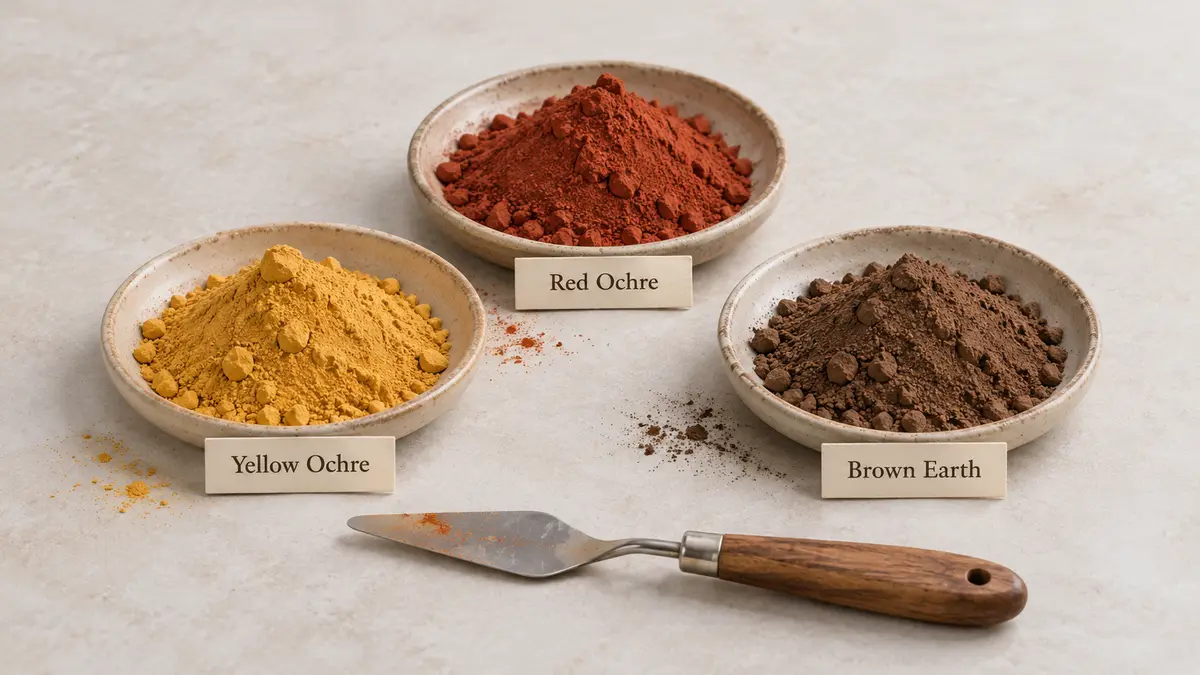
Duty and the iron-content boundary
Read from the UK Trade Tariff on 1 October 2026, heading 2821 covers iron oxides and hydroxides and earth colours containing 70% or more by weight of combined iron evaluated as ferric oxide. Qualifying natural ochre earth colours use 2821 20 00 00 and carry 4% duty from China. The supplied tariff record shows no anti-dumping or countervailing duty and no suspension. The table presents uses and shades of the same commodity line.
Do not classify every natural ochre under this heading. Obtain composition and processing details, then confirm the commodity code. The published background places natural iron oxides in heading 2530 and notes that dispersions and preparations with binders may fall in chapter 32. See the wider iron oxide pigments guide for that distinction.
The tariff attaches import and export waste controls. Confirm whether the material is waste with your customs broker. For notified waste shipped from China to England, the exporter starts the consent application with the dispatch country's competent authority; shipment requires consent from the Environment Agency and other authorities involved. Ask the broker to confirm the route and receiving-site requirements before shipment.
| Goods | Commodity code | Duty | Anti-dumping or countervailing duty on China |
|---|---|---|---|
| Yellow ochre earth colours meeting the heading's iron-content threshold | 2821 20 00 00 | 4% | None |
Specify the ochre, shade and processing
Specify natural mineral origin, whether the ochre is raw or heat-treated, and any added fillers or synthetic pigments. Agree a retained shade master and test the pigment in your actual paint, mortar or plaster formulation. Set contractual tolerances for tinting strength, particle size, oil absorption, moisture and water-soluble matter. Ask for batch analysis showing the combined iron content used for classification.
For supply in Great Britain, classification and labelling must be carried out by someone scientifically competent, and substances and mixtures must be correctly labelled and packaged before sale. Check whether the imported substance requires UK REACH registration. Request composition and processing information to support that assessment rather than relying on the description natural.
Worked duty example
Illustrative example, not a quote: An illustrative tonne of yellow ochre earth colour meeting the heading's iron-content threshold; FOB and freight values are illustrative under 2821 20 00 00, invoiced at £2,200 free on board, with £728 of freight and insurance to the UK. The customs value is £2,928. Duty at 4% is £117.12. Import VAT at 20% is charged on the customs value plus duty, £3,045.12, so it is £609.02. Import taxes total £726.14; a VAT-registered importer can usually reclaim the VAT, so the lasting cost is the £117.12 of duty. The import duty and VAT guide explains each step.
Inspection checklist
Colour: compare each lot with the retained master using the same binder, pigment loading and drying conditions; check both full shade and a tinted sample.
Composition: match the batch analysis to the ordered ochre and iron-content declaration; investigate undeclared fillers or synthetic colour additions.
Fineness: check sieve residue, dispersion and visible grit in a drawdown or mortar trial; compare oil absorption and water-soluble matter with the agreed specification.
Packing: check bag seals, liners, moisture damage, hard lumps and lot identification; retain arrival samples and link them to the batch analysis.
Working out your own order? Send us the product on WhatsApp and we reply the same working day: WhatsApp us
What goes wrong
A sample may match while the delivered lot changes shade or tinting strength. Variable mineral composition, different processing or added fillers can change the colour in use. Coarse particles leave specks or streaks, damp powder forms lumps, and soluble salts can contribute to efflorescence in cement-based products.
A supplier's description of natural ochre can also conceal a classification mismatch. Resolve composition and form before declaring the goods. Keep disputed lots separate and compare retained samples with the agreed formulation before accepting a replacement.
Cambridge China Bridge sources these products for UK businesses, checking the factory and the documents before shipment. See factory verification. For repeat volumes, see container programmes.
Frequently asked questions
What is the UK import duty on natural ochre from China?
Qualifying earth colours under 2821 20 00 00 carry 4% duty.
Does all natural ochre belong in heading 2821?
No. Earth colours must meet the 70% combined-iron threshold evaluated as ferric oxide. Confirm composition, processing and form before choosing the code.
How do I check whether an ochre batch matches?
Compare it with a retained master in your actual binder. Keep pigment loading and drying conditions consistent, and check shade, tinting strength, grit and dispersion.
Does natural ochre need UK REACH registration?
Check the actual substance's registration position before importing. Give your adviser its composition, processing history and annual import quantity; the product name alone is insufficient.