Sourcing malt and baking mixes from China
Heading 1901 duties are 6% to 12% for preparations, or 4% plus £12 or £15 per 100 kg for malt extract, with conditional suspensions to 0%. Dairy products and preparations containing them from China are prohibited from entering Great Britain. Cambridge China Bridge sources malt extract and plant-based baking mixes.
Buying from China for a business? How our UK China sourcing agent service works · China sourcing agent for small orders and first imports
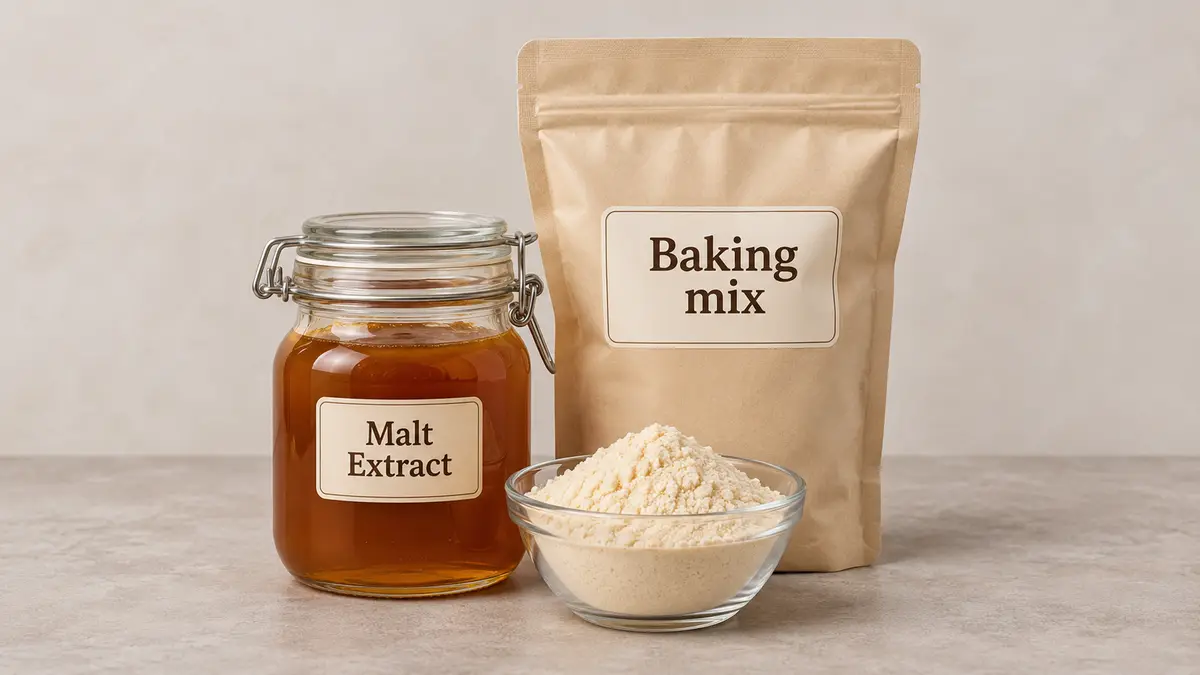
Recipe, dry extract and conditional suspensions
Read from the UK Trade Tariff on 18 November 2026, heading 1901 covers malt extract, qualifying flour, starch and malt preparations, and certain milk-based preparations. Cocoa content and composition affect classification. Standard duties for Chinese goods are 6% or 12% for preparations; malt extract pays 4% plus £15 per 100 kg where dry extract is at least 90%, or 4% plus £12 per 100 kg otherwise. No anti-dumping or countervailing duty is recorded.
The supplied tariff data records conditional 0% suspensions for 1901 90 95 00 and 1901 90 99 90. Both exclude mixtures or preparations containing the specified products. The latter also has a narrowly defined powder recipe, but its supplied footnote is incomplete. Do not assume eligibility without checking the full conditions. A suspension does not override the prohibition on dairy products from China.
Veterinary and organic import controls are attached throughout the heading; the infant-preparation line also carries a genetically modified organism control concerning rice. Ask your customs broker to confirm the applicable entry documents and controls for the exact recipe. Supply ingredient percentages, animal ingredient origins, cocoa content, processing and malt dry extract results when checking your commodity code. The import guidance below concerns Great Britain; obtain separate advice for Northern Ireland.
| Goods | Commodity code | Duty | Anti-dumping or countervailing duty on China |
|---|---|---|---|
| Mixes and doughs for bakers’ wares | 1901 20 00 00 | 6% | None |
| Malt extract with dry extract content of 90% or more | 1901 90 11 00 | 4% + £15.00 per 100 kg | None |
| Other malt extract | 1901 90 19 00 | 4% + £12.00 per 100 kg | None |
| Preparations meeting the low milkfat, sugar and starch limits | 1901 90 91 00 | 12% | None |
| Other food preparations | 1901 90 99 90 | 6% | None |
Specify the recipe and baking performance
Agree the complete recipe, including carriers, emulsifiers and processing aids. Specify flour or starch source, sugar content, malt dry extract, enzyme activity where relevant, colour and flavour. For premixes, approve a baking trial using the intended water addition and process. Agree moisture, dispersibility, shelf life and moisture-barrier packaging against a retained sample.
Dairy products from China are prohibited, including preparations containing them. This affects milk-based powders and mixes containing whey or milk powder. Official guidance also says using milk originating in another approved country does not remove the prohibition on dairy products from China. Resolve ingredient eligibility before ordering.
Confirm food-business registration requirements with the relevant local authority and retail-labelling requirements with Trading Standards, including ingredients with allergens emphasised, net quantity, date information, storage instructions and the address and language requirements. Check wheat, barley, soya and any animal ingredients against the signed recipe.
For organic goods, an approved UK organic control body must certify the food and business. The tariff attaches an organic inspection-certificate control; confirm the consignment requirements with your broker and control body. For rice-containing infant preparations, the tariff attaches additional controls: ask the broker to confirm testing and entry documents. No genetically modified rice or rice products are authorised in the UK.
Worked duty example
Illustrative example, not a quote: 12 tonnes of plant-based bakery premix, illustrative only under 1901 20 00 00, invoiced at £14,000 free on board, with £2,000 of freight and insurance to the UK. The customs value is £16,000. Duty at 6% is £960. Import VAT at 20% is charged on the customs value plus duty, £16,960, so it is £3,392. Import taxes total £4,352; a VAT-registered importer can usually reclaim the VAT, so the lasting cost is the £960 of duty. The import duty and VAT guide explains each step. This assumes the goods are standard-rated for VAT. Most food for human consumption is zero-rated, and animal feed can be too, in which case no import VAT is due, so check the rate for your product in HMRC's VAT Notice 701/14.
Inspection checklist
Composition: compare the production recipe and batch results with the approved specification; investigate any substituted flour, fat, carrier or flavouring.
Performance: check malt colour, dry extract and dissolution, or run a premix baking trial for rise, crumb and flavour against the retained sample.
Condition: inspect for clumping, dampness, insects, off-odours and damaged liners; review batch microbiology and relevant contaminant results.
Packs and labels: check seals, sampled net weights, batch identification, date marking and remaining shelf life; reconcile ingredients and allergens with the approved English artwork.
Working out your own order? Send us the product on WhatsApp and we reply the same working day: WhatsApp us
What goes wrong
A powder sold as vegetable creamer can still contain milk-derived ingredients. A recipe change can therefore affect import eligibility as well as allergens and classification. A quoted tariff rate or suspension is not evidence that the product may enter Great Britain.
Moisture ingress can turn free-flowing premix into lumps; changes in malt enzyme activity or flour can alter baking performance. Approve production samples, record the recipe version and inspect the shipment against it. Use the inspection guide to define the checks before dispatch.
Cambridge China Bridge sources these products for UK businesses, checking the factory and the documents before shipment. See factory verification. For repeat volumes, see container programmes.
Frequently asked questions
What is the UK import duty on baking mixes from China?
Baking mixes under 1901 20 00 00 carry 6%. Other preparations carry 6% or 12%; malt extract carries 4% plus £12 or £15 per 100 kg. Conditional suspensions apply to specified lines.
Can I import milk-based baking powders from China?
Dairy products and products containing them from China are prohibited from entering Great Britain. A listed commodity code or duty suspension does not grant permission to import.
Does malt extract pay duty on weight as well as value?
Yes. Both malt extract lines carry 4% of value plus a charge per 100 kg. The dry extract content determines whether that charge is £15 or £12.
What should I send a factory before sampling a baking mix?
Send the full recipe brief, intended baking process, target texture and flavour, allergen specification, pack format and shelf-life expectations. Compare the trial bake with an approved reference sample.