Sourcing maize grits from China
UK duty on maize grits from China ranges from £82.00 to £144.00 per 1000kg, depending on fat content. Imported cereals must meet the same or equivalent food hygiene standards and procedures as food produced in Great Britain. Organic imports require a Great Britain certificate of inspection. Cambridge China Bridge sources maize grits.
Buying from China for a business? How our UK China sourcing agent service works · China sourcing agent for small orders and first imports
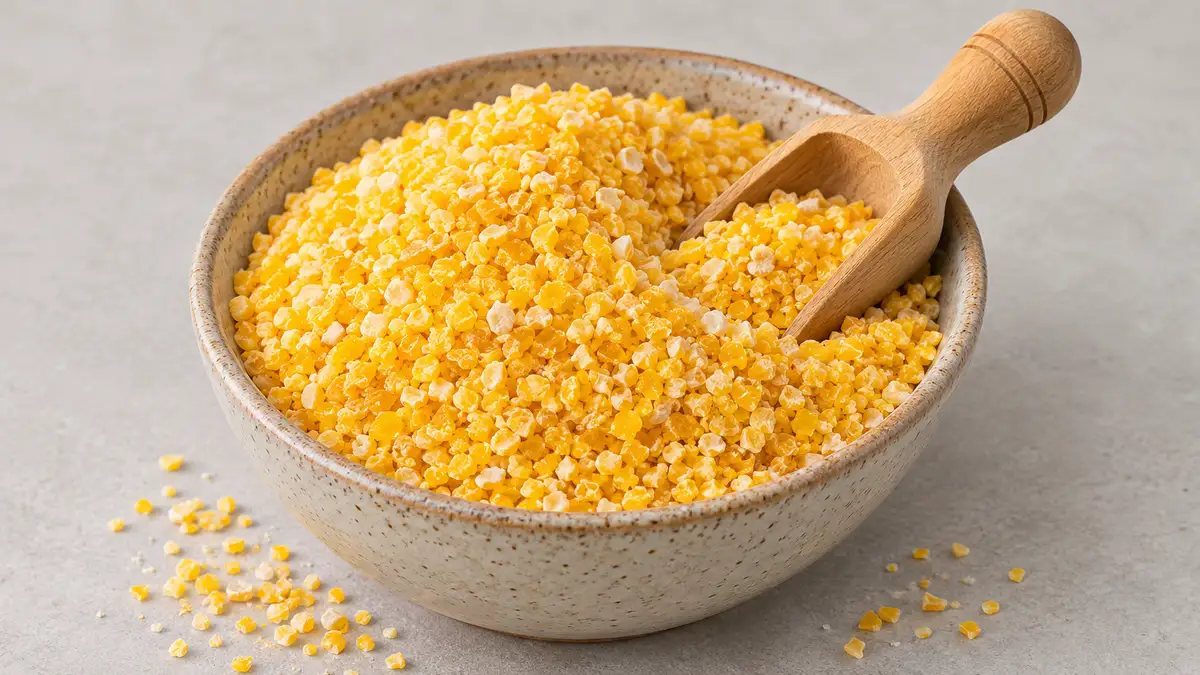
Maize-grits duty and import controls
Heading 1103 covers cereal groats, meal and pellets. This guide concerns maize grits for food use. Read from the UK Trade Tariff on 29 September 2026, the supplied data lists £144.00 per 1000kg for 1103 13 10 00 and £82.00 per 1000kg for 1103 13 90 00. These are duties by weight, rather than percentages.
The supplied maize lines show no anti-dumping or countervailing duty and no suspension. Both attach an organic import control. Organic maize grits from China require a Great Britain certificate of inspection, and the importing company must be based and certified in the UK. Confirm the arrangements with your organic control body and customs broker before shipment.
Give your broker the milling description, ingredients and batch fat analysis, then confirm the commodity code. A supplier's description of degerminated grits does not establish the measured fat content. For the wider product family, see cereal groats and meal.
| Goods | Commodity code | Duty | Anti-dumping or countervailing duty on China |
|---|---|---|---|
| Maize grits with fat content not exceeding 1,5 % by weight | 1103 13 10 00 | £144.00 per 1000 kg | None |
| Other maize grits | 1103 13 90 00 | £82.00 per 1000 kg | None |
Specify the grind and intended cooking use
Agree maize colour, whether the germ is removed, particle-size distribution, moisture specification and acceptable fines. State whether the grits will be cooked directly or used in another manufacturing process. Approve a retained sample and a cooking trial that checks texture, water absorption and consistency.
Request batch analysis for fat and moisture, and agree a contaminant-testing plan with your laboratory. UK rules cover aflatoxin and fusarium-toxin contamination in cereals. Ask the mill about shared equipment, cleaning between crops and protection against wheat contamination. Use testing and certification support to define the evidence needed for your intended food use.
Inspection checklist
Grind: compare the delivered particle-size distribution, colour and fines with the approved sample; repeat the cooking trial.
Condition: check for damp bags, caking, insects, foreign matter and stale or rancid odours; keep affected stock separate while investigating.
Batch evidence: match bag identification to the mill's analysis and laboratory samples; check that fat and moisture results describe the delivered batch.
Packaging: inspect liners, seams and seals. For retail packs, check artwork against the food-labelling requirements, including applicable date information, lot identification, storage instructions and business details.
What goes wrong
A sample with a uniform grind can be followed by a batch containing more fines, changing the cooking texture. Residual germ, moisture and poor storage can also produce inconsistent or stale stock. Agree acceptance criteria before production and compare arrival samples with the retained approval sample.
A generic analysis sheet may describe another batch. Appearance alone cannot replace agreed contaminant testing. Organic wording also creates a separate paperwork issue: resolve certification and the certificate of inspection before dispatch rather than relying on the factory's packaging claim.
Cambridge China Bridge sources these products for UK businesses, checking the factory and the documents before shipment. See factory verification. For repeat volumes, see container programmes.
Frequently asked questions
What is the UK import duty on maize grits from China?
The supplied tariff data lists £144.00 per 1000kg for 1103 13 10 00 and £82.00 per 1000kg for 1103 13 90 00. Classification depends on fat content.
Can I import organic maize grits from China?
Organic imports require a Great Britain certificate of inspection. Your company must be based and certified in the UK. Confirm the product and shipment arrangements with your organic control body before ordering.
What should I specify when ordering maize grits?
Agree colour, germ removal, particle-size distribution, moisture, fines, packaging and intended cooking use. Approve a retained sample and request analysis that identifies the production batch.
Do maize grits normally need a health certificate?
Official cereal-import guidance says these products do not normally need a health certificate. This does not remove food-hygiene obligations or the separate organic import control.