Sourcing luggage packing cubes from China
Luggage packing cubes from China have candidate UK duty rates of 2% for textile outer surfaces and 8% for plastic sheeting. Confirm the finished construction and outer surface before choosing a code; consumer products sold in Great Britain must be safe. Cambridge China Bridge sources luggage packing cubes.
Buying from China for a business? How our UK China sourcing agent service works · China sourcing agent for small orders and first imports
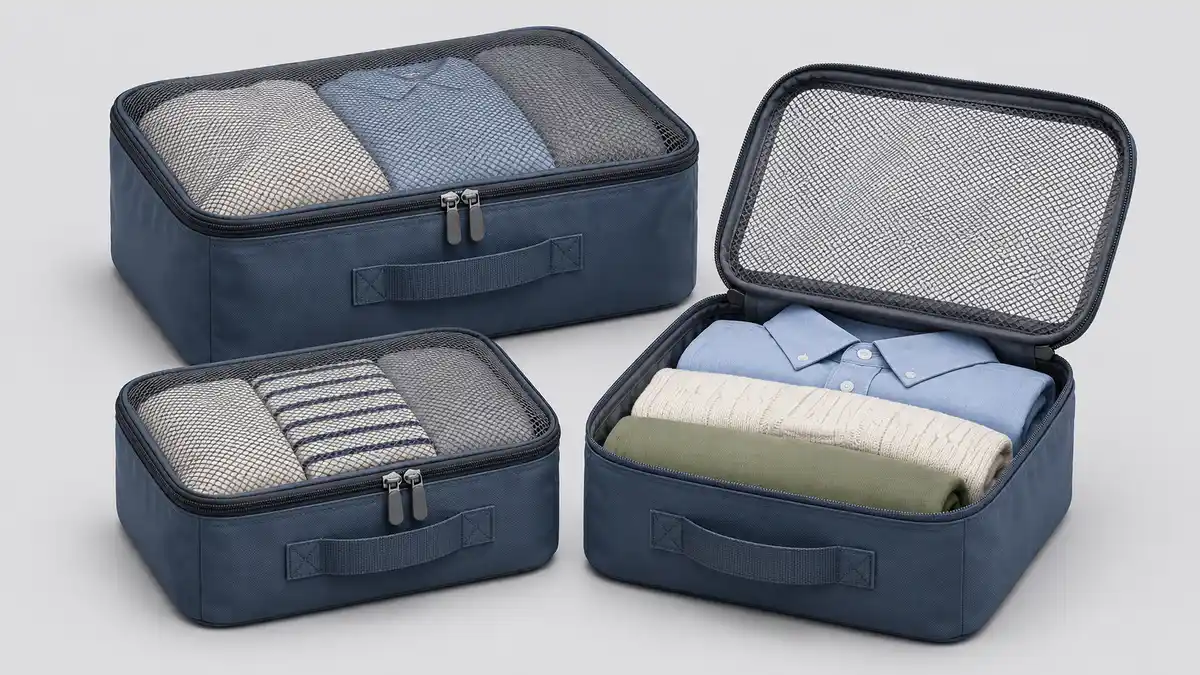
Packing cube duty depends on the outer surface
Read from the UK Trade Tariff on 28 October 2026, heading 4202 covers travel bags and similar containers. For packing cubes, the table compares other-container lines with travel-bag alternatives where the finished construction qualifies. These are candidate classifications, rather than interchangeable codes. See own-label luggage for the wider heading.
The selected textile lines carry 2% duty on goods from China, and plastic-sheeting lines carry 8%. The supplied tariff record shows no anti-dumping or countervailing duty and no suspensions for these lines. Import VAT is 20%. The textile lines carry CITES import and export controls; confirm the applicable declaration or permit requirement with your customs broker.
If animal-derived trim is proposed, check the species and any CITES permits before ordering. Leather lines elsewhere in this heading also carry cat and dog fur and seal-product controls: cat and dog fur imports are banned, while seal products face a ban with limited exemptions. Give your broker the finished sample, outer-material specification and coating details to confirm the commodity code.
| Goods | Commodity code | Duty | Anti-dumping or countervailing duty on China |
|---|---|---|---|
| Textile packing cubes, other-container candidate | 4202 92 98 90 | 2% | None |
| Plastic-sheeting packing cubes, other-container candidate | 4202 92 19 00 | 8% | None |
| Textile travel-bag candidate, if the finished design qualifies | 4202 92 91 90 | 2% | None |
| Plastic-sheeting travel-bag candidate, if the finished design qualifies | 4202 92 11 00 | 8% | None |
Specify usable space and compression construction
Specify each cube's finished dimensions when filled, its opening shape, mesh position, lining, seam binding and handle attachment. For sets, list the size and colour of every component and whether the invoice counts individual cubes or complete sets. Approve a sample packed with the clothing the buyer intends to store.
For compression cubes, distinguish the closing zip from the compression zip. Agree how the fabric is kept clear of the slider, how the corners fold and what packed load the sample must withstand. Record the acceptance criteria before production; squeezing an empty sample does not show how the seams behave when filled.
Consumer packing cubes sold in Great Britain must be safe in normal or reasonably foreseeable use. Check for sharp zip pulls, exposed hardware and detachable trim during sample approval. Retain the approved sample and inspection records, and arrange material-specific checks through testing and certification.
Worked duty example
Illustrative example, not a quote: Illustrative order: 2,000 textile luggage packing cubes under 4202 92 98 90, invoiced at £6,000 free on board, with £400 of freight and insurance to the UK. The customs value is £6,400. Duty at 2% is £128. Import VAT at 20% is charged on the customs value plus duty, £6,528, so it is £1,305.60. Import taxes total £1,433.60; a VAT-registered importer can usually reclaim the VAT, so the lasting cost is the £128 of duty. The import duty and VAT guide explains each step.
Inspection checklist
Materials: compare bulk fabric, mesh, coating and lining with the approved sample. Fold coated panels and rub printed areas to check for cracking, peeling and colour transfer.
Zips and seams: fill the cube with the agreed clothing load, close it and operate any compression zip. Check for trapped fabric, separating zip teeth, opening seams and mesh pulling away beside the stitching.
Set contents: unpack complete retail sets and check component sizes, colours, labels and packing against the order. Measure usable space after filling, rather than relying on flat panel measurements.
Arrival condition: check cartons and inner packs for moisture, mould, persistent odour and print transfer. Photograph affected goods before repacking and retain examples; see quality inspection.
Working out your own order? Send us the product on WhatsApp and we reply the same working day: WhatsApp us
What goes wrong
A compression cube can look correct while empty but split at a corner when packed. Narrow seam allowances, loose mesh edges and zip tape caught in the stitching are useful inspection targets. Test the assembled cube with clothing inside, including the compression operation.
Sets also fail through missing sizes, inconsistent colours and substituted lining. A coated fabric description can leave the outer surface unclear for classification. Settle the material construction before approving packaging or accepting the production sample.
Cambridge China Bridge sources these products for UK businesses, checking the factory and the documents before shipment. See factory verification. For own-brand ranges, see sourcing for brands.
Frequently asked questions
What is the UK import duty on packing cubes from China?
The selected candidate lines carry 2% for textile outer surfaces and 8% for plastic sheeting, with no anti-dumping or countervailing duty or suspensions shown. Import VAT is 20%.
Which commodity code should I use for luggage packing cubes?
4202 92 98 90 is a candidate for textile other containers. Travel-bag construction or a plastic-sheeting outer can change the line. Ask your broker to classify the finished sample.
How should I test compression packing cubes?
Fill the approved sample with the agreed clothing load, close it and operate the compression zip. Check corner seams, zip teeth, trapped fabric and mesh attachment against written acceptance criteria.
Do fabric packing cubes need a CITES permit?
The tariff attaches a CITES control to the selected textile lines. Plain synthetic fabric does not itself imply a listed species. Confirm the declaration with your broker and check any animal-derived trim before ordering.