Sourcing live mud crabs from China
Live mud crabs under 0306 33 90 00 carry 6% UK duty from China; heading 0306 spans 6% to 18%. For food use, confirm country and establishment approval, health certification, pre-notification and the border route before ordering. Cambridge China Bridge sources live mud crabs.
Buying from China for a business? How our UK China sourcing agent service works · China sourcing agent for small orders and first imports
6% duty on the live mud crab line
Read from the UK Trade Tariff on 5 October 2026, live mud crabs fall within the other live, fresh or chilled crab line, 0306 33 90 00, carrying 6% duty from China. The supplied line records no anti-dumping or countervailing duty and no suspension. Heading 0306 covers crustaceans in several conditions. The buying specifications in the table share the same code; they are not separate tariff subdivisions.
The line carries veterinary, illegal fishing, organic and invasive alien species import controls. Ask port health or your customs broker to confirm the applicable health certificate, pre-notification, border control post route and veterinary entry document, including whether a Common Health Entry Document is needed. Confirm catch-certification requirements for wild-caught marine crabs and any aquaculture exemption. For organic food from China, confirm whether a certificate of inspection is required for each consignment. The tariff also attaches an invasive-species control: confirm its applicability and any permit requirement with your customs broker.
Confirm the scientific species, live condition and intended food use before agreeing the declaration. A tariff code does not establish permission to import. Ask port health to confirm approval for the exact Chinese source and product, including whether it is farmed or wild-caught. Use our commodity code guide. For the wider crab heading and frozen purchases, see frozen crab sections.
| Goods | Commodity code | Duty | Anti-dumping or countervailing duty on China |
|---|---|---|---|
| Live mud crabs, male | 0306 33 90 00 | 6% | None |
Specify species, live condition and payable weight
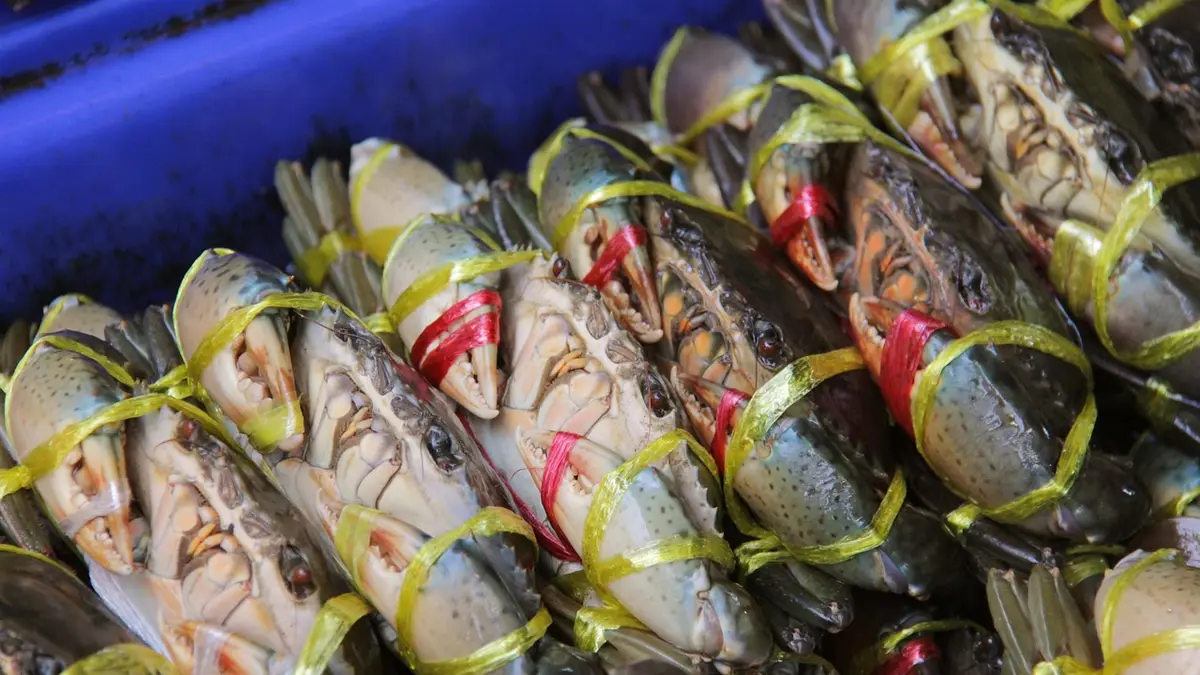
Specify the scientific species rather than accepting only “mud crab” on the offer. Agree farmed or wild origin, male or female selection, individual weight grade, shell hardness, intact claws and legs, and acceptable condition on arrival. Keep photographs showing the agreed grading and packing.
Define payable net crab weight separately from ties, absorbent material and packaging. Agree how arrival weight and mortality will be recorded, who assesses disputed crabs and what evidence supports a claim. Set species-specific handling and holding instructions with the supplier and receiving seafood operator.
These border instructions concern Great Britain; confirm Northern Ireland arrangements separately. Before booking freight, match the source establishment, species and consignment description across the proposed documents. Food business operators are responsible for ensuring their products do not pose a public health risk.
Worked duty example
Illustrative example, not a quote: Illustrative small-business airfreight consignment of live mud crabs under 0306 33 90 00, invoiced at £4,000 free on board, with £1,500 of freight and insurance to the UK. The customs value is £5,500. Duty at 6% is £330. Import VAT at 20% is charged on the customs value plus duty, £5,830, so it is £1,166. Import taxes total £1,496; a VAT-registered importer can usually reclaim the VAT, so the lasting cost is the £330 of duty. The import duty and VAT guide explains each step. This assumes the goods are standard-rated for VAT. Most food for human consumption is zero-rated, and animal feed can be too, in which case no import VAT is due, so check the rate for your product in HMRC's VAT Notice 701/14.
Inspection checklist
Identity: compare the scientific species, source, sex selection and batch markings with the purchase specification and documents.
Vitality and damage: record responsive, weak and dead crabs separately on arrival; photograph cracked shells, missing claws and other damage before mixing batches.
Weight and grade: weigh crabs separately from ties and packing, and compare individual weights with the agreed grade.
Packing and handling: inspect restraints, ventilation, moisture and crushed packs; compare transport records and receiving arrangements with the agreed handling instructions.
Working out your own order? Send us the product on WhatsApp and we reply the same working day: WhatsApp us
What goes wrong
An attractive weight grade can conceal heavy ties, mixed sizes or poor shell condition. Weak crabs may arrive alive but leave little time for sale. Agree the arrival assessment and claim procedure before dispatch, and retain batch photographs and handling records. Our inspection guide explains how to organise checks.
A common seafood name can hide a species mismatch, while inconsistent source details can disrupt clearance. Check scientific identity before treating the invasive-species control as irrelevant. Listed invasive alien animals cannot ordinarily be sold in England and Wales. Resolve the species, approval and document questions before committing to a live shipment.
Cambridge China Bridge sources these products for UK businesses, checking the factory and the documents before shipment. See factory verification. For repeat volumes, see container programmes.
Frequently asked questions
What is the UK import duty on live mud crabs from China?
The supplied tariff line 0306 33 90 00 carries 6% duty from China, with no recorded anti-dumping or countervailing duty or suspension.
Can I import live mud crabs from China for food?
Confirm approval for the exact species, Chinese source establishment and product with port health before ordering. A listed tariff code alone does not establish permission to import.
Do live mud crabs need a catch certificate?
For wild-caught marine crabs, ask your broker or port health authority to confirm whether catch certification is required. For farmed stock, ask them to confirm whether an aquaculture exemption applies.
How should I check live mud crabs on arrival?
Record vitality, mortality, shell damage, individual weight grades and net crab weight separately from ties and packing. Photograph findings before mixing batches.