Sourcing edible seafood meal from China
Edible seafood flours, meals and pellets from China carry UK duty of 10% to 12%. Specify material fit for human consumption and check the plant approval, health documentation and border route before ordering. Cambridge China Bridge sources edible seafood meal.
Buying from China for a business? How our UK China sourcing agent service works · China sourcing agent for small orders and first imports
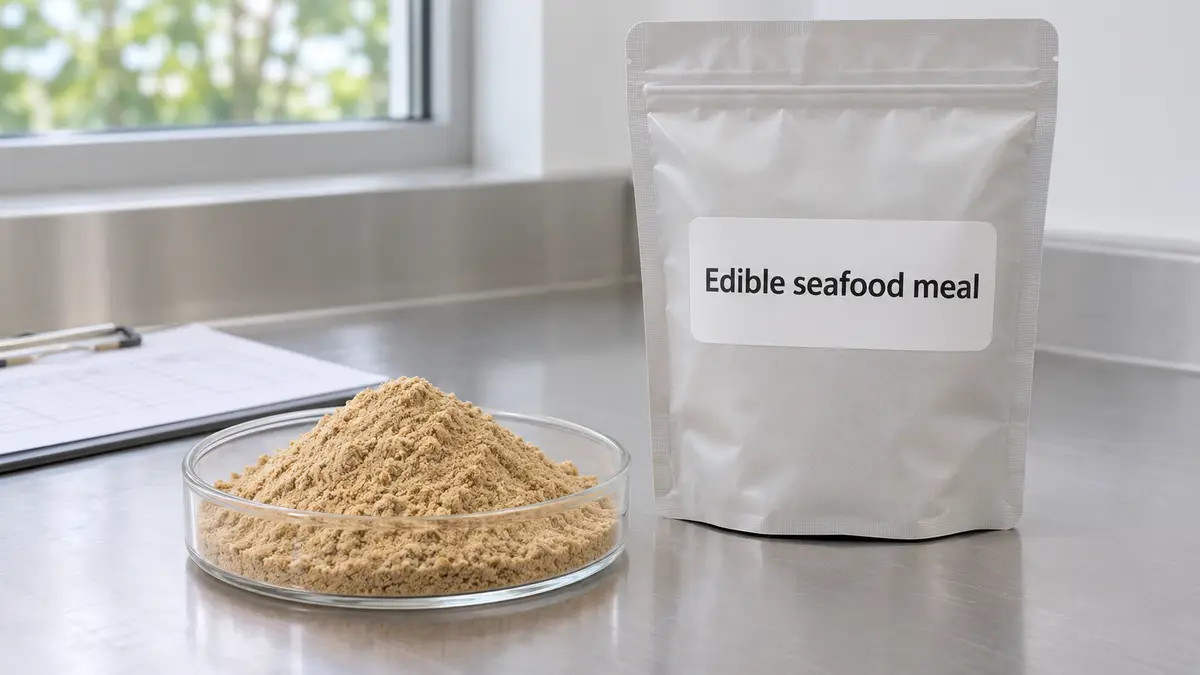
10% to 12% duty by source material
Read from the UK Trade Tariff on 29 September 2026, heading 0309 covers flours, meals and pellets of fish, crustaceans, molluscs and other aquatic invertebrates fit for human consumption. Fish lines carry 12% duty from China; the other lines carry 10%. The supplied tariff record shows no anti-dumping or countervailing duty and no suspensions.
The tariff attaches organic import controls throughout and veterinary control to the non-fish lines. Ask your customs broker or the relevant authority to confirm establishment approval, health documentation and advance notification requirements for the exact fishery product. Consignments must enter through a border control post approved for the commodity. For organic goods, the exporter’s control body issues the inspection certificate; confirm the tariff’s organic release requirements with your customs broker.
Give your broker the scientific species name, ingredients, processing method, physical form and storage condition. Confirm the commodity code before ordering, especially where a supplier describes feed material as edible meal. Ask the broker to confirm China-specific eligibility and documentation for the exact product.
| Goods | Commodity code | Duty | Anti-dumping or countervailing duty on China |
|---|---|---|---|
| Edible trout flour, meal and pellets | 0309 10 00 10 | 12% | None |
| Edible carp flour, meal and pellets | 0309 10 00 20 | 12% | None |
| Other edible fish flour, meal and pellets | 0309 10 00 90 | 12% | None |
| Frozen edible crustacean flour, meal and pellets | 0309 90 00 11 | 10% | None |
| Other edible crustacean flour, meal and pellets | 0309 90 00 15 | 10% | None |
| Frozen edible mollusc flour, meal and pellets | 0309 90 00 23 | 10% | None |
| Other edible mollusc flour, meal and pellets | 0309 90 00 25 | 10% | None |
Specify food-grade seafood powder
State the species and raw-material source, whether farmed or wild, and whether the product is flour, coarse meal or pellets. Record any carriers, salt, additives and blended species. Agree particle size, moisture, fat content, odour, colour and the intended use in your recipe.
Ask for a production flow showing cooking, drying, milling and packing. Agree sealed food-contact packaging, storage instructions and batch identification. Compare samples in the intended application for dispersibility, grittiness and flavour. Use factory verification to check the actual processing site.
Worked duty example
Illustrative example, not a quote: Illustrative order: 2 tonnes of edible fish meal under 0309 10 00 90, invoiced at £16,000 free on board, with £1,500 of freight and insurance to the UK. The customs value is £17,500. Duty at 12% is £2,100. Import VAT at 20% is charged on the customs value plus duty, £19,600, so it is £3,920. Import taxes total £6,020; a VAT-registered importer can usually reclaim the VAT, so the lasting cost is the £2,100 of duty. The import duty and VAT guide explains each step. This assumes the goods are standard-rated for VAT. Most food for human consumption is zero-rated, and animal feed can be too, in which case no import VAT is due, so check the rate for your product in HMRC's VAT Notice 701/14.
Inspection checklist
Identity: match the species, composition and batch references on the specification, packing list, bags and laboratory reports.
Condition: check arrival packs for punctures, dampness, clumping, mould, insects and rancid odour; compare particle size and colour with the approved sample.
Laboratory checks: agree batch sampling for moisture, fat oxidation and microbiology, with species-specific checks for histamine or contaminants where relevant.
Documents and labels: match plant approval and health documents to the shipment; check English allergen and storage information against the composition. Keep inspection records using the quality inspection guide.
Working out your own order? Send us the product on WhatsApp and we reply the same working day: WhatsApp us
What goes wrong
A supplier’s fish-meal specification may describe feed material rather than food-grade production. A powder can also conceal a species substitution or undeclared carrier. Compare the production records, composition and batch test results before accepting the lot.
Poor drying or damaged liners can leave powder damp and clumped; fat oxidation can produce a rancid flavour. Hold affected stock while investigating. Resolve mismatched plant details or shipment documents before dispatch, and confirm organic paperwork before accepting an organic claim.
Cambridge China Bridge sources these products for UK businesses, checking the factory and the documents before shipment. See factory verification. For repeat volumes, see container programmes.
Frequently asked questions
What is the UK import duty on edible seafood meal from China?
The supplied tariff record shows 12% for edible fish flour, meal and pellets, and 10% for crustacean, mollusc and other aquatic invertebrate products, with no trade remedy or suspension.
Can I use an ordinary feed-grade fish-meal supplier?
Specify production for human consumption and verify the processing site, raw materials and batch evidence. A feed specification does not establish suitability for a food ingredient.
Does edible seafood meal need border checks?
Ask your broker or the relevant authority to confirm establishment approval, health documentation and advance notification requirements for the exact fishery product. Confirm the exact route with your broker.
What should I check before buying organic seafood meal?
The tariff attaches organic import controls. The exporter’s control body issues the inspection certificate. Confirm the applicable organic documentation and release requirements with your customs broker before shipment.