Sourcing lithium jump starters from China
Lithium jump starters have a candidate UK duty of 2% under the other lithium-ion accumulator line; selected cells and parts also carry 2% before any qualifying suspension. Battery marking and dangerous-goods transport rules apply. Confirm the complete unit's classification and test its starting performance. Cambridge China Bridge sources lithium jump starters.
Buying from China for a business? How our UK China sourcing agent service works · China sourcing agent for small orders and first imports
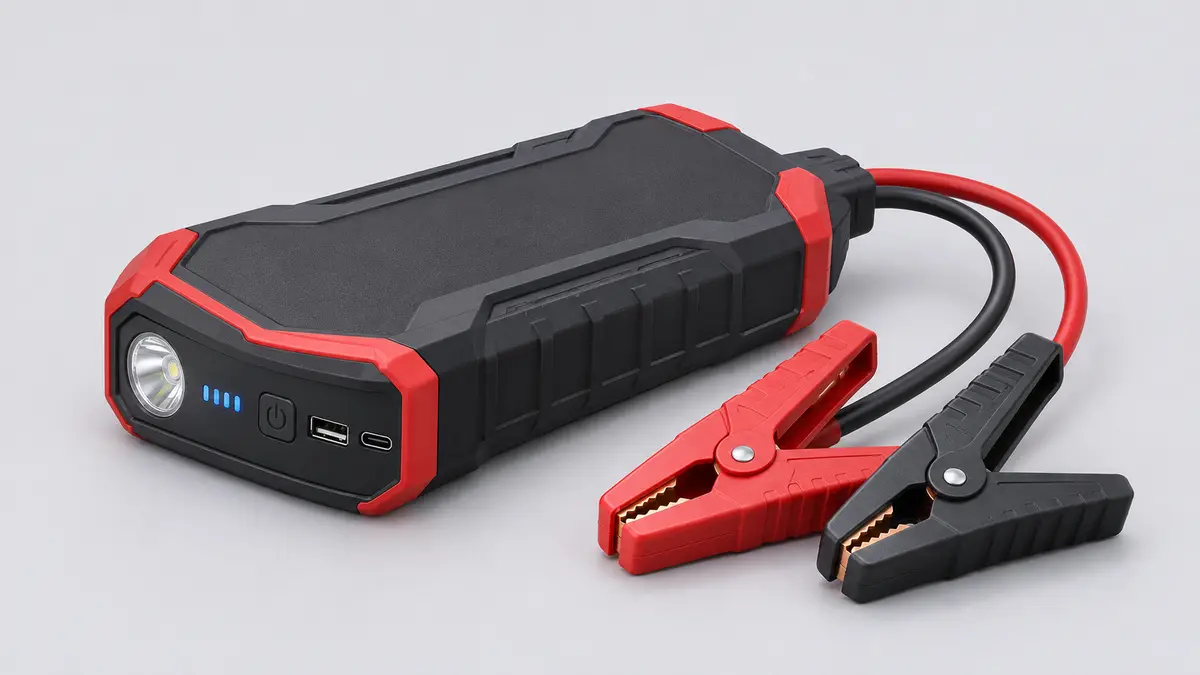
Duty on lithium jump starters and components
Read from the UK Trade Tariff on 5 December 2026, heading 8507 covers electric accumulators and their separators. The candidate line for an ordinary lithium-ion jump starter is 8507 60 00 90, carrying 2% duty from China. The selected cells and parts also carry 2% before any qualifying suspension. No anti-dumping or countervailing duty is recorded on these lines.
The listed suspensions are restricted to specified products, with authorised-use conditions on some measures. Do not assume a complete jump starter qualifies. Some supplied suspension notes are truncated or contain an unrelated aluminium description; ask your broker to verify the full measure. The selected lines attach mercury export control. Official mercury-added-product controls concern intentionally added mercury. Obtain a composition declaration and ask your broker to confirm any relevant customs requirement.
Confirm the commodity code from the chemistry, construction, functions and supplied accessories. The component rows concern separately imported manufacturing inputs, not alternative codes for complete jump starters; check the cylindrical-cell line's detailed conditions. For the wider heading, see lithium batteries and battery packs.
| Goods | Commodity code | Duty | Anti-dumping or countervailing duty on China |
|---|---|---|---|
| Other lithium-ion packs: candidate for complete lithium jump starters | 8507 60 00 90 | 2% | None |
| Cylindrical cells for battery manufacture, subject to the specified dimensions | 8507 60 00 30 | 2% | None |
| Other accumulator separators, imported separately for cell manufacture | 8507 90 39 90 | 2% | None |
| Other accumulator parts, subject to the component specification | 8507 90 80 90 | 2% | None |
Specify starting performance and clamp protection
Specify the intended vehicle electrical system, engine types, cell maker, cell model and battery chemistry. Agree starting current, pulse duration, recovery interval, state of charge and ambient temperature for acceptance testing. Require usable energy and capacity results with their measurement conditions. A peak-current label alone does not define a repeatable starting test.
Fix cable conductor material, conductor cross-section, cable length, clamp opening, insulation and connector retention. Agree reverse-polarity detection, short-circuit response, temperature protection and the behaviour of any manual override. Test faults through a suitable laboratory. Include the charging input, supplied charger, storage instructions and replacement-clamp arrangement in the specification.
A finished product must comply with all applicable legislation before placement on the Great Britain market. Ask a suitable laboratory to assess the complete unit and any supplied mains charger. Confirm with the relevant authority whether the crossed-out wheeled bin mark is required, whether a UK business first supplying imported batteries is a battery producer, and which category and registration route apply before selling. Confirm separately the battery market rules for Northern Ireland. Arrange testing and certification around the exact supplied model.
Worked duty example
Illustrative example, not a quote: Illustrative order: 200 lithium jump starters, subject to classification under 8507 60 00 90, invoiced at £12,000 free on board, with £600 of freight and insurance to the UK. The customs value is £12,600. Duty at 2% is £252. Import VAT at 20% is charged on the customs value plus duty, £12,852, so it is £2,570.40. Import taxes total £2,822.40; a VAT-registered importer can usually reclaim the VAT, so the lasting cost is the £252 of duty. The import duty and VAT guide explains each step.
Inspection checklist
Identity: match cell and pack models, clamp assemblies, charger details and batch records to the approved sample; record substitutions.
Starting performance: witness the agreed starting or load test, recording charge condition, temperature, voltage drop, pulse duration and cable heating.
Protection: have the laboratory verify polarity detection, fault response, charging protection and manual-override behaviour against the approved design.
Arrival: check for swelling, damaged housings, loose connectors, crushed cartons and exposed clamp metal. Compare battery markings and instructions with approved artwork. Use quality inspection to set the acceptance plan.
Working out your own order? Send us the product on WhatsApp and we reply the same working day: WhatsApp us
What goes wrong
Capacity stated at cell voltage can be mistaken for capacity available at the starting output. A large peak-current claim can also conceal voltage collapse, hot cables or weak clamps under load. Compare suppliers using the same test conditions, including cold conditions if that is part of the intended use, and prohibit unapproved changes to cells, cables and protection electronics.
A transport report for a different cell or pack does not establish that the supplied model is covered. Ask the relevant transport authority or customs broker to confirm the dangerous-goods classification of the lithium batteries. Obtain the exact cell and pack transport test summaries, safety data sheet and energy rating, and agree packaging and carrier acceptance before booking. Keep swollen or damaged arrivals out of use pending assessment.
Cambridge China Bridge sources these products for UK businesses, checking the factory and the documents before shipment. See factory verification. For components and parts, see sourcing for manufacturers.
Frequently asked questions
What is the UK import duty on lithium jump starters from China?
The candidate line 8507 60 00 90 carries 2%, with no anti-dumping or countervailing duty recorded. Suspensions are narrowly defined; confirm the complete unit's classification and eligibility.
How do I check a lithium jump starter's peak-current claim?
Agree current, pulse duration, charge condition, temperature and acceptable voltage drop. Witness a repeatable starting or load test with the supplied cables and clamps.
Am I a battery producer if I import jump starters?
If your business has a UK presence and first makes the imported batteries available on the UK market, confirm with the relevant authority whether you are a battery producer. Confirm the battery category and registration route rather than relying on the product's name.
What shipping documents should I request?
Request transport test summaries matching the exact cells and pack, the safety data sheet and energy rating. Ask the forwarder to confirm dangerous-goods classification, packaging and carrier acceptance.