Sourcing leather tap shoes from China
Leather tap shoes from China carry 4% to 8% duty across the candidate lines shown here. Confirm the code against the upper, outer sole, vamp design and insole length, and provide the required footwear composition label. Approve fit and tap attachment on production samples. Cambridge China Bridge sources leather tap shoes.
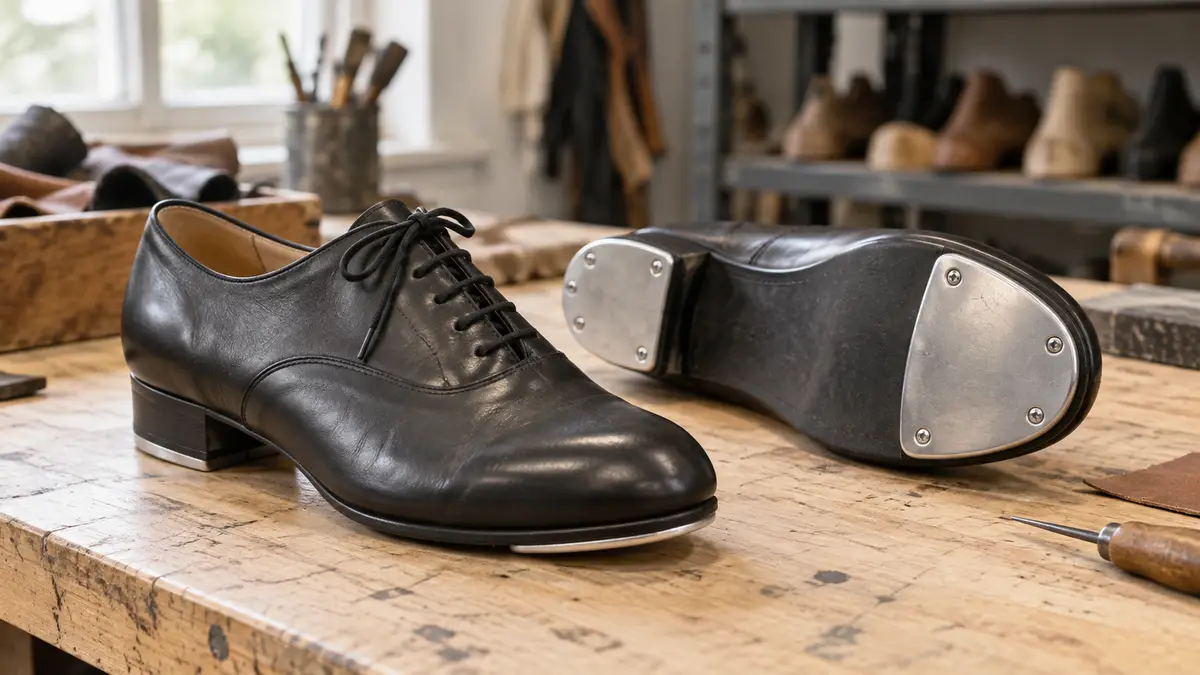
Duty and classification for leather tap shoes
Heading 6403 covers footwear with leather uppers and outer soles of rubber, plastics, leather or composition leather. The rows are candidate descriptions for tap shoes, rather than a code for every style. Record the sole construction beneath the taps, ankle coverage, vamp design, intended wearer and measured insole length. For the wider heading, see leather ballet flats. For golf footwear, see our leather golf shoe sourcing guide. For football footwear, see sourcing leather football boots.
Read from the UK Trade Tariff on 29 September 2026, the selected lines carry 4% to 8% duty for goods from China, with no anti-dumping or countervailing duty and no suspension recorded. They attach CITES and seal-product import controls. CITES-listed leather needs the applicable permit checks. Commercial seal products are restricted to qualifying indigenous hunts and require a seal catch attestation. Confirm applicability and declaration documents with your customs broker.
Ask the factory for material declarations, construction photographs and insole measurements before confirming the commodity code. The tariff also attaches cat and dog fur controls to some leather-soled lines; importing or selling cat and dog fur products is prohibited. Specify the animal species for uppers, linings and trims rather than accepting a description of genuine leather.
| Goods | Commodity code | Duty | Anti-dumping or countervailing duty on China |
|---|---|---|---|
| Closed leather upper, rubber/plastic sole, insole under 24 cm, below ankle | 6403 99 91 90 | 8% | None |
| Men's closed leather upper, rubber/plastic sole, insole 24 cm or more, below ankle | 6403 99 96 90 | 8% | None |
| Women's strap/cut-out leather upper, rubber/plastic sole, insole 24 cm or more | 6403 99 38 00 | 4% | None |
| Closed leather upper and leather sole, insole under 24 cm, below ankle | 6403 59 91 00 | 8% | None |
Specify the leather, last and tap assembly
Specify leather species, finish, lining, sole material, heel construction and fastening. Agree the tap material, shape, mounting position, attachment method and replacement arrangement. Keep an approved assembled sample so the factory cannot substitute a different tap or heel block without review.
Agree the size allocation and a measurement sheet covering internal length, forefoot width and heel fit. Have dancers assess the sample on the intended floor, including comfort, sound and control. Check the composition label against the agreed upper, lining and sock, and outer sole materials; confirm the applicable component labelling requirements for UK sale with the relevant authority.
Worked duty example
Illustrative example, not a quote: Illustrative order: 80 pairs of leather tap shoes across an agreed size run; FOB and freight in whole pounds under 6403 99 91 90, invoiced at £1,995 free on board, with £135 of freight and insurance to the UK. The customs value is £2,130. Duty at 8% is £170.40. Import VAT at 20% is charged on the customs value plus duty, £2,300.40, so it is £460.08. Import taxes total £630.48; a VAT-registered importer can usually reclaim the VAT, so the lasting cost is the £170.40 of duty. The import duty and VAT guide explains each step.
Inspection checklist
Fit: compare production pairs with the approved last and measurement sheet; check matched sizes, heel retention and fastening adjustment.
Taps: check mounting position, secure fixings, sharp edges and protruding screws; compare sound and attachment after repeated tapping with the approved sample.
Construction: inspect heel stability, sole bonding, stitching and lining; flex production samples and look for lifting or movement around the tap mounts.
Labels and packing: match composition labels to the materials, pair left and right shoes correctly, and check for damp boxes, mould, colour transfer and scuffed taps.
Working out your own order? Send us the product on WhatsApp and we reply the same working day: WhatsApp us
What goes wrong
A tap can sound acceptable during a brief sample demonstration but loosen when its screws bite into a weak sole or heel block. Ask the factory to show the mounting construction and assess repeated use on production pairs. Treat heel movement, loose taps and protruding fixings as defects requiring correction before shipment.
A familiar size label can hide a narrow last or inconsistent internal length. Check the size run rather than approving fit from a single sample. Leather finish, lining or sole substitutions can also change feel, labelling and classification. Record changes against the approved specification and use quality inspection to define the checks.
Cambridge China Bridge sources these products for UK businesses, checking the factory and the documents before shipment. See factory verification. For own-brand ranges, see sourcing for brands. For trade in the opposite direction, see exporting UK leather shoes to China.
Frequently asked questions
What is the UK import duty on leather tap shoes from China?
The selected candidate lines carry 4% to 8% duty, with no trade remedy or suspension recorded. The correct rate depends on the finished shoe's construction and commodity code.
What labels do leather tap shoes need?
Confirm with the relevant authority how UK footwear composition labels should identify the upper, lining and sock, and outer sole materials. Agree the label artwork with the factory and check it against production materials.
How do I check that the taps will stay attached?
Review the sole and heel mounting construction, inspect fixings for security and protrusion, and assess repeated tapping on production pairs against the approved sample.
Can I use the factory's usual size chart?
Use it only after checking internal measurements and fit with your intended wearers. Agree a measurement sheet and assess the size run before approving production.