Sourcing Leather Guitar Straps from China
Leather guitar straps from China have a flat 2% UK duty under the candidate code 4205 00 90 00, with no trade remedies or suspensions recorded. Ask HSE to confirm applicable UK REACH chemical restrictions for skin-contact leather. Specify the leather and test the strap ends on the intended fittings. Cambridge China Bridge sources leather guitar straps.
Buying from China for a business? How our UK China sourcing agent service works · China sourcing agent for small orders and first imports
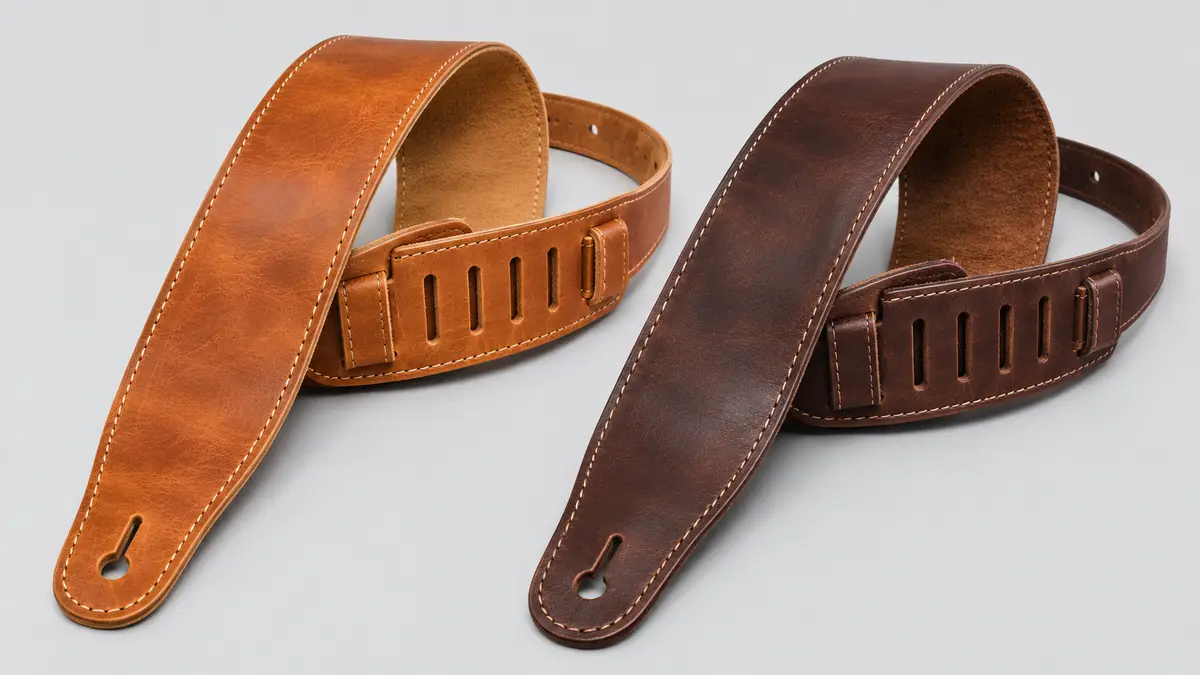
A flat 2% duty for leather guitar straps
Read from the UK Trade Tariff on 1 October 2026, heading 4205 covers other articles of leather or composition leather. The candidate line for leather guitar straps is 4205 00 90 00, carrying 2% duty on goods from China, with no anti-dumping or countervailing duty and no suspension recorded. The table shows strap variants sharing this candidate line. See our wider leather small-goods guide.
The tariff attaches CITES, cat and dog fur, and seal-product import controls. Check the animal species before ordering: CITES-listed species can require permits. Imports of cat and dog fur, including products made from it, are banned. Seal products brought into Great Britain for trade must have a seal catch certificate. Specify the animal species and exclude cat and dog fur and seal material from the order.
The tariff also attaches veterinary control and an import prohibition concerning goods for torture and repression. Ask your customs broker to confirm whether these measures apply to the finished straps and what documents or declarations are required for the China shipment. Provide the material breakdown, species, tanning details and product photographs when confirming your commodity code.
| Goods | Commodity code | Duty | Anti-dumping or countervailing duty on China |
|---|---|---|---|
| Plain leather guitar straps | 4205 00 90 00 | 2% | None |
Specify the leather and the guitar fittings
Specify the animal species, leather layer, tanning method, thickness, width, usable adjustment range, backing and padding. Give the factory a drawing of the end holes and slots, plus the strap buttons or locking fittings the product must fit. Agree stitching, rivet positions, edge finish and embossing against an approved sample. Make any claim of compatibility specific to the fittings tested.
For leather that touches skin, ask HSE to confirm applicable UK REACH restrictions on chromium VI, certain azo dyes and dimethylfumarate. Request reports matching the actual leather and colours through testing and certification. Keep the material description accurate, distinguishing leather from composition leather and synthetic material.
Worked duty example
Illustrative example, not a quote: 300 plain leather guitar straps, illustrative order under 4205 00 90 00, invoiced at £3,450 free on board, with £420 of freight and insurance to the UK. The customs value is £3,870. Duty at 2% is £77.40. Import VAT at 20% is charged on the customs value plus duty, £3,947.40, so it is £789.48. Import taxes total £866.88; a VAT-registered importer can usually reclaim the VAT, so the lasting cost is the £77.40 of duty. The import duty and VAT guide explains each step.
Inspection checklist
Material: compare the cut edge, backing, thickness and flexibility with the approved sample. Check padding, leather joins and the consistency of the adjustment range.
Attachment: fit the ends to the agreed strap buttons or locks. Use a test fixture with the agreed load and movements; check for hole enlargement, tearing beside the slots and accidental release.
Construction: check stitching, rivets and adjustment slots under load. Look for slipping adjustment, loose threads, sharp hardware and metal that could contact the guitar finish.
Finish: rub the face, backing and edges with dry and damp cloths. Check colour transfer, peeling edge paint, cracked coatings, mould, odour and embossing position. Record defects using an agreed quality inspection brief.
Working out your own order? Send us the product on WhatsApp and we reply the same working day: WhatsApp us
What goes wrong
A strap can look right but release from the guitar when its end hole stretches or the slot tears. Thick ends may also prevent a locking fitting from seating properly. Approve the attachment geometry and loaded assembly together, then compare production samples with that approval.
Other failures include adjustment tails that slip, rivets that pull through thin leather, backing that stains clothing and edge paint that cracks when folded. Material substitutions can change strength and chemical results. Keep the approved sample, material specification and matching reports available when assessing the delivered batch.
Cambridge China Bridge sources these products for UK businesses, checking the factory and the documents before shipment. See factory verification. For own-brand ranges, see sourcing for brands.
Frequently asked questions
What is the UK import duty on leather guitar straps from China?
The candidate code 4205 00 90 00 carries 2% duty on goods from China. The supplied tariff record shows no anti-dumping or countervailing duty and no suspension.
Which commodity code should I use for a leather guitar strap?
4205 00 90 00 is the candidate for the leather straps covered here. Ask your customs broker to confirm it from the finished construction, material breakdown and intended use.
Do leather guitar straps need chemical testing?
Ask HSE to confirm applicable UK REACH restrictions for skin-contact leather, including chromium VI, azo dyes and dimethylfumarate. Request reports for the actual leather and colours covering the applicable restrictions.
How do I check whether a guitar strap will stay attached?
Test the finished ends on the intended buttons or locking fittings using an agreed loaded fixture. Check release, slot tearing, hole enlargement and adjustment slipping after movement.