Sourcing Lap cheong sausages from China
Lap cheong tariff lines carry 14% for liver-based sausages or £84 to £125 per 100 kg for other sausages. Confirm with APHA whether pork Lap cheong from China can enter Great Britain; poultry-only versions also need eligibility checks. Cambridge China Bridge checks whether a product can be imported before any order is placed.
Buying from China for a business? How our UK China sourcing agent service works · China sourcing agent for small orders and first imports
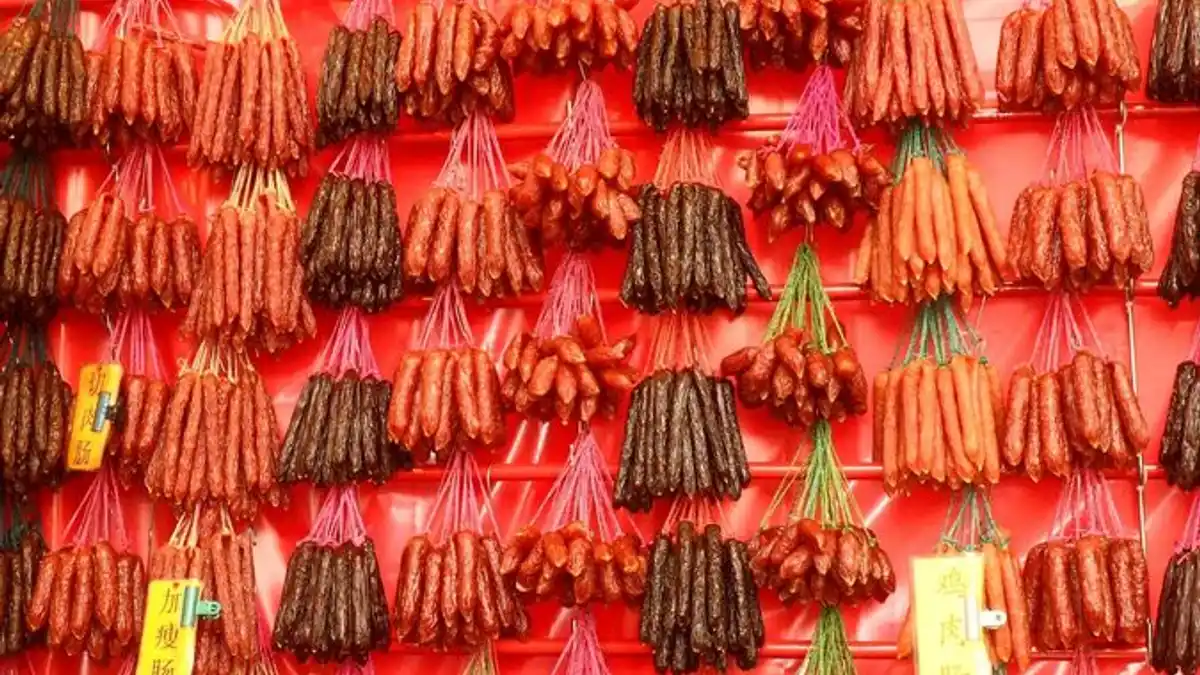
Lap cheong duties and the pork import prohibition
Read from the UK Trade Tariff on 29 September 2026, heading 1601 covers sausages and similar products of meat, offal, blood or insects, and preparations based on them. For Lap cheong, the relevant distinctions include liver-based versus other sausages and dry, uncooked versus other processing. Liver-based lines carry 14%; dry, uncooked lines carry £125.00 per 100 kg; other sausage lines carry £84.00 per 100 kg. The supplied lines show no anti-dumping or countervailing duty and no suspension.
Confirm with APHA whether pork Lap cheong from China can legally enter Great Britain. A tariff code does not provide import permission. Ask APHA whether a poultry meat product falls within an exception to the China prohibition and which import conditions apply. For a poultry-only proposal, confirm country, species, treatment and establishment eligibility before ordering. Eligible meat products need the appropriate health certificate; confirm advance notification and border-check requirements with APHA or your broker. The tariff attaches veterinary control: ask your broker to confirm the common health entry document requirement.
The selected lines also carry organic import and CITES import and export controls. Confirm the CITES requirement with your customs broker; for an organic proposal, confirm certification and the certificate of inspection with your organic control body before ordering. Other sausage lines also carry seal-product controls; ask your broker to confirm applicability if considering those lines. Confirm the commodity code from the complete recipe and processing record. See the wider sausage guide. The worked order is illustrative arithmetic only.
| Goods | Commodity code | Duty | Anti-dumping or countervailing duty on China |
|---|---|---|---|
| Liver-based waxed sausages of chicken, pork and fresh liver, livestock branch | 1601 00 10 11 | 14% | None |
| Other liver-based sausages, livestock branch | 1601 00 10 15 | 14% | None |
| Dry, uncooked waxed sausages of chicken, pork and fresh liver | 1601 00 91 05 | £125.00 per 100 kg | None |
| Other dry, uncooked sausages, livestock branch | 1601 00 91 10 | £125.00 per 100 kg | None |
Specify the meat, drying process and pack
Start with every animal ingredient: lean meat, fat, liver and casing. A poultry description can conceal pork fat or pork liver, so request the complete formulation. Establish import eligibility before approving a production order. For any eligible proposal, specify sweetness, saltiness, wine flavour, fat distribution, casing type and whether the product needs cooking.
Agree sausage size, drying consistency, texture after cooking, net pack weight and vacuum or other packaging. Request processing records and evidence supporting shelf life and storage instructions. Compare samples after cooking by the agreed method. Define how to assess casing splits, loose seals, excess surface oil and uneven drying. Use factory verification to check the proposed manufacturer and records.
Worked duty example
Illustrative example, not a quote: Illustrative wholesale batch of liver-based Lap cheong; arithmetic only, not an authorised China import under 1601 00 10 11, invoiced at £30,000 free on board, with £4,000 of freight and insurance to the UK. The customs value is £34,000. Duty at 14% is £4,760. Import VAT at 20% is charged on the customs value plus duty, £38,760, so it is £7,752. Import taxes total £12,512; a VAT-registered importer can usually reclaim the VAT, so the lasting cost is the £4,760 of duty. The import duty and VAT guide explains each step. This assumes the goods are standard-rated for VAT. Most food for human consumption is zero-rated, and animal feed can be too, in which case no import VAT is due, so check the rate for your product in HMRC's VAT Notice 701/14.
Inspection checklist
Documents: for an eligible shipment, match the full recipe, approved establishment, health certificate and batch identification to the goods.
Pack integrity: inspect vacuum loss, punctures, seal contamination, leakage, damaged casings and visible mould; isolate suspect packs for investigation.
Contents: weigh sampled packs and compare fat distribution, colour, drying consistency and cooked texture with the retained sample.
Labels: check the food name, ingredient list with allergens emphasised, net quantity, date mark, storage instructions and food business name and UK address; check that cooking instructions match the agreed product.
Working out your own order? Send us the product on WhatsApp and we reply the same working day: WhatsApp us
What goes wrong
The first failure is ordering pork Lap cheong because a supplier has found a tariff code. Confirm with APHA whether the product is prohibited from China. A chicken-labelled recipe can also contain pork fat or liver. Obtain the complete formulation and confirm eligibility before committing to production or printed packaging.
Quality disputes arise when drying varies within a batch, fat becomes rancid, casings split or vacuum packs lose their seal. A change in sugar, wine or fat can alter the cooked flavour and texture. Retain approved samples, agree storage and arrival checks, and investigate suspect packs before releasing stock.
Cambridge China Bridge sources these products for UK businesses, checking the factory and the documents before shipment. See factory verification. For repeat volumes, see container programmes.
Frequently asked questions
What is the UK import duty on Lap cheong from China?
Liver-based sausage lines carry 14%; dry, uncooked sausages £125.00 per 100 kg; other sausage lines £84.00 per 100 kg. These rates do not establish import permission; confirm with APHA whether pork Lap cheong from China is eligible.
Can I import pork Lap cheong from China?
Confirm with APHA whether pork Lap cheong from China can legally enter Great Britain before ordering. A commodity code, vacuum pack or supplier certificate does not establish import permission.
Can poultry Lap cheong from China enter Great Britain?
Ask APHA whether the proposed poultry meat product falls within an exception to the China prohibition and which import conditions apply. Confirm the full recipe, species, treatment, country and plant eligibility, health certificate and border arrangements before ordering.
What should I check when Lap cheong arrives?
For eligible goods, check shipment documents, batch markings, seals, vacuum loss, mould, casing damage and net weight. Compare drying, fat distribution and cooked texture with the approved sample.
Sources
- UK Trade Tariff — commodity codes and duty
- Foodstuffs with GB import restrictions
- Importing confectionery: China animal-product prohibition
- Import of meat products for human consumption
- Importing animal products from non-EU countries
- Importing organic food, feed and seed to the UK
- HMRC — Food products (VAT Notice 701/14)