Sourcing knitted baby dresses from China
Knitted baby dresses from China carry 12% UK duty across the relevant lines, with no anti-dumping or countervailing duty recorded. Fibre composition must be labelled; confirm applicable babywear safety requirements with the relevant authority. Specify the knit, size chart and trim attachment, then check washed samples. Cambridge China Bridge sources knitted baby dresses.
Buying from China for a business? How our UK China sourcing agent service works · China sourcing agent for small orders and first imports
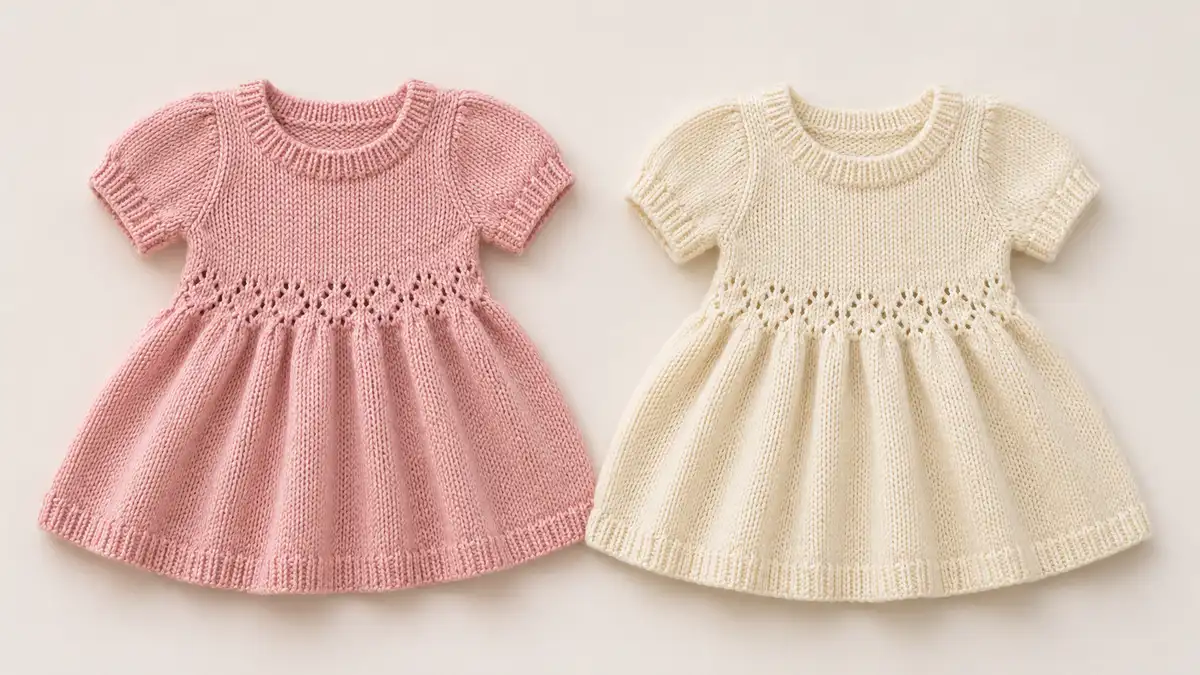
UK duty on knitted baby dresses
Read from the UK Trade Tariff on 30 September 2026, heading 6111 covers knitted or crocheted babies' garments and clothing accessories. The dress lines shown here all carry 12% duty for goods from China. The supplied records show no anti-dumping or countervailing duty and no suspensions. These are garment lines, rather than separate tariff codes exclusively for dresses.
The tariff attaches cat and dog fur and seal product import controls, plus CITES import controls on some animal-hair and other-material lines. Cat and dog fur products cannot be imported or exported. Seal products brought to Great Britain to trade must have a seal catch certificate; ask your customs broker to confirm eligibility under the indigenous communities exemption before ordering. For CITES-listed materials from China, confirm species and applicable documentation with your customs broker before ordering. Cat and dog fur export controls also appear, with CITES export controls on some lines.
Confirm the commodity code using the actual fibre composition, knitted construction and intended wearer. A supplier's description of a garment as a baby dress does not settle classification. For the woven alternative, see woven baby dresses; for broader babywear, see baby clothing.
| Goods | Commodity code | Duty | Anti-dumping or countervailing duty on China |
|---|---|---|---|
| Cotton knitted baby dresses | 6111 20 90 00 | 12% | None |
| Synthetic-fibre knitted baby dresses | 6111 30 90 00 | 12% | None |
| Wool or fine animal hair knitted baby dresses | 6111 90 19 00 | 12% | None |
| Artificial-fibre knitted baby dresses | 6111 90 90 19 | 12% | None |
| Other textile material knitted baby dresses | 6111 90 90 90 | 12% | None |
Specify the knit, dress fit and fastenings
State the fibre blend, knit structure, fabric weight, stretch and lining material. Approve chest width, shoulder width, dress length, sleeve length and neck opening against a graded size chart. Check that the opening allows dressing without excessive stretching. Specify waist gathers, skirt fullness, hem finish and seam placement so the factory can reproduce the approved shape.
Fibre composition must be labelled; confirm applicable durability and legibility requirements with the relevant authority. Agree the wording against the actual materials before production. Confirm applicable babywear safety requirements with the relevant authority: avoid neck cords and specify secure buttons, poppers, bows and appliqués. Agree attachment checks before and after washing, and chemical testing of fabrics, prints and trims. Keep a washed approval sample to compare fit, colour and handle with production garments.
Worked duty example
Illustrative example, not a quote: Illustrative order: 500 cotton knitted baby dresses; FOB value and freight are illustrative. under 6111 20 90 00, invoiced at £7,000 free on board, with £700 of freight and insurance to the UK. The customs value is £7,700. Duty at 12% is £924. Import VAT at 20% is charged on the customs value plus duty, £8,624, so it is £1,724.80. Import taxes total £2,648.80; a VAT-registered importer can usually reclaim the VAT, so the lasting cost is the £924 of duty. The import duty and VAT guide explains each step. This assumes the goods are standard-rated for VAT. Clothing designed for babies and young children is zero-rated under HMRC's VAT Notice 714, in which case no import VAT is due, so check the rate for your product.
Inspection checklist
Fit and opening: measure production dresses against the approved size chart; check neck opening, armholes and waist seams for dressing ease and stretch recovery.
Trims and seams: pull-test buttons, poppers and decorations before and after washing; inspect loose threads, dropped stitches, rough seam edges and gathered waist stitching.
Wash and colour: wash samples by the agreed care method; compare shrinkage, twisting, skirt shape, colour transfer and shade variation across cartons.
Materials and labels: compare composition evidence, lining and trim materials with the approved specification; check fibre wording and size labels. Plan shipment and arrival checks with the inspection guide.
Working out your own order? Send us the product on WhatsApp and we reply the same working day: WhatsApp us
What goes wrong
A dress can match the sample before washing but lose length, twist at the side seams or develop a tight neck opening afterwards. Heavy bows can distort lightweight jersey, while poppers can tear out where the fabric lacks reinforcement. Gathered waist seams may break when stretched, and bulk yarn substitutions can change both fit and handle.
Keep sealed garment and material samples, record the washing method and agree acceptance criteria before production. Check the finished dresses before shipment and repeat the checks on arrival. Keep affected stock aside while the supplier investigates loose trims, incorrect labels or material substitutions.
Cambridge China Bridge sources these products for UK businesses, checking the factory and the documents before shipment. See factory verification. For own-brand ranges, see sourcing for brands.
Frequently asked questions
What is the UK import duty on knitted baby dresses from China?
The relevant dress lines all carry 12% duty in the supplied tariff records. No anti-dumping or countervailing duty or suspensions are recorded. Confirm the code using fibre composition and construction.
Do knitted baby dresses need fibre labels?
Yes. Agree the wording before production and check it against the actual dress materials.
How do I check knitted baby dresses for shrinkage?
Wash production samples using the agreed care method. Compare dress length, chest width, neck opening and skirt shape with the unwashed measurements and approved washed sample.
What should I check on bows and buttons?
Check attachment strength before and after washing, fabric reinforcement beneath fastenings, loose threads and any decoration that detaches. Record the agreed checks in the purchase specification.
Sources
What most often fails: Clothing, textiles and fashion
UK OPSS + EU / EEA Safety Gate (alerts counted separately in each system) · China-origin alerts over the 24 calendar month coverage window(2024-12 – 2026-11) · 152
Combined counts are alerts from both systems, not unique products across markets. Each source uses its own publication window; the same product may appear in both. · OPSS: 2024-12 – 2026-11 · Safety Gate: 2024-12 – 2026-11
- Chemical: 95
- Entrapment: 25
- Strangulation: 20
Most-cited regulations
- REACH Regulation: 79
- General Product Safety Regulation: 36
- EN 14682: 26
Checks to ask the factory for
- Ask for laboratory testing for restricted substances relevant to the materials and intended market.
- Match the report model, material colours and component list to the order.
- Ask how raw-material declarations and supplier changes are traced by batch.
Questions for due diligence, not a certification checklist or a guarantee of compliance. Select the applicable standards and tests with a competent laboratory.
The current calendar month is partial. These are published alerts, safety reports and recalls, not a measure of all products sold or a recall rate. Hong Kong is reported separately.
All recall dataContains public sector information licensed under the Open Government Licence v3.0 (OPSS, GOV.UK product safety alerts)
Source: European Commission, Safety Gate, English XML (en), extracted 2026-11-09. XML distribution: CC0. Cambridge China Bridge analysis.