Sourcing interesterified palm oil from China
Interesterified palm oil from China carries UK duty of 8% to 12%, depending on packing and free fatty acid content. For food-grade oil, confirm applicable food hygiene, labelling and contaminant requirements with the relevant food authority. Specify the palm feedstock and melting profile before ordering. Cambridge China Bridge sources interesterified palm oil.
Buying from China for a business? How our UK China sourcing agent service works · China sourcing agent for small orders and first imports
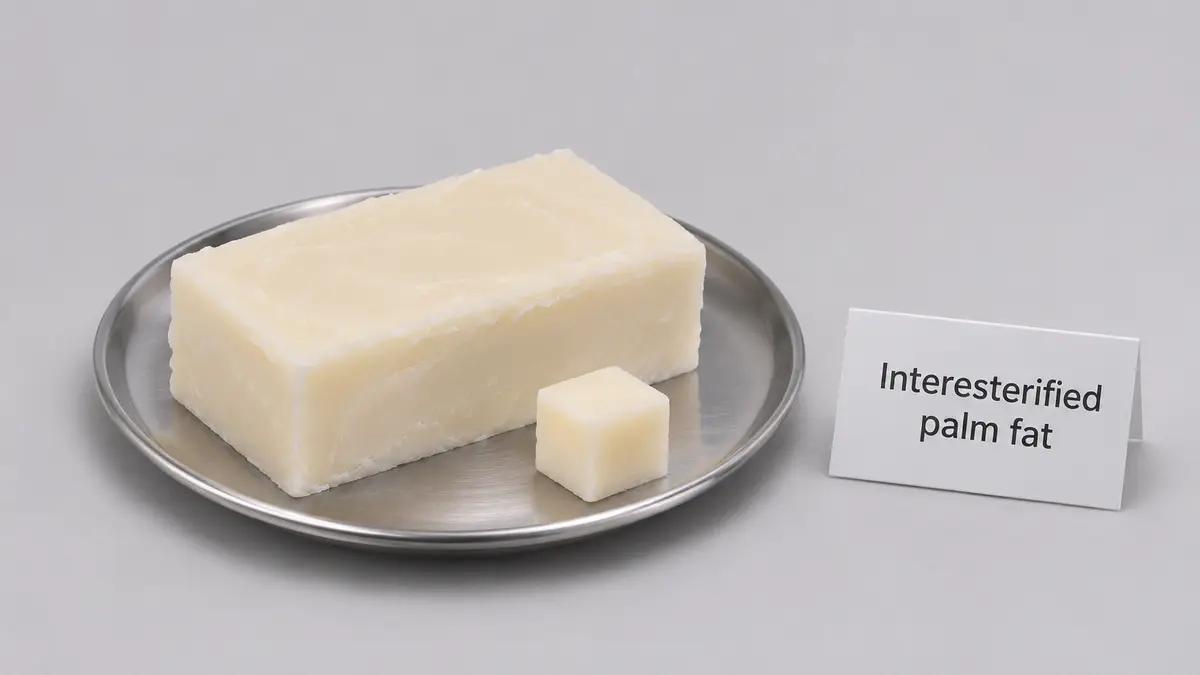
Duty depends on packing and composition
Read from the UK Trade Tariff on 29 September 2026, heading 1516 covers hydrogenated, interesterified, re-esterified or elaidinised fats, oils and fractions, whether refined or not, but not further prepared. This guide concerns interesterified palm oil. The table distinguishes oil and fractions sharing a code. For the wider heading, see hydrogenated palm oil.
Goods from China in immediate packs not exceeding 1 kg carry 12%. Bulk palm oil with less than 50% free fatty acids carries 8%; the residual bulk line carries 10%. These selected lines show no anti-dumping or countervailing duty on plain palm oil. The suspension under 1516 20 96 00 is limited to specified jojoba oil. Separate biodiesel blend lines show 10.90% ordinary duty and 54.64% residual anti-dumping duty.
The selected lines attach organic and waste import controls. Organic imports from China require a certificate of inspection for each consignment, issued by the exporter's control body. For waste, confirm the applicable requirement with your customs broker; where notification controls apply to imports into England, consent is needed before shipment. Confirm packing, composition and processing through finding your commodity code.
| Goods | Commodity code | Duty | Anti-dumping or countervailing duty on China |
|---|---|---|---|
| Interesterified palm oil in immediate packs not exceeding 1 kg | 1516 20 91 00 | 12% | None |
| Bulk interesterified palm oil with less than 50% free fatty acids | 1516 20 96 00 | 8% | None |
| Bulk interesterified palm oil with at least 50% free fatty acids, no biodiesel | 1516 20 98 80 | 10% | None |
Specify palm feedstock and melting behaviour
Identify palm oil, palm olein or palm stearin as the feedstock, and record any other oil used. Distinguish palm oil from palm-kernel oil. Ask whether interesterification is chemical or enzymatic, whether hydrogenation is also used, and what refining or deodorising follows. Describe the intended bakery or food-manufacturing application.
Agree melting point, solid fat content at your processing and storage temperatures, free fatty acids, peroxide value, moisture, colour and odour. Obtain the test methods and a retained approval sample. Trial the oil in your actual recipe, checking crystallisation, texture and oil separation.
For food-grade supply, confirm applicable food hygiene, labelling and contaminant requirements with the relevant food authority. Ask for batch analysis and suitable contaminant testing, plus storage instructions and remaining shelf life. Cooking oils do not normally need a health certificate. For organic supply, ask the exporter to arrange the certificate of inspection through its control body.
Worked duty example
Illustrative example, not a quote: Illustrative order: 2 tonnes of food-grade interesterified palm oil in bulk packs under 1516 20 96 00, invoiced at £4,000 free on board, with £2,500 of freight and insurance to the UK. The customs value is £6,500. Duty at 8% is £520. Import VAT at 20% is charged on the customs value plus duty, £7,020, so it is £1,404. Import taxes total £1,924; a VAT-registered importer can usually reclaim the VAT, so the lasting cost is the £520 of duty. The import duty and VAT guide explains each step. This assumes the goods are standard-rated for VAT. Most food for human consumption is zero-rated, and animal feed can be too, in which case no import VAT is due, so check the rate for your product in HMRC's VAT Notice 701/14.
Inspection checklist
Identity: match the batch analysis, production description and packing list to the agreed palm feedstock, modification process and commodity code.
Performance: independently sample melting behaviour, solid fat content, free fatty acids and oxidation indicators; compare with the approved sample and recipe trial.
Packing: check seals, leaks, cleanliness, batch marks and storage records on arrival; investigate foreign odours or evidence of overheating.
Documents: match food labels and batch reports to the delivered lot; check organic paperwork where relevant. Use quality inspection explained to brief the inspector.
Working out your own order? Send us the product on WhatsApp and we reply the same working day: WhatsApp us
What goes wrong
An acceptable melting point can hide a solid fat profile that gives greasy fillings, brittle products or poor aeration. Feedstock changes, inconsistent processing and storage conditions can make repeat batches behave differently. Approve the application trial and compare arrival samples before releasing the lot into production.
Classification problems arise when palm-kernel oil, a further-prepared fat or a biodiesel blend is described simply as palm oil. Organic claims also need the matching import certificate. Review the composition and documents before dispatch, and use factory verification to check the producer's process and batch records.
Cambridge China Bridge sources these products for UK businesses, checking the factory and the documents before shipment. See factory verification. For repeat volumes, see container programmes.
Frequently asked questions
What is the UK import duty on interesterified palm oil from China?
The supplied tariff snapshot shows 8% for bulk palm oil with less than 50% free fatty acids, 10% on the residual bulk line and 12% for immediate packs not exceeding 1 kg.
Does the jojoba oil duty suspension cover palm oil?
No. The suspension under 1516 20 96 00 is limited to the specified hydrogenated and interesterified jojoba oil. Palm oil on that line carries 8%.
Does interesterified palm oil need a health certificate?
Official cooking-oil guidance says a health certificate is not normally needed. Confirm applicable food hygiene, labelling and contaminant requirements with the relevant food authority, and confirm the route for your actual formulation.
What should I test before buying interesterified palm oil?
Check melting behaviour, solid fat content, free fatty acids, oxidation, moisture and odour. Trial the approved sample in your recipe and compare production-batch results before shipment.