Sourcing industrial stearic acid from China
Industrial stearic acid from China carries 0% UK duty across the listed stearic-acid lines, with no trade remedies recorded. Before sale in Great Britain, ensure the grade is labelled and packaged correctly under chemical classification rules. Cambridge China Bridge sources industrial stearic acid.
Buying from China for a business? How our UK China sourcing agent service works · China sourcing agent for UK manufacturers and engineering firms
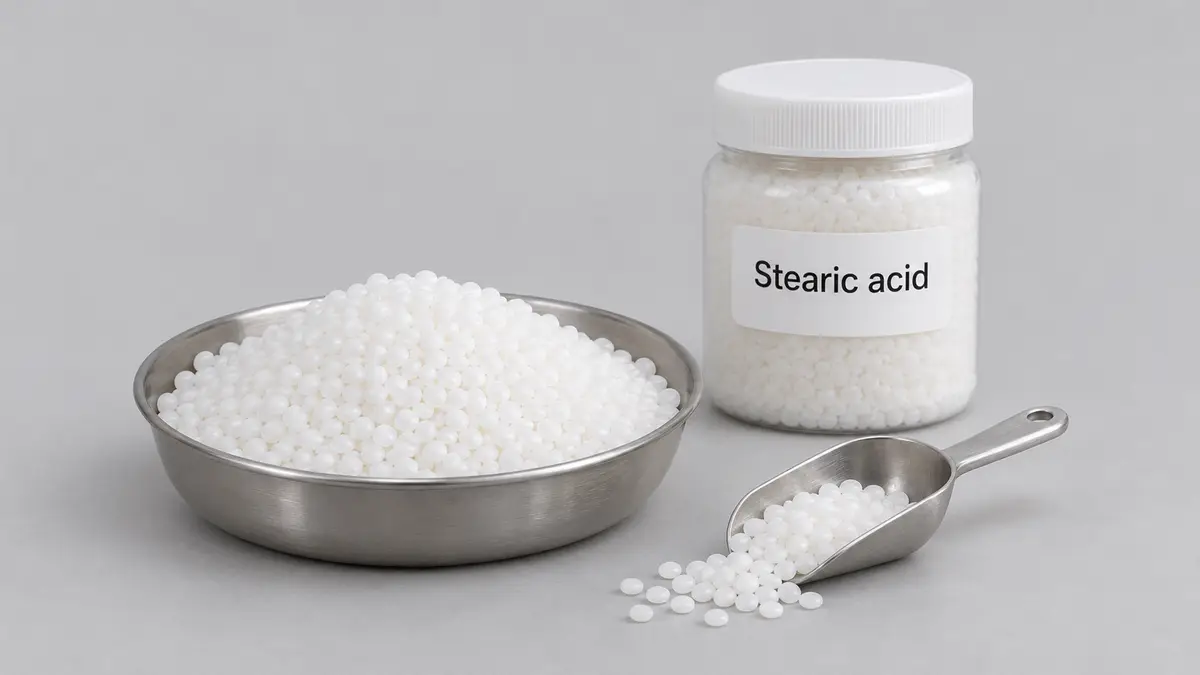
Industrial stearic acid: 0% duty
Read from the UK Trade Tariff on 29 September 2026, heading 3823 covers industrial monocarboxylic fatty acids, acid oils from refining and industrial fatty alcohols. This guide focuses on its stearic-acid branch. See the fatty acids and alcohols guide for the wider heading.
All listed stearic-acid lines carry 0% duty for goods from China. The supplied tariff record lists no anti-dumping or countervailing duty, suspensions or attached import controls for these lines. The table distinguishes non-feed material from material of a kind used for animal feed; it does not establish suitability for feed.
Match the fatty-acid composition, iodine value and intended use to the full tariff description before choosing a line. Ask your customs broker to confirm the commodity code. A supplier's grade name alone is insufficient.
| Goods | Commodity code | Duty | Anti-dumping or countervailing duty on China |
|---|---|---|---|
| Non-feed stearic acid meeting the listed fatty-acid and iodine-value description | 3823 11 00 70 | 0% | None |
| Other non-feed industrial stearic acid | 3823 11 00 80 | 0% | None |
| Feed-use stearic acid meeting the listed fatty-acid and iodine-value description | 3823 11 00 20 | 0% | None |
| Other stearic acid of a kind used for animal feed | 3823 11 00 50 | 0% | None |
Specify the fatty-acid profile and melting behaviour
Specify stearic and palmitic acid content, the remaining fatty-acid profile, feedstock origin and any additives. Agree acid value, iodine value, melting or solidification range, moisture, colour, ash and odour, with test methods and acceptance limits. State whether you need flakes, beads or powder, and approve a sample in your actual rubber, lubricant or cleaning formulation.
For Great Britain, check the grade's UK REACH position before ordering. Some aspects of UK REACH apply only at one tonne per year or more. Obtain a written assessment for the actual substance and supply arrangement rather than relying on a generic supplier declaration.
Ensure the material is labelled and packaged correctly before placing it on the Great Britain market. A safety data sheet is required if the chemical is hazardous and supplied for workplace use. Request current safety information for the exact grade, without assuming every industrial stearic-acid grade has the same classification.
Worked duty example
Illustrative example, not a quote: A palletised consignment of bagged industrial stearic acid, illustrative only under 3823 11 00 70, invoiced at £30,000 free on board, with £3,000 of freight and insurance to the UK. The customs value is £33,000. Duty at 0% is £0. Import VAT at 20% is charged on the customs value plus duty, £33,000, so it is £6,600. With no duty, the only import tax is the VAT, which a VAT-registered importer can usually reclaim. The import duty and VAT guide explains each step.
Inspection checklist
Composition: compare the batch analysis with the agreed stearic and palmitic acid profile, acid value and iodine value.
Performance: check melting behaviour, colour and odour against the approved sample, then trial the received batch in your formulation.
Packaging: check sealed liners, dry bags, net weight, pallet condition and evidence of contamination or caking.
Traceability: match bag batch marks to the analysis certificate and safety information, and retain a labelled sample. Use the quality inspection guide to brief the inspection.
Working out your own order? Send us the product on WhatsApp and we reply the same working day: WhatsApp us
What goes wrong
A grade name can hide a different stearic-to-palmitic balance. That changes melting behaviour and can upset processing or finished-product consistency. Reject substitutions without reviewing the composition and repeating your formulation trial.
Wet bags, damaged liners and mixed batches can leave you with caked or contaminated material despite a satisfactory supplier sample. Agree representative batch sampling and release criteria before shipment, then compare arrival samples with the retained approved sample.
Cambridge China Bridge sources these products for UK businesses, checking the factory and the documents before shipment. See factory verification. For repeat volumes, see container programmes.
Frequently asked questions
What is the UK import duty on industrial stearic acid from China?
The supplied tariff record, read on 29 September 2026, shows 0% on all listed stearic-acid lines, with no anti-dumping or countervailing duty.
What should I specify when buying industrial stearic acid?
Specify the fatty-acid profile, feedstock, acid and iodine values, melting behaviour, moisture, colour and physical form. Agree test methods and trial the sample in your formulation.
Does industrial stearic acid need a safety data sheet?
Check the exact grade's classification and request current safety information.
Can I accept the supplier's stearic-acid grade name?
Use it only alongside an agreed composition and batch test results. Similar grade names can conceal a different fatty-acid balance and melting behaviour.