Sourcing industrial ribbon blenders from China
Industrial ribbon blenders classified under 8479 82 00 00 carry 0% UK duty from China, giving a duty range of 0% for the configurations covered here. Machinery supplied in Great Britain must meet applicable safety and conformity requirements. Cambridge China Bridge sources industrial ribbon blenders.
Buying from China for a business? How our UK China sourcing agent service works · China sourcing agent for UK manufacturers and engineering firms
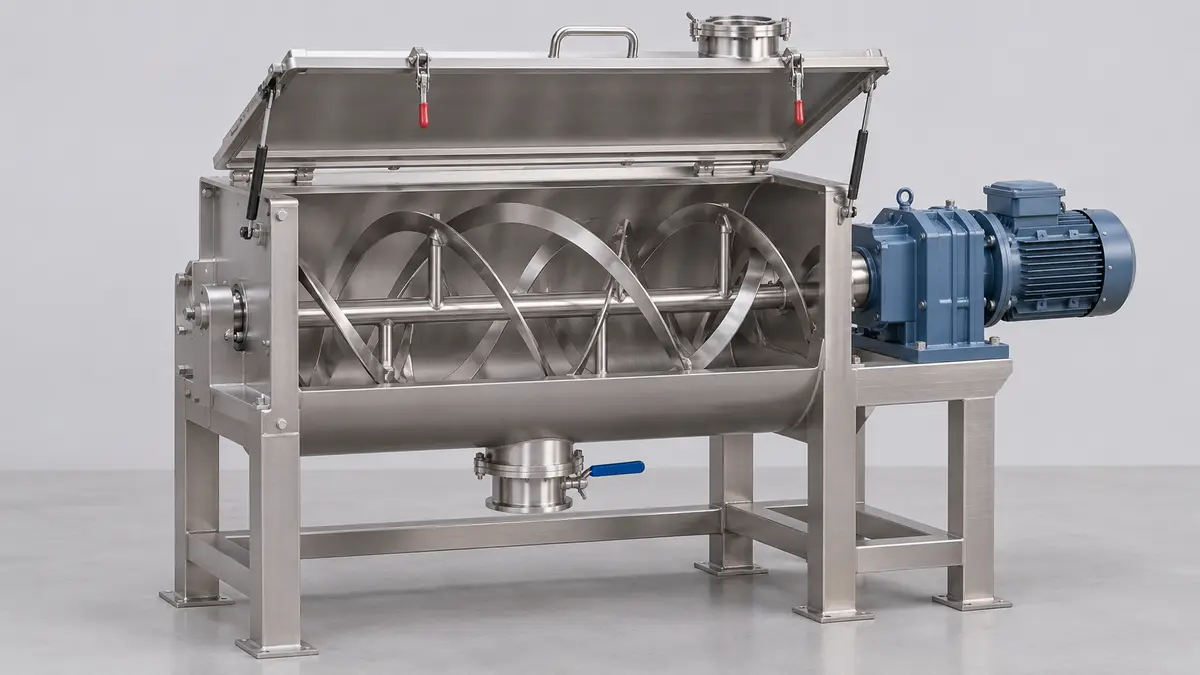
UK duty on industrial ribbon blenders
Heading 8479 covers machines with individual functions not specified elsewhere in the chapter. Its mixing-machine line, 8479 82 00 00, is a starting point for classifying complete industrial ribbon blenders. The table shows configurations sharing this code, rather than separate tariff subdivisions. For another application within the wider heading, see laboratory overhead stirrers.
Read from the UK Trade Tariff on 21 November 2026, line 8479 82 00 00 carries 0% ordinary duty for goods from China. The supplied record lists no anti-dumping or countervailing duty, suspension or attached import control for this line. This finding does not extend to unrelated machines or separately imported parts.
Confirm the commodity code using the intended process, material handled and complete configuration. Identify any jacket, liquid-addition equipment, feeder and separately shipped components so classification reflects the goods actually imported.
| Goods | Commodity code | Duty | Anti-dumping or countervailing duty on China |
|---|---|---|---|
| Industrial ribbon blenders with manual discharge | 8479 82 00 00 | 0% | None |
Specify working batches and discharge performance
Specify the powder's bulk density, particle characteristics, moisture and tendency to stick or segregate. Distinguish usable batch capacity from total trough volume. Agree a loaded trial using your material or an agreed substitute, with a sampling method and acceptance criteria for blend uniformity, mixing time and residue after discharge.
Define product-contact materials, weld finish, ribbon geometry, shaft seals, cleaning access and discharge-valve arrangement. Include drive torque, loaded starting, supply voltage and frequency, installation clearances and replacement seals. For food batches, agree how product-contact material evidence and cleaning results will be checked.
Either CE or UKCA marking can be used under the applicable conformity route. Check the declaration, technical-file arrangements and English instructions against the delivered configuration. Flour and sugar are examples of explosible dusts; for combustible powders, have a competent specialist define the protective specification before choosing the blender.
Worked duty example
Illustrative example, not a quote: Illustrative order of an industrial ribbon blender for a small powder-processing business under 8479 82 00 00, invoiced at £8,000 free on board, with £1,200 of freight and insurance to the UK. The customs value is £9,200. Duty at 0% is £0. Import VAT at 20% is charged on the customs value plus duty, £9,200, so it is £1,840. With no duty, the only import tax is the VAT, which a VAT-registered importer can usually reclaim. The import duty and VAT guide explains each step.
Inspection checklist
Loaded mixing: check starting, running stability, blend samples, drive heating and discharge residue against the agreed trial. Repeat the agreed checks after installation.
Trough and seals: check ribbon clearance, weld finish, shaft alignment, seal leakage and access for cleaning. Inspect the discharge valve for trapped powder and incomplete closure.
Guarding and controls: check access at the lid, feed opening, discharge and drive. Dangerous parts must be inaccessible or stopped before a person enters the danger zone. Have a competent inspector check protective devices, emergency stopping and isolation.
Documents and arrival: match the nameplate, declaration and English instructions to the supplied machine. Check transport damage, supplied spares and mounting condition through your quality inspection.
Working out your own order? Send us the product on WhatsApp and we reply the same working day: WhatsApp us
What goes wrong
An empty demonstration can hide failure to start a settled batch, uneven mixing or excessive drive load. Powder can remain around shaft seals, trough ends and the discharge valve, contaminating a later batch. Require representative loaded trials and inspect retained material after emptying and cleaning.
A substituted seal, motor or discharge valve can change cleaning, performance and maintenance needs. Resolve substitutions and document mismatches before dispatch. A general-purpose blender should not be selected for combustible powders without specialist review of the actual process.
Cambridge China Bridge sources these products for UK businesses, checking the factory and the documents before shipment. See factory verification. For machinery and equipment, see machinery imports.
Frequently asked questions
What is the UK import duty on industrial ribbon blenders from China?
The supplied tariff record gives 0% for mixing machines under 8479 82 00 00, with no listed anti-dumping or countervailing duty. Confirm classification for the actual configuration.
Do industrial ribbon blenders need CE or UKCA marking?
For Great Britain, either marking can be used under the applicable conformity route. Check the declaration, technical-file arrangements and English instructions for the delivered machine.
How do I check a ribbon blender's batch capacity?
Specify usable working capacity for your powder's bulk density and behaviour. Agree a loaded trial that checks starting, blend uniformity and discharge residue, rather than relying on total trough volume.
Can a standard ribbon blender mix flour or sugar?
Flour and sugar are examples of explosible dusts. Have a competent specialist review your material, process and protective specification before selecting a blender.