Sourcing horse bits from China
Horse bits from China carry a flat 2% UK duty under the relevant line, with no anti-dumping or countervailing duty listed. Bits supplied to consumers in Great Britain must be safe in normal or reasonably foreseeable use. Specify mouthpiece dimensions, joint construction and metal composition. Cambridge China Bridge sources horse bits.
Buying from China for a business? How our UK China sourcing agent service works · China sourcing agent for small orders and first imports
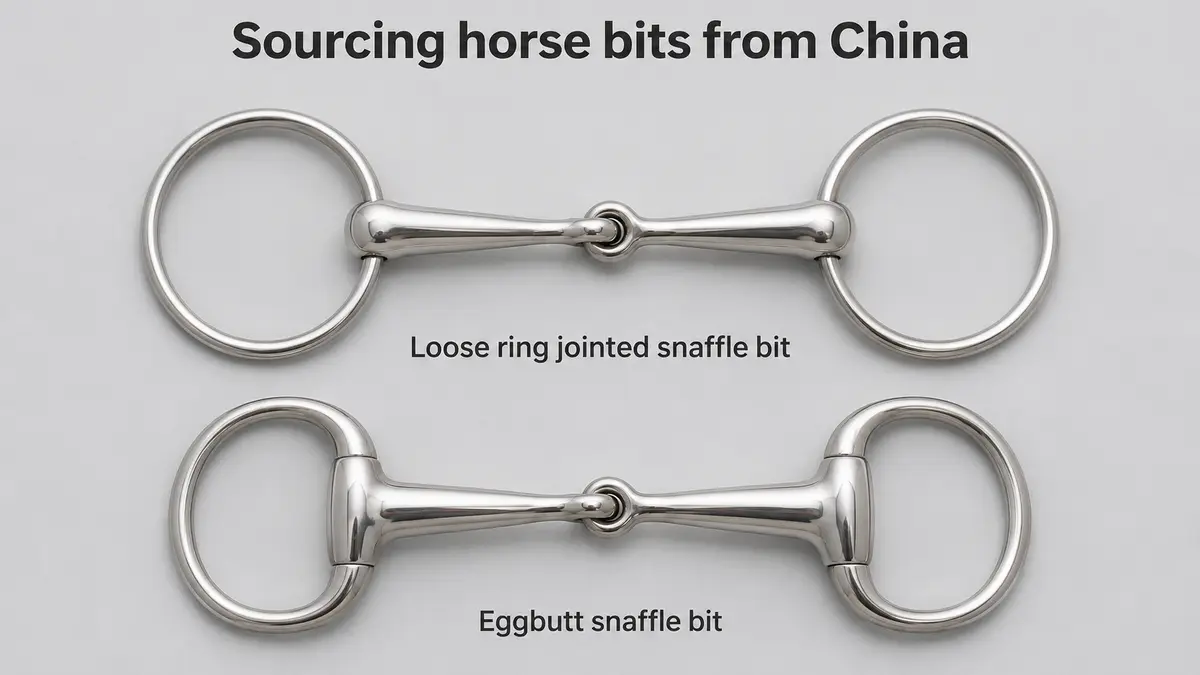
Horse bits: flat 2% UK duty
Read from the UK Trade Tariff on 28 October 2026, heading 4201 covers animal saddlery and harness of any material. Horse bits use the other-goods line, 4201 00 00 90. The table shows bit styles sharing that code. The supplied record lists 2% duty for goods from China, with no anti-dumping or countervailing measures and no suspensions.
The tariff attaches cat and dog fur import and export controls and a seal-product import control. Imports and exports of cat or dog fur and products made from it are banned. Seal products brought into Great Britain for trade must have a seal catch certificate. If animal-derived accessories accompany the bits, identify their materials and ask your customs broker to confirm eligibility and applicable declaration requirements before ordering from China.
Confirm the finished product and shipment contents with your broker using our commodity code guide. For bridles supplied with bits and related goods within the wider heading, see horse bridles.
| Goods | Commodity code | Duty | Anti-dumping or countervailing duty on China |
|---|---|---|---|
| Loose-ring snaffle bits | 4201 00 00 90 | 2% | None |
Specify the mouthpiece, joints and cheeks
Define the bit style, intended use and mouthpiece construction. Draw the measurement points for usable mouth width, mouthpiece thickness, curvature and any port. Record joint shape, centre-link orientation, ring dimensions and cheek or shank geometry. Agree tolerances against drawings and a retained sample. Have an experienced fitter assess sample suitability for the intended horses and riders before approving production.
Specify the exact metal or alloy for each component, whether the mouthpiece is solid or hollow, and any plating, rubber or polymer covering. Agree checks for weld strength, joint retention, corrosion and covering adhesion through testing and certification. Bits supplied to consumers in Great Britain must be safe in normal or reasonably foreseeable use under general product safety rules.
Worked duty example
Illustrative example, not a quote: Illustrative order of 800 loose-ring snaffle bits under 4201 00 00 90, invoiced at £9,000 free on board, with £700 of freight and insurance to the UK. The customs value is £9,700. Duty at 2% is £194. Import VAT at 20% is charged on the customs value plus duty, £9,894, so it is £1,978.80. Import taxes total £2,172.80; a VAT-registered importer can usually reclaim the VAT, so the lasting cost is the £194 of duty. The import duty and VAT guide explains each step.
Inspection checklist
Dimensions: measure usable mouth width and thickness at the agreed points; compare curvature, joint orientation, rings and cheek geometry with the approved drawing.
Contact surfaces: inspect mouthpieces, joints and ring holes for burrs, sharp seams, pitting and rough polishing. Check that coverings have no splits, exposed edges or loose sections.
Connections: articulate joints and rotate rings through their intended movement; check for binding, excessive play, open seams and cracked welds. Review the agreed strength-test results.
Arrival condition: check for corrosion, damaged coatings, bent cheeks and mixed sizes. Match product and batch references to cartons. Use quality inspection to agree checks before shipment.
Working out your own order? Send us the product on WhatsApp and we reply the same working day: WhatsApp us
What goes wrong
A bit can match the ordered width while its thickness, curvature or centre-link orientation differs from the sample. These changes alter fit and contact. Rough ring holes and stiff joints can escape a visual check, so inspect moving parts as well as the polished outer surfaces.
A polished surface can conceal a different alloy or weak weld. Plating can peel, hollow mouthpieces can develop cracks, and soft coverings can separate around joints. Require approval before material or construction changes. Isolate defective deliveries and establish the extent of the problem before accepting replacements.
Cambridge China Bridge sources these products for UK businesses, checking the factory and the documents before shipment. See factory verification. For own-brand ranges, see sourcing for brands.
Frequently asked questions
What is the UK import duty on horse bits from China?
The relevant line, 4201 00 00 90, carries 2% duty in the supplied tariff record. No anti-dumping or countervailing duty or suspension is listed. Import VAT is separate.
Do snaffle and Pelham bits have different commodity codes?
The styles shown share 4201 00 00 90 within heading 4201. Confirm the finished construction and any accompanying accessories with your customs broker before declaration.
What measurements should I give a horse-bit factory?
Specify usable mouth width, mouthpiece thickness and curvature, joint shape and orientation, ring dimensions and cheek or shank geometry. Show measurement points on drawings rather than relying on size names.
How do I check horse-bit quality before shipment?
Compare dimensions and materials with the approved sample. Inspect contact surfaces, articulate joints, rotate rings and check welds. Review agreed strength and corrosion checks using production materials.