Sourcing high-pressure sodium lamps from China
High-pressure sodium lamps from China carry 0% UK duty, with no anti-dumping or countervailing duty recorded. Mercury content and the applicable hazardous-substance exemption need checking before purchase, alongside electrical safety and light-source compliance. Cambridge China Bridge sources high-pressure sodium lamps.
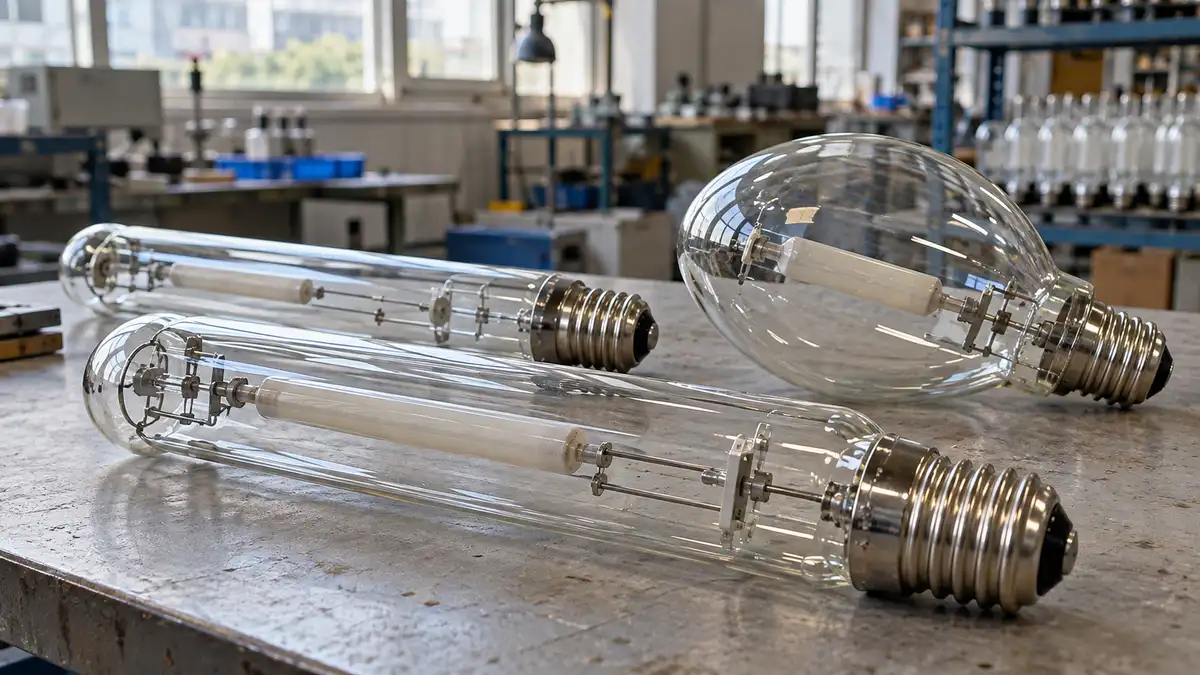
Duty on high-pressure sodium lamps
Read from the UK Trade Tariff on 30 September 2026, high-pressure sodium lamps under 8539 32 20 00 carried 0% duty for goods from China, with no recorded anti-dumping or countervailing duty and no suspension. Heading 8539 covers electric filament and discharge lamps, other light sources and lamp parts. The comparison and parts rows help distinguish lamps from separately supplied components.
The UK Trade Tariff attaches an import control of mercury to the sodium-lamp and lamp-base lines. Confirm the requirement for the exact Chinese product with your customs broker before shipment. The sodium-lamp line also carries export controls on mercury and dangerous chemicals; these concern export movements. Do not treat the duty rate as permission to import a mercury-containing model.
Give your broker the lamp type, voltage, intended use and mercury declaration to confirm the commodity code. For related discharge lamps within the wider heading, see metal halide lamps. For low-pressure models, see our low-pressure sodium lamp sourcing guide.
| Goods | Commodity code | Duty | Anti-dumping or countervailing duty on China |
|---|---|---|---|
| High-pressure sodium lamps | 8539 32 20 00 | 0% | None |
| Metal halide lamps, for comparison | 8539 32 90 90 | 0% | None |
| Lamp bases supplied separately | 8539 90 10 00 | 0% | None |
| Other lamp parts supplied separately | 8539 90 90 00 | 0% | None |
Specify the lamp and its control gear together
State the intended application, rated power, lamp voltage and current, cap dimensions, envelope shape, operating position and light output. Identify the exact ballast and ignitor used in the receiving installation. Record whether ignition is internal or external, and agree starting, warm-up and hot-restart checks using that equipment.
Ask for mercury content per burner and the precise hazardous-substance exemption claimed. Official determinations renew some high-pressure sodium exemptions and revoke others, so a generic mercury exemption statement is insufficient. Match the intended application, power and colour-rendering category to the supplier's evidence.
Confirm with the relevant authorities which electrical safety, electromagnetic compatibility and hazardous-substance compliance documentation applies to the mains lighting being supplied. Also confirm the applicable light-source ecodesign and energy information requirements and whether waste electrical equipment producer registration is needed. Obtain model-specific declarations, technical documentation and matching label information before approving production. Arrange testing and certification around the actual lamp and control gear.
Worked duty example
Illustrative example, not a quote: 600 high-pressure sodium lamps, illustrative only under 8539 32 20 00, invoiced at £12,000 free on board, with £600 of freight and insurance to the UK. The customs value is £12,600. Duty at 0% is £0. Import VAT at 20% is charged on the customs value plus duty, £12,600, so it is £2,520. With no duty, the only import tax is the VAT, which a VAT-registered importer can usually reclaim. The import duty and VAT guide explains each step.
Inspection checklist
Identity: compare lamp markings, rated power, cap and carton model against the approved sample and purchase specification.
Construction: inspect the envelope for cracks, the cap for looseness and the internal supports for displacement; check protective sleeves and carton dividers.
Operation: sample lamps from the shipment and check starting, stable operation, light output and restart behaviour with the agreed ballast and ignitor.
Documents: match batch identifiers, mercury declarations, exemption evidence and product information to the delivered model. Keep results with the inspection record.
Working out your own order? Send us the product on WhatsApp and we reply the same working day: WhatsApp us
What goes wrong
A lamp can fit the holder yet fail to start with the installed ignitor, or operate poorly with the wrong ballast. Loose caps, displaced internal supports and cracked envelopes can survive a superficial carton check. Approve a working sample in the buyer's intended equipment and repeat that check on bulk samples.
Compliance can fail when a supplier copies documents from another lamp or relies on an exemption that does not cover the delivered model. Freeze the burner design, mercury content and named control gear in the specification, and require written approval before changes.
Cambridge China Bridge sources these products for UK businesses, checking the factory and the documents before shipment. See factory verification. For components and parts, see sourcing for manufacturers.
Frequently asked questions
What is the UK import duty on high-pressure sodium lamps from China?
The supplied tariff reading shows 0% under 8539 32 20 00, with no anti-dumping or countervailing duty and no suspension. Mercury import controls are attached.
Can I import mercury-containing sodium lamps from China?
Confirm the exact model with your customs broker. The tariff attaches a mercury import control, and hazardous-substance exemptions differ by lamp category. A duty-free classification does not establish permission.
Will a sodium lamp work with my existing ballast?
Check the lamp rating, ballast model and ignitor arrangement together. Approve a sample in the intended equipment and agree starting, stable operation and restart checks before ordering.
What documents should I ask the lamp factory for?
Request model-specific declarations, technical documentation, mercury content and exemption evidence, plus matching energy information. Check that the documents describe the actual lamp supplied.