Sourcing frozen whole pomfret from China
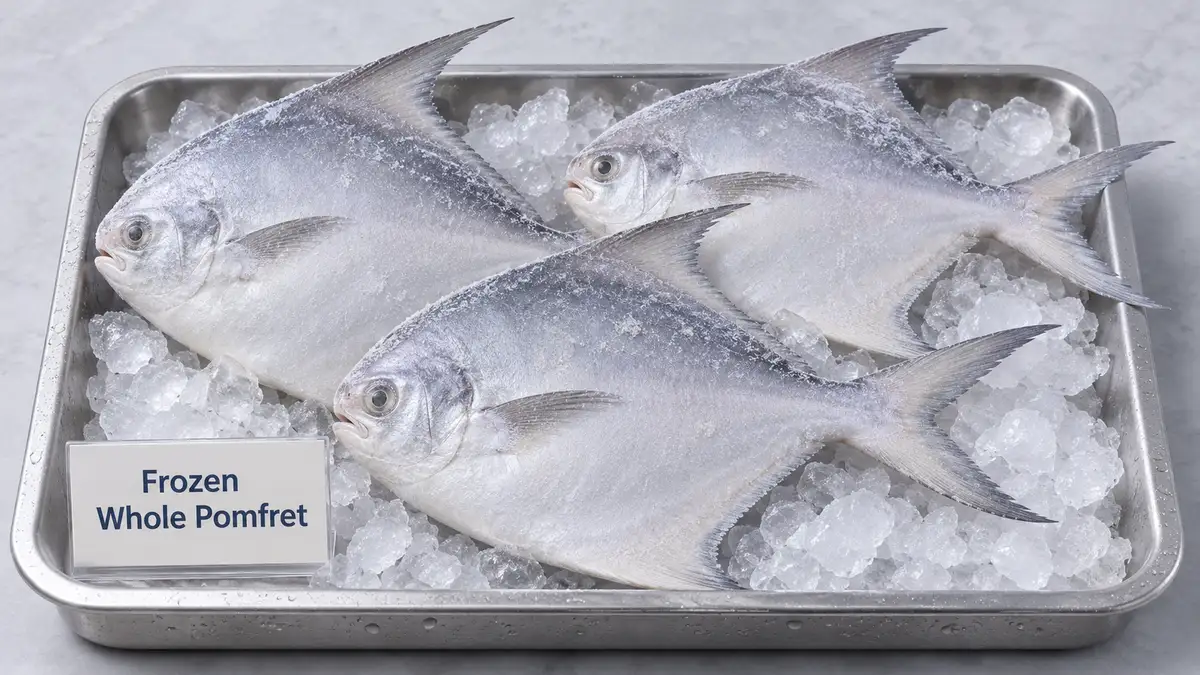
Frozen whole pomfret from China carries 14% duty on both relevant tariff lines, with no recorded anti-dumping or countervailing duty. Confirm establishment approval, health certification, advance notification and border-check requirements with your customs broker; for wild-caught fish, also confirm the applicable catch documents. Cambridge China Bridge sources frozen whole pomfret.
Buying from China for a business? How our UK China sourcing agent service works · China sourcing agent for small orders and first imports
Pomfret tariff lines carry 14% duty
Read from the UK Trade Tariff on 4 October 2026, frozen whole silver pomfret of the genus Pampus falls within 0303 59 90 90, carrying 14% duty from China. Other fish sold as pomfret may fall within 0303 89 90 92, also at 14%, subject to scientific species confirmation. Neither supplied line records anti-dumping duty, countervailing duty or a suspension. The table distinguishes buying forms sharing the same codes.
Heading 0303 covers frozen fish, excluding fillets and other fish meat. The relevant lines attach veterinary, illegal fishing and organic import controls. Ask your customs broker to confirm establishment approval, health certification, advance notification through IPAFFS and entry through a suitable border control post. Confirm whether a validated catch certificate is required for wild-caught fish and whether fish farmed from fry or larvae is outside that scheme.
Organic-labelled consignments from China need a Great Britain certificate of inspection; check the exporter’s control body and export country against the recognised organic registers. The silver pomfret line also attaches CITES import control, and both lines attach CITES export control. Confirm species-specific applicability and documents with your customs broker. Confirm the commodity code from the scientific name and presentation. See the wider frozen whole fish guide for other species.
| Goods | Commodity code | Duty | Anti-dumping or countervailing duty on China |
|---|---|---|---|
| Frozen whole silver pomfret, ungutted | 0303 59 90 90 | 14% | None |
| Other frozen whole pomfret, ungutted, subject to species confirmation | 0303 89 90 92 | 14% | None |
Specify the species, whole-fish form and glaze
Request the scientific name alongside the supplier’s commercial name. Do not accept “pomfret” alone as the specification. Agree whether the fish retains its head and viscera, the individual weight grade, freezing method, permitted glaze, net fish weight per pack and carton arrangement. Keep photographs and a retained sample showing the agreed body shape, skin colour and cleaning.
Record whether the fish is wild-caught or farmed and its catch or farming area. Match the establishment approval number and batch identity across the cartons and health documents. For farmed pomfret, arrange veterinary residue testing before shipment and confirm the applicable China-specific import conditions with your broker. Specify retail label checks for the commercial name, production method, catch or farming area, allergen information, storage instructions and UK address.
Worked duty example
Illustrative example, not a quote: Illustrative order: 2 tonnes of frozen whole silver pomfret under 0303 59 90 90, invoiced at £16,000 free on board, with £1,500 of freight and insurance to the UK. The customs value is £17,500. Duty at 14% is £2,450. Import VAT at 20% is charged on the customs value plus duty, £19,950, so it is £3,990. Import taxes total £6,440; a VAT-registered importer can usually reclaim the VAT, so the lasting cost is the £2,450 of duty. The import duty and VAT guide explains each step. This assumes the goods are standard-rated for VAT. Most food for human consumption is zero-rated, and animal feed can be too, in which case no import VAT is due, so check the rate for your product in HMRC's VAT Notice 701/14.
Inspection checklist
Species and grade: compare sampled fish with the agreed scientific name and retained sample; weigh individual fish from different cartons and check for mixed grades or substituted species.
Glaze and net weight: deglaze representative samples, drain consistently and compare the fish weight with the declared net weight; confirm the applicable net-weight labelling requirements with the relevant authority.
Condition and cold chain: review the transport temperature record and measure arrival temperature against the agreed storage specification; inspect for freezer burn, broken fins, damaged bellies and signs of thawing and refreezing.
Documents and labels: match batch marks, approved establishment number, health certificate and applicable catch documents to the delivered cartons; check label information before releasing stock. Use the quality inspection guide to brief the inspection.
Working out your own order? Send us the product on WhatsApp and we reply the same working day: WhatsApp us
What goes wrong
A purchase described only as pomfret can arrive as a different species or a mixture of sizes. Heavy glaze reduces the fish received, while split bellies and damaged skin reduce suitability for whole-fish presentation. Temperature excursions can leave fish stuck together or with poor texture after thawing.
Approval numbers or batch marks that do not match the certificates can delay clearance. Farmed and wild-caught fish need different supporting checks, so settle the production method before ordering. Compare deglazed weight and condition with the approved specification before dispatch and on arrival. Confirm the VAT treatment of food fish with HMRC or your customs broker; border and cold-storage charges remain relevant. See UK import duty and VAT.
Cambridge China Bridge sources these products for UK businesses, checking the factory and the documents before shipment. See factory verification. For repeat volumes, see container programmes.
Frequently asked questions
What is the UK import duty on frozen whole pomfret from China?
The supplied tariff read shows 14% on 0303 59 90 90 for silver pomfret and on 0303 89 90 92 for other relevant fish, subject to species confirmation. Neither line records anti-dumping or countervailing duty.
Does frozen pomfret need a catch certificate?
Ask your customs broker to confirm whether wild-caught pomfret needs a validated catch certificate, whether fish farmed from fry or larvae is outside that scheme, and which animal-origin import documents and checks apply.
How do I check the weight of glazed pomfret?
Deglaze samples from different cartons, drain them consistently and weigh the fish. Compare that result with the declared net weight and agreed size grade; confirm the applicable requirements for excluding glaze from labelled net weight with the relevant authority.
Can I use the supplier’s pomfret name for customs?
Obtain the scientific name and exact whole-fish presentation. Silver pomfret and other fish sold as pomfret can use different tariff lines, so ask your broker to confirm the classification before shipment.