Sourcing frozen whole tuna from China
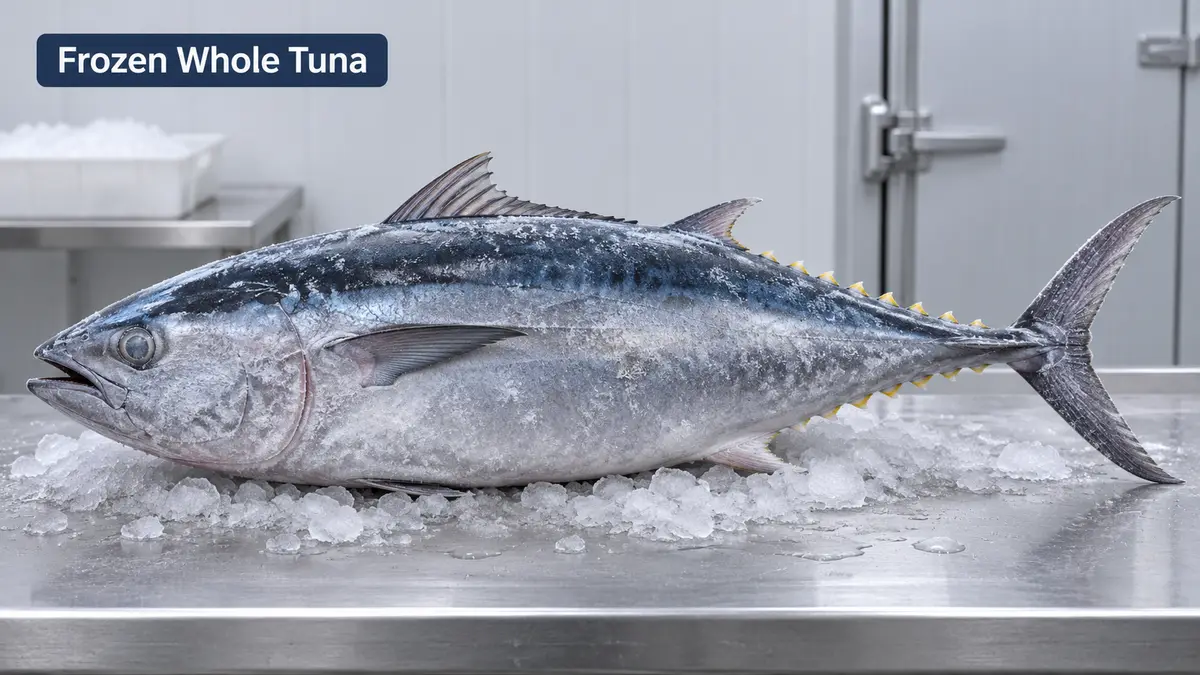
Frozen whole tuna from China carries 0% duty on the supplied industrial-manufacture lines, not a general rate for every use. Confirm plant approval, health certification and pre-notification requirements with the relevant authority before shipment. Imports undergo border checks; wild-caught tuna also needs catch documentation. Cambridge China Bridge sources frozen whole tuna.
Buying from China for a business? How our UK China sourcing agent service works · China sourcing agent for small orders and first imports
0% on the listed industrial-manufacture lines
Read from the UK Trade Tariff on 4 October 2026, heading 0303 covers frozen fish, excluding fillets and other fish meat of heading 0304. The supplied tuna lines cover albacore, skipjack, Atlantic bluefin and southern bluefin for industrial manufacture of products of heading 1604. Each carries 0% duty for goods from China, with no recorded anti-dumping or countervailing duty and no listed suspension. This is not a verified rate for tuna bought for other uses.
The listed lines carry veterinary and organic import controls. For Great Britain, confirm plant approval, health certificate and IPAFFS notification requirements with the relevant authority, and enter through a suitably designated border control post. Wild-caught tuna needs validated catch documentation; bluefin has a specific validated catch-document requirement. Organic consignments need a separate certificate of inspection. Ask your customs broker to confirm the veterinary clearance-document requirements and any applicable bluefin re-export paperwork before shipment.
Give your broker the scientific species name, whole-fish presentation and intended industrial use, then confirm the commodity code. Do not choose a listed industrial-manufacture code simply because its rate is 0%. For finished products under the wider prepared-fish heading, see canned tuna and prepared fish.
| Goods | Commodity code | Duty | Anti-dumping or countervailing duty on China |
|---|---|---|---|
| Frozen albacore, for industrial manufacture of heading 1604 products | 0303 41 10 00 | 0% | None |
| Frozen skipjack, for industrial manufacture of heading 1604 products | 0303 43 10 00 | 0% | None |
| Frozen Atlantic bluefin, for industrial manufacture of heading 1604 products | 0303 45 12 00 | 0% | None |
| Frozen southern bluefin, for industrial manufacture of heading 1604 products | 0303 46 10 00 | 0% | None |
Specify species, whole-fish form and processing use
Specify the scientific species name, whether the fish retains its head and guts, individual weight grade, freezing method, glaze allowance and net fish weight. State the intended processing use and agree carton or pallet identification that connects the fish to the supplier's batch records.
Ask for catch origin, vessel details, freezing and storage records, and a batch-specific testing plan for histamine and mercury. Agree how samples will be taken and how non-conforming fish will be handled. For bluefin, check the catch-document route before approving a sample or purchase order.
Worked duty example
Illustrative example, not a quote: Illustrative order: 20,000 kg of frozen whole skipjack for industrial manufacture of prepared fish under 0303 43 10 00, invoiced at £30,000 free on board, with £4,000 of freight and insurance to the UK. The customs value is £34,000. Duty at 0% is £0. Import VAT at 20% is charged on the customs value plus duty, £34,000, so it is £6,800. With no duty, the only import tax is the VAT, which a VAT-registered importer can usually reclaim. The import duty and VAT guide explains each step. This assumes the goods are standard-rated for VAT. Most food for human consumption is zero-rated, and animal feed can be too, in which case no import VAT is due, so check the rate for your product in HMRC's VAT Notice 701/14.
Inspection checklist
Species and grading: compare sampled fish with the agreed species and presentation; weigh individual fish and check for mixed grades, damaged bodies and missing identification.
Glaze and net weight: deglaze representative samples using an agreed method, then compare fish weight with the declared net weight and purchase specification.
Cold chain and condition: measure core temperature on arrival against the agreed frozen-storage specification, review voyage temperature records, and inspect for freezer burn, dehydration and thaw damage.
Batch evidence and labels: match the plant approval number, health certificate, catch documents and batch marks; check commercial name, production method and catch area, and review the agreed histamine and mercury results.
Working out your own order? Send us the product on WhatsApp and we reply the same working day: WhatsApp us
What goes wrong
A supplier's description of 'whole tuna' can hide a different species, mixed weight grades or a different headed-and-gutted presentation. Heavy glaze reduces usable fish weight. Incomplete temperature records leave the buyer unable to assess handling before freezing and during transport; appearance alone is not a substitute for the agreed laboratory checks.
Paperwork can fail when the plant number, species, batch or catch document does not match the shipment. A Chinese exporter may be handling fish caught by a vessel registered elsewhere, so establish the catch-document trail rather than relying on the export invoice. Resolve discrepancies before loading and use the quality inspection guide to agree the inspection scope.
Cambridge China Bridge sources these products for UK businesses, checking the factory and the documents before shipment. See factory verification. For repeat volumes, see container programmes.
Frequently asked questions
What is the UK import duty on frozen whole tuna from China?
The supplied albacore, skipjack, Atlantic bluefin and southern bluefin lines carry 0%, all for industrial manufacture of heading 1604 products. They do not establish the rate for other uses.
Can I import frozen whole tuna from a Chinese supplier?
Before ordering, confirm with the relevant authority whether the plant needs approval for Great Britain and what health certificate and IPAFFS notification requirements apply. Arrange border entry and applicable catch documents; a supplier's export invoice is not enough.
Does frozen bluefin tuna need extra paperwork?
Yes. Bluefin imports require validated catch documents submitted to the importing competent authority or relevant fisheries administration. Ask your broker to confirm any applicable re-export certificate.
How do I check the quality of frozen whole tuna?
Confirm species and weight grades, measure net weight after deglazing, review temperature records and inspect thaw damage. Agree batch-specific histamine and mercury testing before shipment.