Sourcing frozen cassava roots from China
Frozen cassava roots from China carry £7.90 per 100 kg on both relevant cassava lines, rather than a percentage duty. Immediate pack size and peeling determine the code. Raw cassava must be cooked before eating, so agree preparation instructions and batch testing. Cambridge China Bridge sources frozen cassava roots.
Buying from China for a business? How our UK China sourcing agent service works · China sourcing agent for small orders and first imports
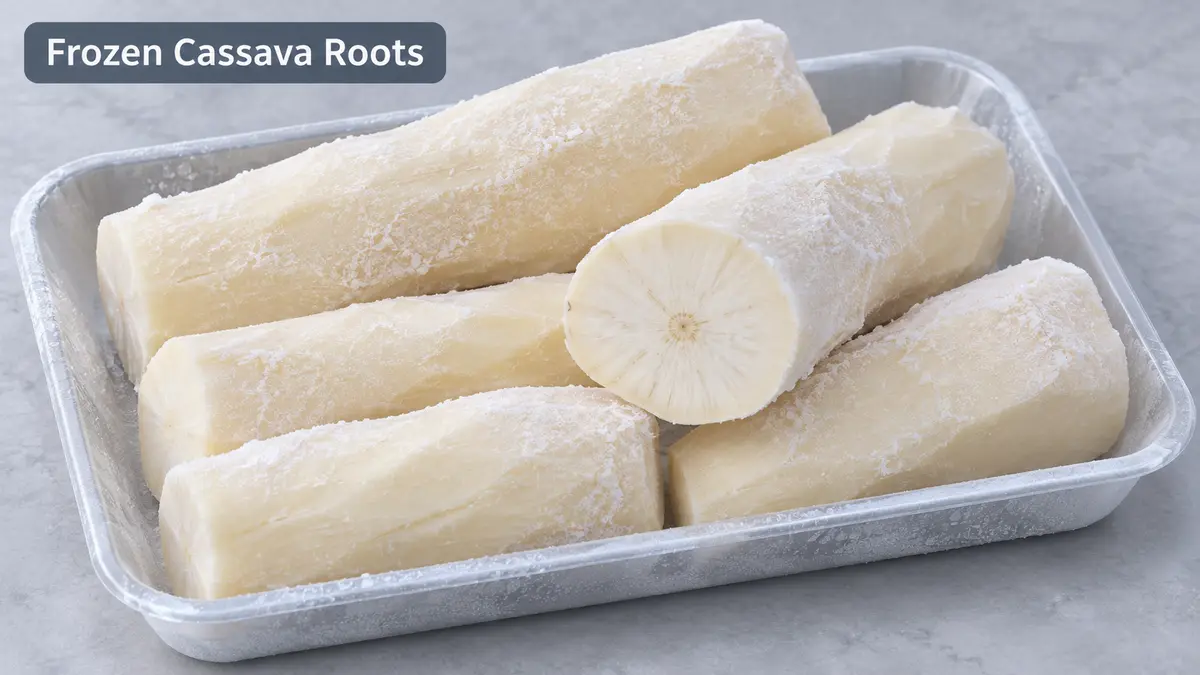
Frozen cassava duty is charged by weight
Read from the UK Trade Tariff on 4 October 2026, heading 0714 covers starchy roots and tubers, including frozen cassava. Code 0714 10 00 10 covers cassava for human consumption in immediate packs not exceeding 28 kg, peeled and frozen, whether or not sliced. Other frozen cassava roots may fall under 0714 10 00 99. Flour and meal pellets are outside this guide.
Both relevant cassava lines carry £7.90 per 100 kg for goods from China. The supplied tariff record lists no anti-dumping or countervailing measures and no suspensions on these lines. It attaches import control of organic products. Organic consignments from China into Great Britain need a Great Britain certificate of inspection; confirm the paperwork with your customs broker before dispatch.
There are only these relevant root lines in the supplied data, and neither has a percentage duty. The illustrative order therefore uses a weight-based line. Confirm peeling, processing, intended use and immediate-pack net weight using finding your commodity code. For the wider heading, see dried cassava chips.
| Goods | Commodity code | Duty | Anti-dumping or countervailing duty on China |
|---|---|---|---|
| Peeled frozen cassava for human consumption, immediate packs not exceeding 28 kg | 0714 10 00 10 | £7.90 per 100 kg | None |
| Other frozen cassava roots outside the specified immediate-pack category | 0714 10 00 99 | £7.90 per 100 kg | None |
Specify peeling, cuts and safe preparation
Specify food-use cassava, the variety, complete peeling, whole sections or sliced pieces, cut dimensions, acceptable broken pieces and whether pieces must remain separate. Agree bag and carton net weights, packaging seals, remaining shelf life and the freezing and storage arrangements. Distinguish raw frozen roots from cooked or seasoned products before confirming classification.
Cassava contains toxic cyanogen compounds. Ask the supplier for its processing method, batch testing for cyanogenic compounds and preparation instructions suited to the supplied product. Raw cassava must be cooked before eating, so labels should make this clear. Confirm applicable GB pesticide maximum residue levels and food-business registration requirements with the relevant authorities.
Agree a cold chain of -18°C or colder, temperature records and pre-cooling. Ask the relevant authority to confirm retail-label requirements for the product name, net weight, storage instructions, a UK address, English information, and ingredients and allergens where applicable. Review the label alongside the specification before printing.
Inspection checklist
Roots: check peeling, cut dimensions, dark streaks, woody centres, broken pieces and foreign matter against the approved sample.
Cold chain: check core temperature against the agreed -18°C or colder target, download temperature records and examine packs for ice accumulation, clumping and freezer burn.
Weight and packs: check net contents against the declared quantity, seals, carton condition, lot codes and remaining shelf life.
Documents: match shipped lot codes to cyanogenic-compound and pesticide-residue reports, preparation instructions and any organic paperwork. Plan these checks through quality inspection.
What goes wrong
Incomplete peeling, woody centres and uneven cuts can leave the delivered roots unsuitable for the buyer's recipes. Excess broken pieces change portion yield. Heavy ice, damaged seals and fused pieces warrant investigation of packing and temperature records before accepting the stock.
An attractive sample does not establish the safety of the shipped batch. Hold stock with unexplained test results, missing preparation instructions or mismatched lot codes while investigating. For organic orders, settle the certificate arrangements before loading rather than relying on an organic claim printed on the bag.
Cambridge China Bridge sources these products for UK businesses, checking the factory and the documents before shipment. See factory verification. For repeat volumes, see container programmes.
Frequently asked questions
What is the UK import duty on frozen cassava from China?
The supplied tariff record shows £7.90 per 100 kg on 0714 10 00 10 and 0714 10 00 99. Duty is charged by weight, with no listed trade remedies or suspensions.
Which code covers peeled frozen cassava?
0714 10 00 10 covers food-use cassava, peeled and frozen, whether or not sliced, in immediate packs not exceeding 28 kg. Confirm other pack formats with your customs broker.
Can frozen cassava be eaten without cooking?
Raw cassava must be cooked before eating. Agree preparation instructions for the supplied roots and request batch testing for cyanogenic compounds.
What paperwork is needed for organic frozen cassava?
Organic consignments from China into Great Britain need a Great Britain certificate of inspection. Ask your customs broker to confirm the arrangements before dispatch.