Sourcing fresh mangosteens from China
Fresh mangosteens from China carry 0% UK duty; the wider heading ranges from 0% to 8%. Fresh fruit must meet quality and labelling requirements. Confirm plant health documents before shipment and obtain an inspection certificate for each organic consignment. Cambridge China Bridge sources fresh mangosteens.
Buying from China for a business? How our UK China sourcing agent service works · China sourcing agent for small orders and first imports
Fresh mangosteen duty and import checks
Read from the UK Trade Tariff on 29 September 2026, heading 0804 covers dates, figs, pineapples, avocados, guavas, mangoes and mangosteens, fresh or dried. Fresh mangosteens fall under 0804 50 00 89, carrying 0% duty for goods from China. The supplied record lists no anti-dumping or countervailing duty and no suspension for this line. The other table rows are neighbouring fruit codes for comparison, not alternative mangosteen codes.
The tariff attaches import control of organic products. Ask your broker to confirm inspection-certificate requirements for organic consignments; the exporter’s control body issues the certificate in the country of export. Confirm the plant health category and documents with your broker before dispatch. For Great Britain, medium risk B goods require a phytosanitary certificate but do not need plant health pre-notification. Confirm that category for the actual consignment rather than relying on the tariff record alone.
Give your broker the fruit description, fresh condition, growing country and packing details to confirm the commodity code. Buying through a Chinese supplier does not establish where the fruit was grown. For the related dried product within this heading, see dried mangosteen sourcing.
| Goods | Commodity code | Duty | Anti-dumping or countervailing duty on China |
|---|---|---|---|
| Fresh mangosteens | 0804 50 00 89 | 0% | None |
| Guavas, for comparison | 0804 50 00 30 | 0% | None |
| Mangoes, for comparison | 0804 50 00 40 | 0% | None |
| Fresh avocados, for comparison | 0804 40 00 10 | 4% | None |
Specify ripeness, rind condition and packing
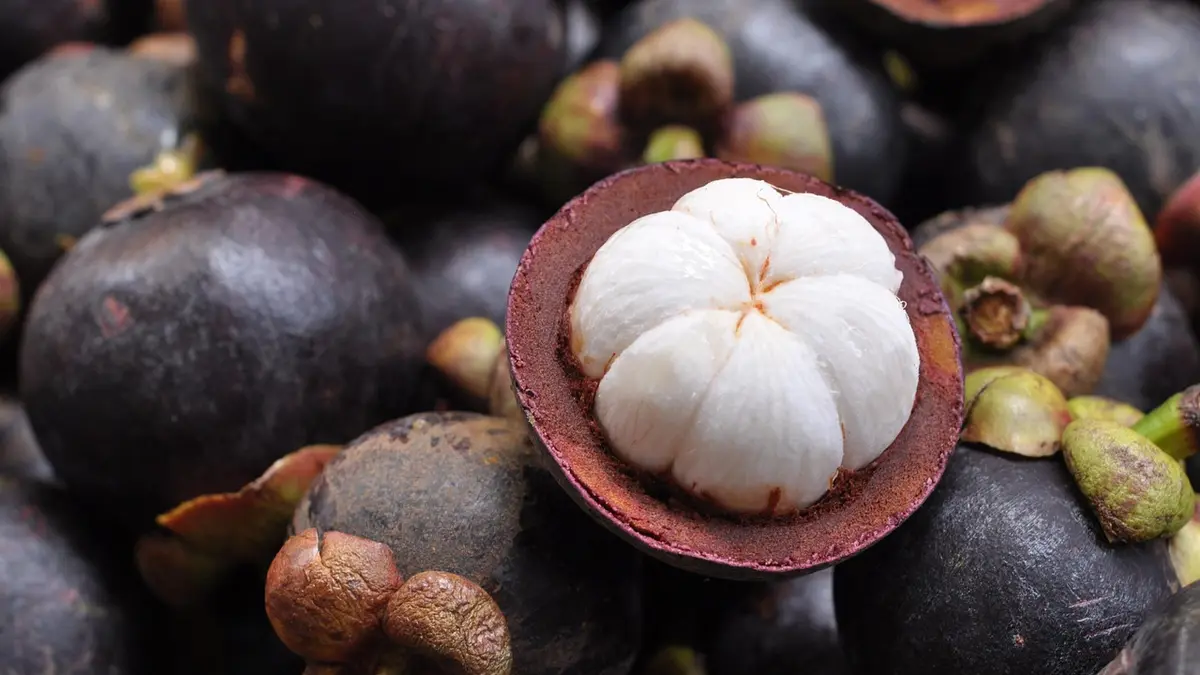
Specify whole fresh mangosteens, growing origin, harvest and packing records, size grading, rind colour and firmness, and acceptable defects. Agree how samples will be opened to assess white flesh, browning, translucent segments, yellow latex staining and off odours. A photograph of purple rind cannot establish the condition inside.
Agree ventilated cartons, protection against crushing, transport conditions, temperature records and the condition expected on arrival. Fresh fruit must meet quality and labelling requirements. Review the pack information before printing, including growing origin, supplier identity and net contents. Request batch-linked pesticide residue testing against the applicable UK limits.
Worked duty example
Illustrative example, not a quote: 100 kg of fresh mangosteens, illustrative only under 0804 50 00 89, invoiced at £2,500 free on board, with £1,800 of freight and insurance to the UK. The customs value is £4,300. Duty at 0% is £0. Import VAT at 20% is charged on the customs value plus duty, £4,300, so it is £860. With no duty, the only import tax is the VAT, which a VAT-registered importer can usually reclaim. The import duty and VAT guide explains each step. This assumes the goods are standard-rated for VAT. Most food for human consumption is zero-rated, and animal feed can be too, in which case no import VAT is due, so check the rate for your product in HMRC's VAT Notice 701/14.
Inspection checklist
Rind: compare colour and size with the agreed sample; check cracks, hard rind, bruising, mould and insects around the calyx.
Flesh: open fruit from different cartons; check segment colour, texture, latex staining, internal decay and smell.
Packing: check carton strength, ventilation, compression damage, wet packaging and recorded transport conditions against the contract.
Records: match carton markings to the packing list, growing origin and test reports; check the organic inspection certificate where organic claims are made.
Working out your own order? Send us the product on WhatsApp and we reply the same working day: WhatsApp us
What goes wrong
A uniform purple exterior can conceal hard rind or damaged flesh. Mixed maturity, crushing and unsuitable transport conditions can leave fruit difficult to open or unacceptable to customers. Inspect opened samples before dispatch and again on arrival, and agree how disputed defects will be recorded.
An exporter may trade fruit grown outside China, while paperwork describes only the dispatch country. Ask for growing-origin records before agreeing labels and customs instructions. Organic paperwork can also be missing or unrelated to the shipment, so check it before loading.
Cambridge China Bridge sources these products for UK businesses, checking the factory and the documents before shipment. See factory verification. For repeat volumes, see container programmes.
Frequently asked questions
What is the UK import duty on fresh mangosteens from China?
The supplied tariff record gives 0% for 0804 50 00 89, with no anti-dumping or countervailing duty and no suspension.
Do fresh mangosteens need a phytosanitary certificate?
Confirm the consignment’s plant health category with your broker. Medium risk B goods entering Great Britain need a phytosanitary certificate but do not need plant health pre-notification.
What documents do organic mangosteens need?
Ask your customs broker to confirm whether an inspection certificate is needed for each organic consignment. It is issued by the exporter’s control body in the country of export.
How should I inspect fresh mangosteens on arrival?
Check rind damage, firmness, calyx pests and carton condition, then open samples from different cartons to assess flesh colour, decay, latex staining and smell.