Sourcing Floating Breakwaters from China
Floating breakwaters from China under 8907 90 00 00 carry 0% UK duty, with no anti-dumping or countervailing duty listed. Construction in English waters or Northern Ireland offshore waters may need a marine licence. Specify wave conditions, buoyancy and mooring loads before ordering. Cambridge China Bridge sources floating breakwaters.
Buying from China for a business? How our UK China sourcing agent service works · China sourcing agent for small orders and first imports
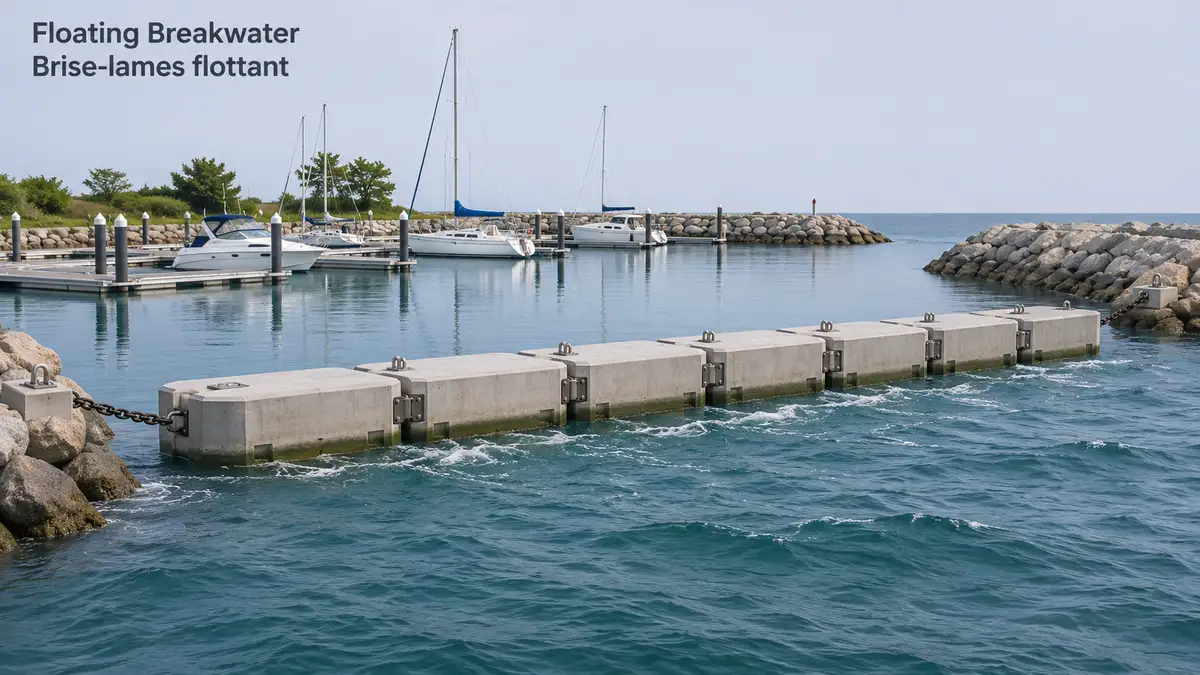
Zero duty on floating breakwaters
Read from the UK Trade Tariff on 23 November 2026, heading 8907 covers other floating structures, including rafts, tanks, coffer-dams, landing stages, buoys and beacons. Floating breakwaters are considered here under 8907 90 00 00, the other floating structures line. The table shows product variants sharing that line, rather than separate tariff subdivisions. See the wider floating pontoons and liferafts guide.
Goods from China carry 0% duty, with no anti-dumping or countervailing duty or suspension listed in the supplied tariff extract. The tariff attaches fluorinated greenhouse gas import control and a DCMS export licence measure. Ask your customs broker to confirm the import-control requirement for the actual materials. Products containing banned fluorinated gases must not be placed on the Great Britain market. Cultural-object export licensing concerns exports from Great Britain to destinations outside the UK.
Confirm the commodity code using drawings, materials and the supplied configuration. Give the broker details of foam filling and its blowing agent where used. The worked order is illustrative, not a supplier quotation. For the calculation method, see UK import duty and VAT.
| Goods | Commodity code | Duty | Anti-dumping or countervailing duty on China |
|---|---|---|---|
| Concrete floating breakwater modules | 8907 90 00 00 | 0% | None |
Specify wave performance and moorings
Define the site's wave heights, periods and directions, water depth, tidal range, current and wind exposure. Specify the acceptable wave conditions behind the breakwater and ask for calculations or test results matching those conditions. A buoyancy test alone does not demonstrate wave attenuation.
Agree module dimensions, material, mass, draft, loaded freeboard, connection movement and mooring loads. Include anchor or pile-guide drawings, corrosion protection, lifting points and replacement connections. For foam-filled units, request the foam composition and blowing-agent declaration. Use factory verification to check the maker's fabrication and test records.
Construction activities in English waters or Northern Ireland offshore waters may need a marine licence. Check the proposed installation with the relevant licensing authority before finalising the layout and ordering site-specific moorings.
Worked duty example
Illustrative example, not a quote: Illustrative order: a 60-metre modular floating breakwater system under 8907 90 00 00, invoiced at £48,000 free on board, with £6,500 of freight and insurance to the UK. The customs value is £54,500. Duty at 0% is £0. Import VAT at 20% is charged on the customs value plus duty, £54,500, so it is £10,900. With no duty, the only import tax is the VAT, which a VAT-registered importer can usually reclaim. The import duty and VAT guide explains each step.
Inspection checklist
Hull and buoyancy: compare dimensions, mass, draft and freeboard with the approved drawings; inspect for cracks, damaged seams and water ingress.
Connections: trial-assemble modules, check alignment and movement, and compare pins, lugs and fixings with the agreed material and strength records.
Moorings and lifting: check attachment positions, welds, corrosion protection, lifting-point identification and the supplied anchor or pile-guide components.
Arrival and records: photograph transit damage, reconcile module identification with test records, and check foam declarations and assembly instructions. Use the quality inspection guide to brief the inspection.
Working out your own order? Send us the product on WhatsApp and we reply the same working day: WhatsApp us
What goes wrong
A supplier demonstrates flotation but provides no evidence of wave reduction at your site. The delivered units can float correctly while failing the agreed shelter performance. Tie acceptance to the specified wave conditions, layout and mooring arrangement.
Thin shells, damaged seals, mismatched connectors and incomplete corrosion protection create rework after arrival. Missing mooring calculations or a changed module mass also undermine the design basis. Agree how substitutions and damaged units will be assessed before shipment.
Cambridge China Bridge sources these products for UK businesses, checking the factory and the documents before shipment. See factory verification. For machinery and equipment, see machinery imports.
Frequently asked questions
What is the UK import duty on floating breakwaters from China?
The supplied tariff extract gives 0% for other floating structures under 8907 90 00 00, with no anti-dumping or countervailing duty listed.
Does installing a floating breakwater need a marine licence?
Check the proposed installation with the relevant authority before ordering.
How do I check a supplier's wave-reduction claim?
Ask for calculations or test results matching your wave heights, periods, directions, water depth and proposed layout. A flotation demonstration alone does not establish shelter performance.
What should I ask about foam-filled breakwaters?
Request the foam composition and blowing-agent declaration. The tariff flags fluorinated-gas import control; ask your broker to confirm applicability. Products containing banned fluorinated gases cannot be placed on the Great Britain market.