Sourcing ethyl chloride from China
Ethyl chloride, also called chloroethane, from China carries 4% UK duty, with no suspension or trade remedy shown for its shared tariff line. Before selling in Great Britain, ensure the chemical is labelled and packaged correctly and review UK REACH registration. Cambridge China Bridge sources ethyl chloride.
Buying from China for a business? How our UK China sourcing agent service works · China sourcing agent for small orders and first imports
Ethyl chloride duty and shared-line controls
Read from the UK Trade Tariff on 1 October 2026, ethyl chloride falls within heading 2903 for halogenated derivatives of hydrocarbons. Commodity code 2903 11 00 00 covers both chloromethane and chloroethane. Goods from China carry 4% duty, with no anti-dumping or countervailing measure and no suspension shown. The table repeats this shared line for different purchasing uses; these are not separate tariff subdivisions.
The tariff attaches a restriction on entry into free circulation concerning ozone-depleting substances. Official guidance says its Part B substances require import and export reporting but are not banned or subject to licensing or quotas. Confirm with your customs broker whether this shared-line control applies to your ethyl chloride shipment from China. The tariff also attaches an export control for waste; ask the broker to confirm its relevance and requirements.
Give your broker the chemical identity, composition, intended use and packaging details when confirming the commodity code. For the wider heading, see sourcing chloromethane from China. Confirm classification separately for a formulated product rather than relying on the name of an ingredient.
| Goods | Commodity code | Duty | Anti-dumping or countervailing duty on China |
|---|---|---|---|
| Ethyl chloride (chloroethane) | 2903 11 00 00 | 4% | None |
Specify ethyl chloride purity and cylinder connections
Write ethyl chloride and chloroethane together in the purchase specification. State the intended industrial or laboratory use, whether you require virgin material, and the agreed assay, water, acidity and impurity limits. Ask for the analytical methods and a certificate of analysis tied to the actual production batch.
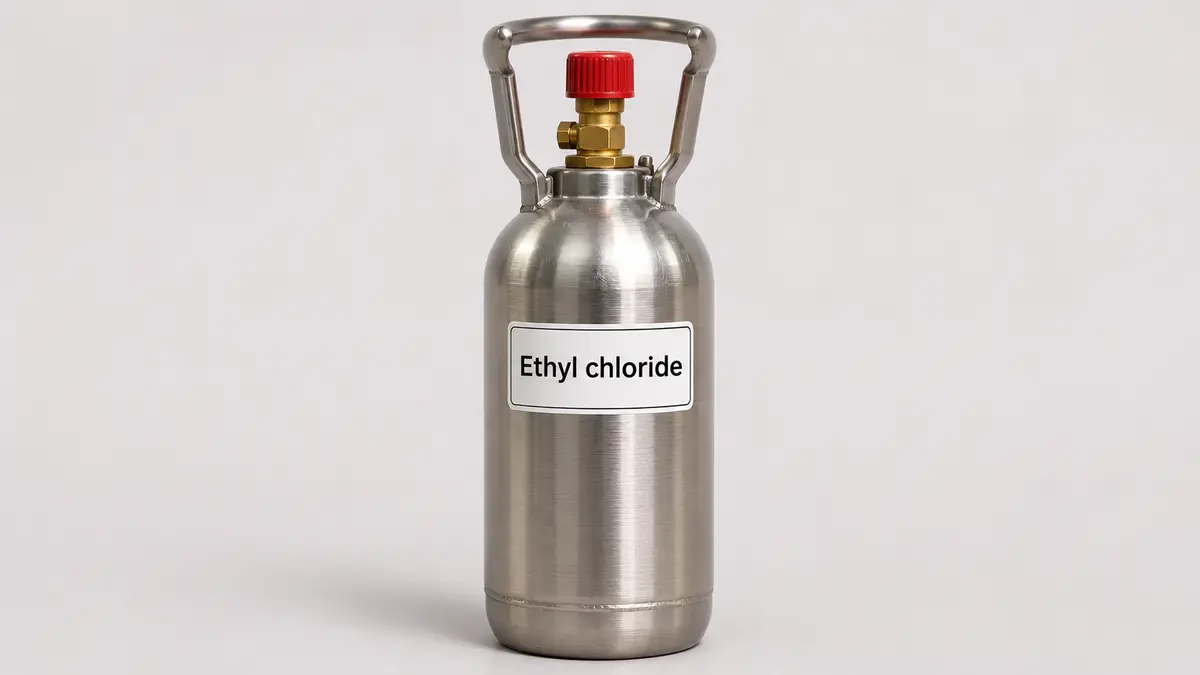
Agree the cylinder material, net fill, valve outlet, closure protection and connection to your receiving equipment. Request photographs of the proposed package and label before accepting the order. Arrange testing and certification support around the agreed specification.
Before placing chemicals on the Great Britain market, the supply chain must ensure correct labelling and packaging. Hazardous chemicals supplied for use at work require safety data sheets. If you have not previously imported this substance, consider whether UK REACH registration is required.
Worked duty example
Illustrative example, not a quote: Illustrative order: 20 kg of ethyl chloride in cylinders; FOB and freight values are illustrative under 2903 11 00 00, invoiced at £2,500 free on board, with £3,500 of freight and insurance to the UK. The customs value is £6,000. Duty at 4% is £240. Import VAT at 20% is charged on the customs value plus duty, £6,240, so it is £1,248. Import taxes total £1,488; a VAT-registered importer can usually reclaim the VAT, so the lasting cost is the £240 of duty. The import duty and VAT guide explains each step.
Inspection checklist
Identity: match the substance name and composition across the order, cylinder label, safety data sheet and batch certificate.
Batch quality: compare assay, water, acidity and impurities with the written specification; check that the certificate identifies the delivered batch.
Cylinders: check valve outlets, protective fittings, seals, visible damage and recorded net fill against the order.
Documents: check that handling and storage information relates to ethyl chloride and that your broker has resolved the attached tariff controls before shipment.
Working out your own order? Send us the product on WhatsApp and we reply the same working day: WhatsApp us
What goes wrong
A shared tariff code can conceal a substance-name error: chloromethane and chloroethane are different purchasing specifications. A certificate for another batch, an unsuitable valve connection or a label that does not match the safety data sheet can leave the delivery unusable until the discrepancy is resolved.
Reject vague descriptions such as “chlorinated solvent” in the purchase specification. Resolve grade substitutions, unexplained impurities and packaging changes before dispatch. Keep arrival records and batch documents together so a disputed cylinder can be traced to its production lot.
Cambridge China Bridge sources these products for UK businesses, checking the factory and the documents before shipment. See factory verification. For repeat volumes, see container programmes.
Frequently asked questions
What is the UK import duty on ethyl chloride from China?
The supplied tariff snapshot shows 4% under 2903 11 00 00, with no suspension, anti-dumping duty or countervailing duty shown.
Is chloroethane the same as ethyl chloride?
Yes. The tariff uses chloroethane with ethyl chloride in brackets. Specify both names and match the composition across the order and batch documents.
Do I need UK REACH registration for ethyl chloride?
If you have not previously imported this substance, HSE says to consider whether UK REACH registration is required. Resolve your registration position before ordering.
What should I check on ethyl chloride cylinders?
Check identity, batch certificate, agreed net fill, valve connection, seals and visible damage. Match the label and safety data sheet to the substance ordered.