Sourcing emulsifying wax blends from China
Emulsifying wax blends from China classified under heading 3404 carry 0% UK duty across the supplied lines. Confirm the composition before choosing the code, and check chemical classification and UK REACH duties for supply in Great Britain. Test the blend in your own cream or lotion formula. Cambridge China Bridge sources emulsifying wax blends.
Buying from China for a business? How our UK China sourcing agent service works · China sourcing agent for small orders and first imports
Zero duty for qualifying prepared wax blends
Heading 3404 covers artificial waxes and prepared waxes. This guide concerns emulsifying blends bought as formulation ingredients. The trade name alone does not establish the classification: obtain the full composition and intended use. The table shows alternative supply forms under the same other-prepared-waxes line, rather than separate commodity lines. See the wider artificial and prepared waxes guide.
Read from the UK Trade Tariff on 1 October 2026, both 3404 20 00 00, for polyethylene glycol waxes, and 3404 90 00 00, for other artificial and prepared waxes, carry 0% duty for goods from China. The supplied snapshot lists no anti-dumping or countervailing duties, suspensions or attached import controls.
Ask your customs broker to confirm whether the actual blend belongs in this heading before using its duty rate. Provide ingredient identities, proportions and a technical description, using our commodity code guide. Zero customs duty does not establish compliance with chemical supply rules.
| Goods | Commodity code | Duty | Anti-dumping or countervailing duty on China |
|---|---|---|---|
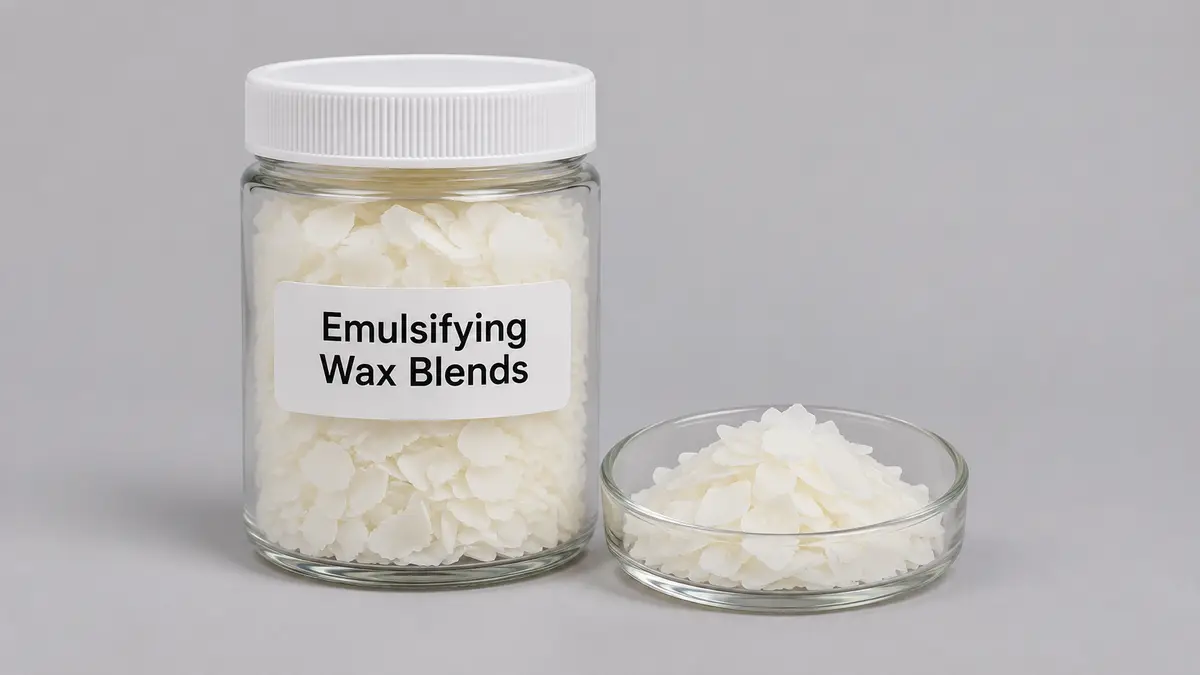
| Prepared emulsifying wax blends in flakes | 3404 90 00 00 | 0% | None |
Specify the blend and test it in your formula
Agree the fatty alcohol and emulsifier identities, proportions, ionic character, appearance, odour, melting range and supply form. Record the intended cream or lotion, oil phase, acidity, processing temperature and mixing method. Ask for a batch certificate of analysis and retain the approved sample. Compare blends in your own formula rather than accepting the same trade name as proof of equivalence.
For supply in Great Britain, chemical suppliers, including importers, are responsible for hazard classification. Substances and mixtures must be correctly labelled and packaged before being placed on the market. A hazardous blend supplied for workplace use needs a safety data sheet.
UK REACH registration applies to substances, including substances within mixtures. Check the constituent substances and applicable registration duties before ordering; obtain sufficient composition information to assess them. Ask the supplier to identify any formulation changes before production.
Worked duty example
Illustrative example, not a quote: Illustrative trial pallet of prepared emulsifying wax flakes under 3404 90 00 00, invoiced at £2,200 free on board, with £1,168 of freight and insurance to the UK. The customs value is £3,368. Duty at 0% is £0. Import VAT at 20% is charged on the customs value plus duty, £3,368, so it is £673.60. With no duty, the only import tax is the VAT, which a VAT-registered importer can usually reclaim. The import duty and VAT guide explains each step.
Inspection checklist
Identity: check the batch certificate, ingredient declaration and supplied grade against the approved formulation and retained sample.
Appearance: check colour, odour, melting behaviour and uniformity; inspect for contamination, moisture and caking.
Performance: make a trial emulsion using your agreed process; compare viscosity, separation, graininess and texture after cooling and storage.
Packing: check seals, cleanliness, net contents and batch identification; match chemical labels and the safety data sheet to the supplied blend. Use our quality inspection guide to brief the inspection.
Working out your own order? Send us the product on WhatsApp and we reply the same working day: WhatsApp us
What goes wrong
A supplier substitutes the emulsifier or changes its proportion while keeping the product name. The sample cream works, but the production blend separates, thickens differently or leaves a grainy texture. Colour and odour can also drift, while damaged bags admit moisture or contamination.
Approve the formulation as well as the sample, retain batch samples and repeat the agreed application test on arrival. Hold a batch that differs from the agreed specification while the supplier investigates. A matching melting range alone does not demonstrate equivalent emulsifying performance.
Cambridge China Bridge sources these products for UK businesses, checking the factory and the documents before shipment. See factory verification. For repeat volumes, see container programmes.
Frequently asked questions
What is the UK import duty on emulsifying wax blends from China?
For blends confirmed within heading 3404, both supplied commodity lines carry 0% duty. The supplied snapshot lists no anti-dumping or countervailing duty. Confirm the composition and code first.
Are all emulsifying wax blends interchangeable?
Do not assume so. Compare ingredient identities, proportions and ionic character, then test the replacement in your own cream or lotion using the agreed manufacturing process.
Does emulsifying wax need a safety data sheet?
A hazardous blend supplied for workplace use needs a safety data sheet. Ask for the actual blend's hazard classification and check that the document matches the supplied formulation.
What should I test before accepting a batch?
Compare identity, appearance, odour and melting behaviour with the approved sample. Make an emulsion in your own formula and check viscosity, separation and graininess after cooling and storage.