Sourcing drip bag coffee from China
Plain roasted drip bag coffee from China attracts UK duty of 6%, or 8% when decaffeinated. Confirm retail food-labelling requirements with the relevant food authority; organic coffee needs an inspection certificate. Specify the coffee, filter and sealed wrapper together. Cambridge China Bridge sources drip bag coffee.
Buying from China for a business? How our UK China sourcing agent service works · China sourcing agent for small orders and first imports
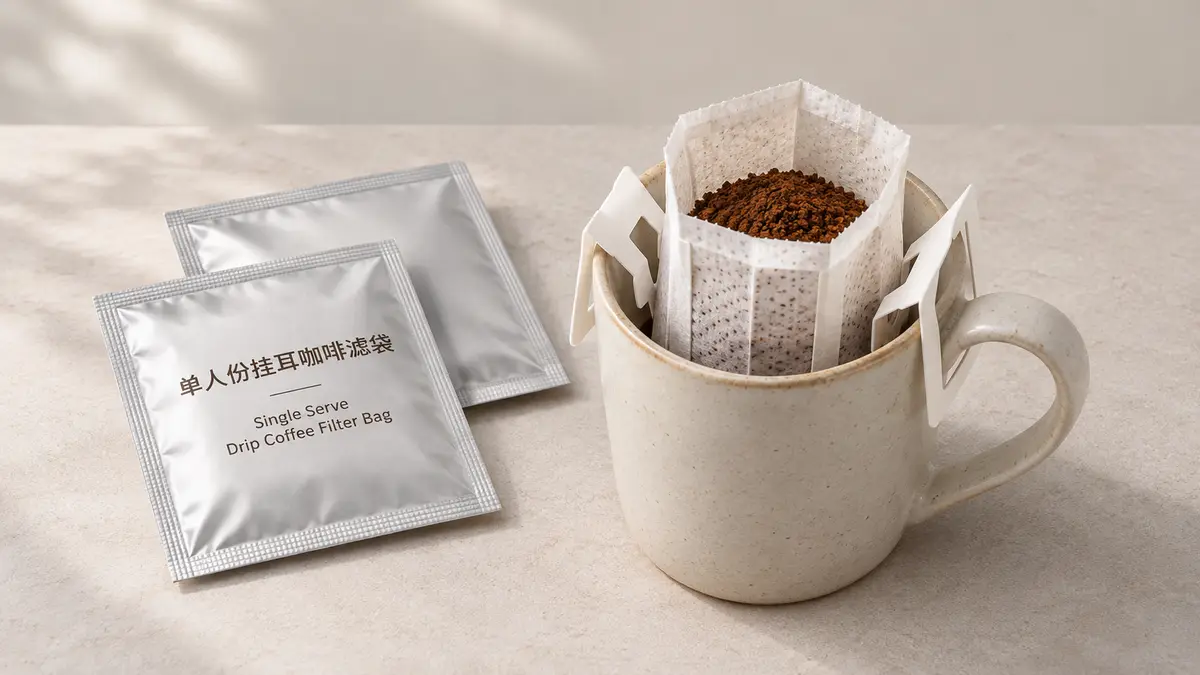
Duty on filled drip bags and coffee inputs
Read from the UK Trade Tariff on 5 October 2026, heading 0901 covers coffee, whether roasted or decaffeinated, coffee husks and skins, and substitutes containing coffee. This guide concerns plain roasted ground coffee in hanging filters. The green-coffee table rows are production inputs for buyers arranging roasting and filling separately, rather than finished drip bags.
Chinese-origin roasted coffee carries 6% duty under 0901 21 00 00, or 8% when decaffeinated under 0901 22 00 00. Green coffee carries 0% when not decaffeinated and 8% when decaffeinated. The supplied tariff facts show no anti-dumping or countervailing duties and no suspensions. They attach organic import control: organic coffee needs an inspection certificate, issued by the exporter’s control body in the exporting country.
Confirm the composition and processing with your customs broker using our commodity code guide. Do not apply the green-coffee rate to finished roasted drip bags. For related formats within the heading, see filled coffee capsules.
| Goods | Commodity code | Duty | Anti-dumping or countervailing duty on China |
|---|---|---|---|
| Roasted coffee in drip bags, not decaffeinated | 0901 21 00 00 | 6% | None |
| Decaffeinated roasted coffee in drip bags | 0901 22 00 00 | 8% | None |
| Green coffee input for roasting and drip-bag filling, not decaffeinated | 0901 11 00 00 | 0% | None |
| Decaffeinated green coffee input for roasting and drip-bag filling | 0901 12 00 00 | 8% | None |
Specify the coffee, hanging filter and wrapper
Agree bean origin, blend, roast profile, decaffeination status, grind distribution and fill weight against an approved brewed sample. Specify brewing instructions and the cup shapes the hanging arms must fit. Test the filled filter rather than approving loose coffee alone: grind and filter permeability together determine drainage, sediment and flavour.
Record the filter material, hanging-arm construction, seams and outer-wrapper barrier specification. Ask for food-contact suitability evidence covering the actual materials and hot-water brewing conditions. Agree seal checks, roast and packing records, storage conditions and evidence supporting the proposed shelf life.
Confirm food business registration and traceability requirements with the relevant food authority. Ask the authority or your label reviewer to confirm requirements for the food name, net quantity, best-before date and importer’s name and address on retail labels. If packed in a protective atmosphere, the label must state ‘packaged in a protective atmosphere’. Review artwork before printing.
Worked duty example
Illustrative example, not a quote: Illustrative trial consignment of individually wrapped drip bag coffee under 0901 21 00 00, invoiced at £1,800 free on board, with £300 of freight and insurance to the UK. The customs value is £2,100. Duty at 6% is £126. Import VAT at 20% is charged on the customs value plus duty, £2,226, so it is £445.20. Import taxes total £571.20; a VAT-registered importer can usually reclaim the VAT, so the lasting cost is the £126 of duty. The import duty and VAT guide explains each step. This assumes the goods are standard-rated for VAT. Most food for human consumption is zero-rated, and animal feed can be too, in which case no import VAT is due, so check the rate for your product in HMRC's VAT Notice 701/14.
Inspection checklist
Brew: compare aroma, flavour, drainage and sediment with the approved sample using the agreed brewing method.
Filter: check that hanging arms stay on the intended cups, seams remain intact when wet and grounds stay inside the filter.
Wrapper: check seal continuity, trapped grounds, pinholes, opening notches and any nitrogen-flushing records against the packing specification.
Batch: check fill weights, roast and packing records, label artwork and traceability; review lot-specific contaminant and pesticide residue reports.
Working out your own order? Send us the product on WhatsApp and we reply the same working day: WhatsApp us
What goes wrong
Fine grounds can block the filter, while unsuitable filter material lets sediment through. Hanging arms may slip from wide cups or soften during brewing. Grounds trapped in wrapper seals, pinholes and poor barriers can leave coffee stale despite acceptable loose-coffee samples.
Approve samples made on the intended filling line, retain sealed reference packs and repeat brew and seal checks on arrival. Keep suspect cartons separate while investigating. Use our quality inspection guide to define the checks before production.
Cambridge China Bridge sources these products for UK businesses, checking the factory and the documents before shipment. See factory verification. For repeat volumes, see container programmes.
Frequently asked questions
What is the UK import duty on drip bag coffee from China?
Plain roasted coffee in drip bags carries 6% under 0901 21 00 00, or 8% when decaffeinated under 0901 22 00 00. The supplied tariff facts show no anti-dumping or countervailing duty.
Is imported drip bag coffee subject to VAT?
Confirm the VAT treatment of plain coffee with HMRC or your customs broker. Check the treatment separately if the product includes other ingredients or is supplied as part of a mixed set.
What documents do I need for organic drip bag coffee?
Organic coffee needs an inspection certificate. The exporter’s control body issues it in the exporting country. Confirm the import arrangements with your organic control body and customs broker before dispatch.
How do I check drip bag coffee before ordering?
Brew production samples in the intended cups. Compare flavour, drainage and sediment, test wet seams and hanging arms, and check outer-wrapper seals and food-contact suitability evidence.