Sourcing dried Sichuan chillies from China
Dried Sichuan chillies from China have base UK duty rates of 0% whole and 4% crushed or ground, with a 0% suspension for unmixed crushed or ground Capsicum. Confirm applicable food-contaminant and pesticide-residue limits with the relevant food authority. Specify the variety, heat and drying quality, then check the shipment lot. Cambridge China Bridge sources dried Sichuan chillies.
Buying from China for a business? How our UK China sourcing agent service works · China sourcing agent for small orders and first imports
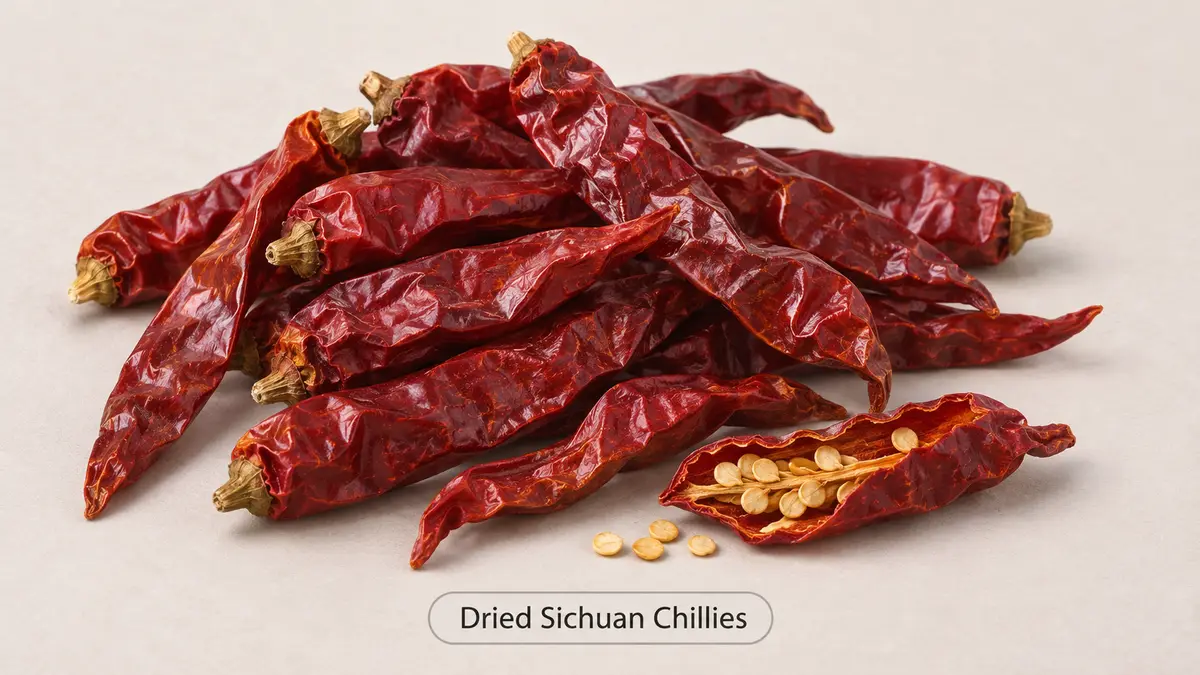
Whole chillies: 0%; flakes and powder: suspended duty
Read from the UK Trade Tariff on 2 October 2026, heading 0904 covers pepper and dried, crushed or ground Capsicum and Pimenta fruit. This guide concerns dried Sichuan chillies: whole pods under 0904 21 90 20 and unmixed flakes or powder under 0904 22 00 19. The table distinguishes commercial forms sharing these codes.
Whole dried chillies from China carry 0% duty. Crushed or ground chillies have a 4% base rate with a 0% autonomous suspension, which excludes mixtures and preparations. No anti-dumping or countervailing duty is recorded for these lines. The tariff attaches organic import control: organic spices need an inspection certificate for release as organic. The certificate is issued by the exporter’s control body in the country of export.
Confirm the commodity code using the species, processing and ingredients. Sauces and blended seasonings need separate classification. See the pepper and dried chillies guide for the wider heading. Before booking, ask the relevant food authority or your customs broker whether the product and Chinese origin appear on the current high-risk food list, and confirm any pre-notification and border-check requirements. This guide addresses imports into Great Britain.
| Goods | Commodity code | Duty | Anti-dumping or countervailing duty on China |
|---|---|---|---|
| Whole dried Sichuan chillies, with stalks | 0904 21 90 20 | 0% | None |
| Dried Sichuan chilli flakes, without added ingredients | 0904 22 00 19 | 4% | None |
Specify the chilli variety and intended cooking use
Do not buy against the description ‘Sichuan chilli’ alone. Record the supplier’s variety name, growing origin and whether varieties are blended. Agree pod shape, colour, aroma and heat against an approved sample. State whether the chillies will be fried whole, milled or sold in retail packs.
Specify stalk removal, acceptable broken pods, seed content, moisture and foreign matter. For flakes and powder, agree particle size and whether seeds are retained. Record drying and microbial treatment, then agree sealed inner packaging and batch identification. Ask for shipment-lot testing through testing and certification.
Worked duty example
Illustrative example, not a quote: 5 tonnes of whole dried Sichuan chillies; illustrative order under 0904 21 90 20, invoiced at £15,000 free on board, with £1,500 of freight and insurance to the UK. The customs value is £16,500. Duty at 0% is £0. Import VAT at 20% is charged on the customs value plus duty, £16,500, so it is £3,300. With no duty, the only import tax is the VAT, which a VAT-registered importer can usually reclaim. The import duty and VAT guide explains each step. This assumes the goods are standard-rated for VAT. Most food for human consumption is zero-rated, and animal feed can be too, in which case no import VAT is due, so check the rate for your product in HMRC's VAT Notice 701/14.
Inspection checklist
Identity: compare pod shape, variety declaration, origin and cooked aroma with the approved sample; confirm that the shipment contains the agreed varieties.
Condition: check moisture, mould, insects, stones, stalks, broken pods and excessive loose seeds. Compare colour and heat with the specification.
Safety: match laboratory reports to the shipment lot and agreed tests for aflatoxins, ochratoxin A, pesticide residues, Salmonella and illegal dyes, especially in flakes and powder.
Packing and labels: check dry, sealed liners and consistent batch identification. Confirm retail labelling requirements with the relevant food authority, including the food name, net quantity, responsible business address and ingredients where blended. For organic stock, check the inspection certificate. Retain sealed samples using the quality inspection guide.
Working out your own order? Send us the product on WhatsApp and we reply the same working day: WhatsApp us
What goes wrong
A sample can have the right aroma while the shipment contains a different variety blend, more seeds or more broken pods. Heat and colour then change in the buyer’s recipes. Keep an approved sample and compare a representative shipment sample before release.
Damp drying or storage can lead to mould and contamination. Grinding can hide stalks or other added material. Agree lot testing before shipment and keep suspect stock separate on arrival. A clean appearance does not replace the agreed laboratory checks.
Cambridge China Bridge sources these products for UK businesses, checking the factory and the documents before shipment. See factory verification. For repeat volumes, see container programmes.
Frequently asked questions
What is the UK import duty on dried Sichuan chillies from China?
Whole dried chillies under 0904 21 90 20 carry 0%. Flakes and powder under 0904 22 00 19 have a 4% base rate with a 0% suspension excluding mixtures and preparations.
Are dried Sichuan chillies the same as Sichuan peppercorns?
No. Specify chilli pods, flakes or powder explicitly. Do not accept a supplier description that substitutes peppercorns for chillies.
Do dried chillies need a health certificate?
Herbs and spices do not normally need a health certificate. Check the current high-risk food list before shipment, and arrange an inspection certificate if importing as organic.
What tests should I request for dried Sichuan chillies?
Agree shipment-lot tests for aflatoxins, ochratoxin A, pesticide residues and Salmonella, with illegal dye screening especially for flakes and powder. Also check moisture, foreign matter and heat.