Sourcing dried pear pomace feed from China
Dried pear pomace feed from China carries 0% UK duty under the non-grape fruit pomace line; all supplied heading 2308 lines are 0%. Feed importers must be registered; ask the relevant feed authority to confirm applicable labelling and contaminant requirements. Check organic documents and waste status before shipment. Cambridge China Bridge sources dried pear pomace feed.
Buying from China for a business? How our UK China sourcing agent service works · China sourcing agent for small orders and first imports
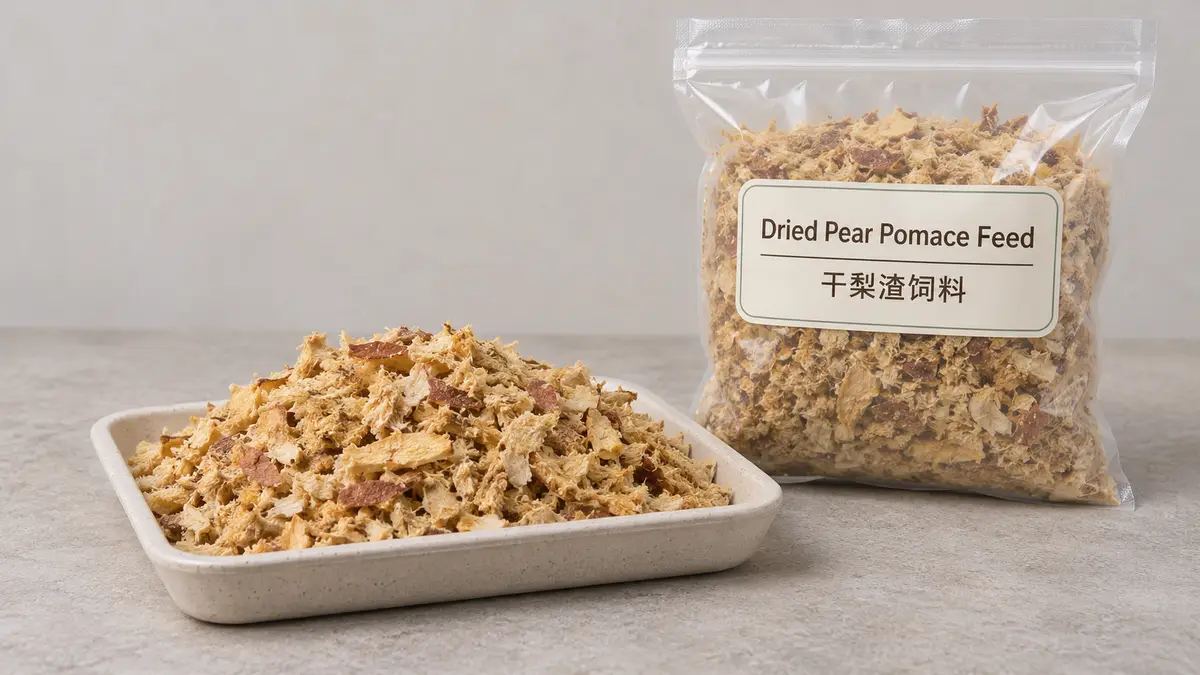
Pear pomace classification and import controls
Read from the UK Trade Tariff on 29 September 2026, heading 2308 covers vegetable feed materials, residues and by-products, including pellets, not elsewhere specified. Plain dried pear pomace falls within 2308 00 40 90, covering other non-grape fruit pomace. All supplied lines carry 0% duty for goods from China, with no recorded anti-dumping or countervailing duties or suspensions. The table includes neighbouring comparison lines.
The tariff attaches organic import and waste import controls, plus a waste export control relevant to later exports. For organic pear feed from China into Great Britain, obtain a consignment inspection certificate. Ask the relevant organic control body to confirm the importer's location and certification requirements. Confirm the documents and clearance arrangements with your customs broker before shipment.
Waste shipment controls apply only if the material is waste. For imports into England under notification controls, shipment must await consent from the Environment Agency and the other competent authorities involved. Ask your broker to confirm the pear residue's status and applicable requirements. Confirm the commodity code from its composition, processing and intended use. See the dried apple pomace feed guide for the wider heading.
| Goods | Commodity code | Duty | Anti-dumping or countervailing duty on China |
|---|---|---|---|
| Non-grape, non-citrus fruit pomace, including dried pear pomace feed | 2308 00 40 90 | 0% | None |
| Citrus pulp residues, neighbouring comparison line | 2308 00 40 10 | 0% | None |
| Other grape marc, neighbouring comparison line | 2308 00 19 00 | 0% | None |
| Other vegetable feed materials and residues, comparison line | 2308 00 90 00 | 0% | None |
Specify the pear residue and drying process
Describe the residue from pear processing, including the expected peel, pulp, core and seed content. State whether it is loose, milled or pelleted, and disclose other fruit residues, binders and preservatives. Agree moisture, crude fibre, protein, residual sugars, ash, particle size and packaging against the intended feeding use. Request the drying process and batch analysis before approving a sample.
Feed importers must be registered as feed businesses. Ask the relevant feed authority to confirm requirements for the feed-material name, statutory declarations and applicable undesirable substance limits. Request proposed labels and supporting analysis. Agree contaminant testing with the laboratory through testing and certification support, and keep loading samples for comparison with the delivered lot.
Worked duty example
Illustrative example, not a quote: Illustrative order: 12 tonnes of dried pear pomace feed under 2308 00 40 90, invoiced at £3,500 free on board, with £2,680 of freight and insurance to the UK. The customs value is £6,180. Duty at 0% is £0. Import VAT at 20% is charged on the customs value plus duty, £6,180, so it is £1,236. With no duty, the only import tax is the VAT, which a VAT-registered importer can usually reclaim. The import duty and VAT guide explains each step. This assumes the goods are standard-rated for VAT. Most food for human consumption is zero-rated, and animal feed can be too, in which case no import VAT is due, so check the rate for your product in HMRC's VAT Notice 701/14.
Inspection checklist
Identity: compare the pear residue, declared additions and loose or pellet form with the approved specification; investigate unexpected fruit material, grit or excess seeds.
Analysis: independently sample the shipment and compare moisture, fibre, protein, sugars and ash with the contract; check the agreed contaminant results against applicable feed limits.
Condition: on arrival, check for mould, fermentation odour, heating, insects and caking; inspect pellet breakdown and excessive dust.
Packs and documents: check seals, bag damage and net weight; match batch references to analysis reports, feed declarations and any organic inspection certificate.
Working out your own order? Send us the product on WhatsApp and we reply the same working day: WhatsApp us
What goes wrong
Damp pockets can remain inside material that looks dry on the surface. During transit these can encourage mould, fermentation and caking. Drying that scorches the residue, or a change in peel and seed content, can also leave the delivered material different from the approved sample. Compare loading and arrival samples before accepting a disputed lot.
A supplier may mix other fruit residues into pear pomace or add a binder without updating the specification. Missing organic paperwork or unresolved waste status can disrupt clearance. Approve composition, batch analysis and the document checklist before loading. Use the quality inspection guide to brief the inspector.
Cambridge China Bridge sources these products for UK businesses, checking the factory and the documents before shipment. See factory verification. For repeat volumes, see container programmes.
Frequently asked questions
What is the UK import duty on dried pear pomace feed from China?
The supplied tariff record gives 0% for 2308 00 40 90 and all other heading 2308 lines, with no recorded anti-dumping or countervailing duty or suspensions.
Do I need to register to import dried pear pomace feed?
Yes. Feed importers must be registered as feed businesses. Confirm the registration arrangements for your activities with the relevant authority before importing.
Does organic pear pomace feed need an inspection certificate?
Yes. For organic imports from China into Great Britain, obtain an inspection certificate for each consignment.
Is dried pear pomace feed zero-rated for VAT?
Ask HMRC or your customs broker to confirm the VAT treatment for the intended feeding use, including whether zero-rating applies. Do not assume that 0% customs duty settles VAT.