Sourcing dried echinacea root from China
Dried echinacea root from China has a 0% duty rate under the candidate code 1211 90 86 90, covering whole, cut, crushed and powdered root. Confirm the botanical species and intended use: food suitability and medicinal claims need separate checks. Cambridge China Bridge sources dried echinacea root.
Buying from China for a business? How our UK China sourcing agent service works · China sourcing agent for small orders and first imports
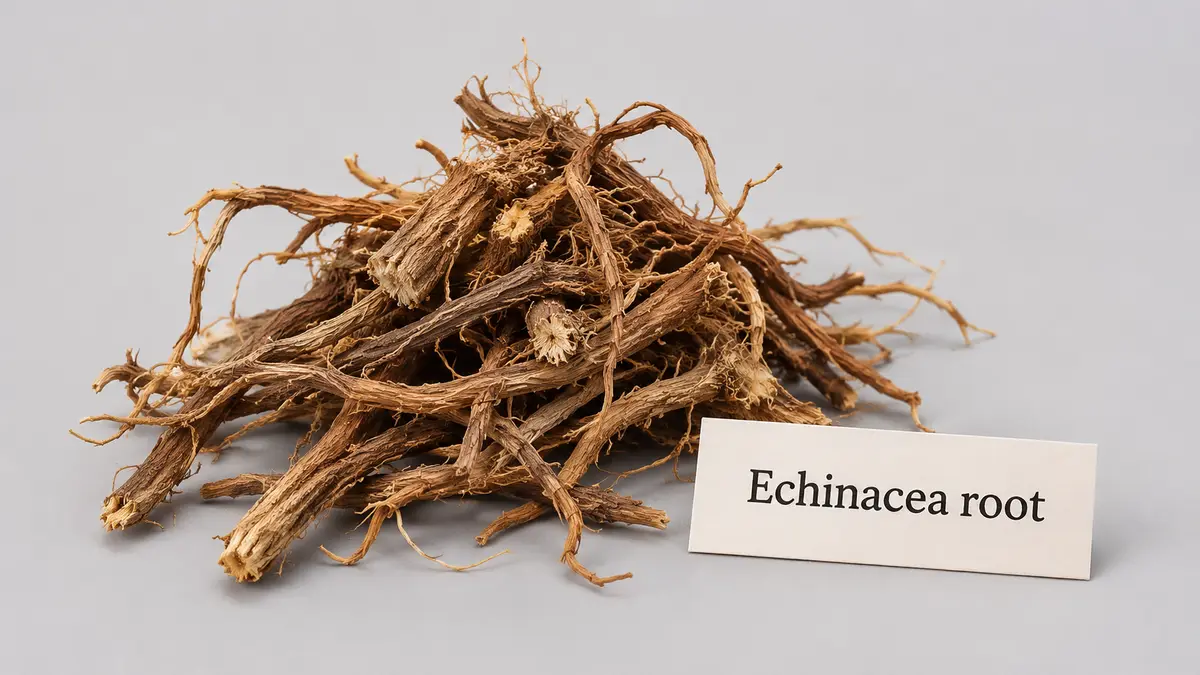
Dried root: duty and control checks
Read from the UK Trade Tariff on 2 October 2026, heading 1211 covers plants and plant parts primarily used in pharmacy, perfumery or similar purposes, including dried, cut, crushed and powdered material. Dried echinacea root is a candidate for the residual code 1211 90 86 90. The table entries describe supply forms sharing this code.
The supplied tariff facts show 0% duty for this code on goods from China, no anti-dumping or countervailing measure, and no suspension. The line attaches CITES, Home Office controlled-drug and organic import controls, plus CITES and controlled-drug export controls. For listed Annex A or B species, CITES permits are required; controlled drugs or precursor chemicals require a licence. Have your customs broker confirm applicability to the declared species and shipment.
For organic food, arrange the inspection certificate with the exporter’s control body and ask your broker to confirm the organic clearance requirements. Confirm classification using the species, plant part, processing and intended use with finding your commodity code. For the wider heading, see dried valerian root.
| Goods | Commodity code | Duty | Anti-dumping or countervailing duty on China |
|---|---|---|---|
| Whole dried echinacea root | 1211 90 86 90 | 0% | None |
Specify the echinacea species and root form
Write the botanical name and root-only description into the purchase specification. Agree whole roots, cut material, crushed material or powder, with the cut or particle profile matched to your process. Specify acceptable soil, foreign plant material, fines and moisture against an approved sample. Record growing origin, drying method and any fumigation or other treatment.
Decide whether the buyer will use the root as a food ingredient, supplement ingredient or medicinal raw material. For food use, confirm novel-food status and any authorisation requirements with the relevant food authority. Before selling products with medicinal claims, confirm any herbal registration or marketing authorisation requirements with MHRA. Agree batch identity and contamination testing before purchasing, using testing and certification support.
Worked duty example
Illustrative example, not a quote: Illustrative order: 500 kg of cut dried echinacea root under 1211 90 86 90, invoiced at £30,000 free on board, with £900 of freight and insurance to the UK. The customs value is £30,900. Duty at 0% is £0. Import VAT at 20% is charged on the customs value plus duty, £30,900, so it is £6,180. With no duty, the only import tax is the VAT, which a VAT-registered importer can usually reclaim. The import duty and VAT guide explains each step. This assumes the goods are standard-rated for VAT. Most food for human consumption is zero-rated, and animal feed can be too, in which case no import VAT is due, so check the rate for your product in HMRC's VAT Notice 701/14.
Inspection checklist
Identity: compare sampled roots with the approved reference and botanical description; arrange microscopic or laboratory identification where needed, especially for powder.
Condition: check moisture, musty odour, visible mould, insects, soil and foreign material across the batch; compare cut size and fines with the agreed specification.
Testing: match the batch to reports for pesticides, heavy metals, sulphite and aflatoxins, with microbiological testing selected for the intended use.
Packaging and records: check dry, intact liners and closures; reconcile bag markings, botanical name, root form, batch identification, invoice and test reports. Check any organic inspection certificate with the shipment records.
Working out your own order? Send us the product on WhatsApp and we reply the same working day: WhatsApp us
What goes wrong
The common name can conceal a different species or a mixture of roots and aerial parts. Powder makes visual identification harder. Excess fines alter processing, residual soil increases cleaning work, and moisture trapped in packaging can lead to mould. Keep an approved reference sample and agree the sampling and rejection criteria before shipment.
A supplier’s medicinal-use description does not settle whether you can sell the material as food. Check the intended sales route before printing labels or making claims. Keep uncertain identity or contamination results separate from accepted stock while investigating, and ask your broker to resolve tariff control flags before dispatch.
Cambridge China Bridge sources these products for UK businesses, checking the factory and the documents before shipment. See factory verification. For repeat volumes, see container programmes.
Frequently asked questions
What is the UK import duty on dried echinacea root from China?
The supplied tariff facts show 0% duty under candidate code 1211 90 86 90, with no anti-dumping or countervailing measure. Confirm the classification and attached controls before shipment.
Can I sell dried echinacea root as food?
Check the species, plant part and intended food use against novel-food guidance, and confirm any authorisation requirements with the relevant food authority before sale. A history of medicinal use does not establish food suitability.
Does the tariff mean echinacea needs a CITES permit?
The residual code carries a CITES control. Check the declared species rather than assuming the flag settles its status. Ask your customs broker to confirm the requirement for your shipment.
What should I specify for echinacea root powder?
Specify the botanical name, root-only material, particle profile, moisture, treatment history and batch testing. Retain an identified reference sample because powder is harder to verify visually.