Sourcing dried Corinth currants from China
Dried Corinth currants from China have a 2% UK tariff rate, suspended to 0% for qualifying unmixed goods. Confirm the applicable food contaminant and pesticide limits with the relevant food authority, with additional import controls for organic consignments. Cambridge China Bridge sources dried Corinth currants.
Buying from China for a business? How our UK China sourcing agent service works · China sourcing agent for small orders and first imports
Currant duty and the suspension
Heading 0806 covers fresh and dried grapes. Dried Corinth currants fall under the currant line, 0806 20 10 00. The other table rows are dried-grape comparisons, not alternative codes for the same currants. See the raisins and sultanas guide for the wider dried-grape family.
Read from the UK Trade Tariff on 6 October 2026, the currant line carries a 2% third-country duty for goods from China, with an autonomous suspension to 0%. The supplied reference gives the suspension end as 31 December 2028. It excludes mixtures, preparations and products containing different components. No anti-dumping duty is recorded. Plain dried fruit is zero-rated for VAT.
Confirm the commodity code against the actual product. The tariff also attaches organic import controls. Organic shipments from China to Great Britain require a Certificate of Inspection and accompanying documents. The exporter’s control body issues the certificate. Check the recognised countries and control bodies in the non-UK organic registers, and confirm the consignment paperwork with your customs broker before shipment.
| Goods | Commodity code | Duty | Anti-dumping or countervailing duty on China |
|---|---|---|---|
| Dried currants, including Corinth currants | 0806 20 10 00 | 2% | None |
| Comparison: sultanas in immediate containers not exceeding 2 kg | 0806 20 30 10 | 2% | None |
| Comparison: sultanas in other containers | 0806 20 30 90 | 2% | None |
| Comparison: other dried grapes | 0806 20 90 00 | 2% | None |
Specify the currant variety and baking performance
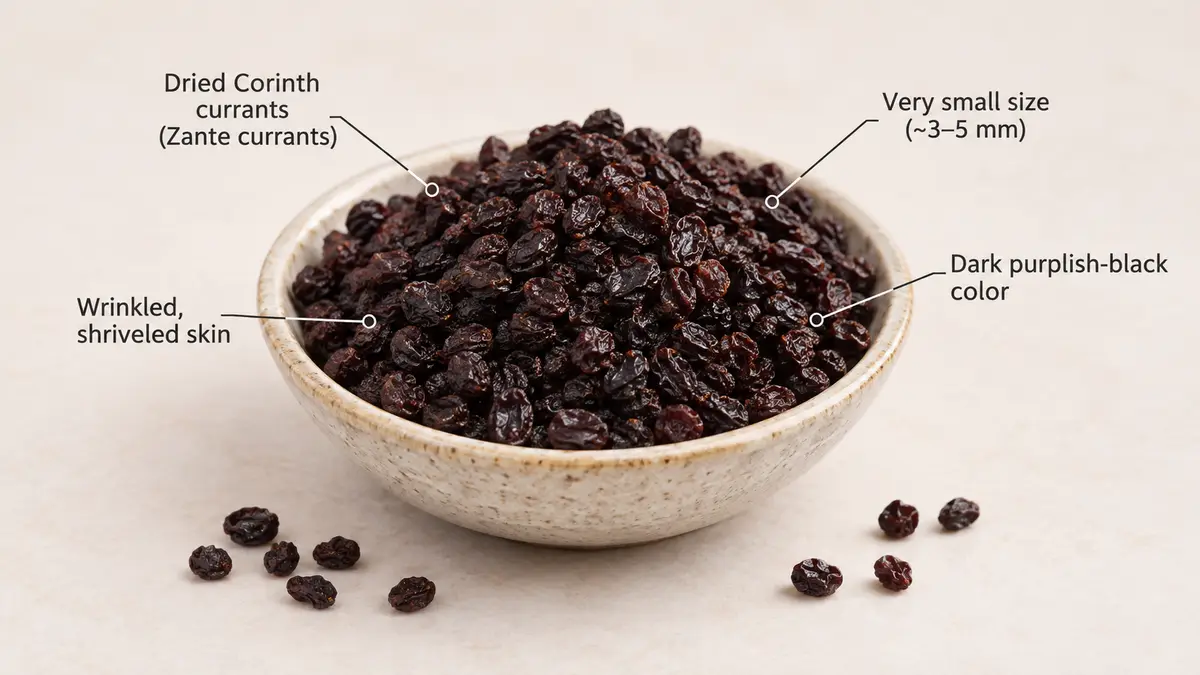
Ask the supplier to identify the grape variety and growing origin, rather than accepting a quotation that says only “black raisins”. Require a representative sample of the actual currants offered. Agree colour, size grading, flavour, moisture, capstem removal and acceptable foreign matter against that sample.
Record any added oil or sulphur dioxide, the packing format and storage conditions. Agree batch testing for ochratoxin A, pesticide residues and sulphur dioxide before ordering. Confirm the applicable pesticide residue limits and sulphite allergen declaration and emphasis requirements with the relevant food authority.
For bakery use, trial the sample in your recipe. Check whether the fruit separates during mixing, retains its texture after soaking and distributes evenly through the dough. Agree how a batch that differs from the approved sample will be handled.
Worked duty example
Illustrative example, not a quote: Illustrative bulk-carton order of dried Corinth currants for a small bakery under 0806 20 10 00, invoiced at £2,500 free on board, with £850 of freight and insurance to the UK. The customs value is £3,350. Duty at 2% is £67. Import VAT at 20% is charged on the customs value plus duty, £3,417, so it is £683.40. Import taxes total £750.40; a VAT-registered importer can usually reclaim the VAT, so the lasting cost is the £67 of duty. The import duty and VAT guide explains each step. This assumes the goods are standard-rated for VAT. Most food for human consumption is zero-rated, and animal feed can be too, in which case no import VAT is due, so check the rate for your product in HMRC's VAT Notice 701/14.
Inspection checklist
Identity: compare the delivered currants with the approved sample and the supplier’s variety and growing-origin records.
Condition: check moisture against the agreed specification, smell for fermentation and inspect for mould, insects and hard clumps.
Cleaning: examine samples for capstems, stalks, stones and grit, and check size grading and any oil coating.
Batch evidence: match laboratory reports to carton lot marks. Check declared ingredients, sulphite information, pack condition and storage instructions before releasing the lot for use.
Working out your own order? Send us the product on WhatsApp and we reply the same working day: WhatsApp us
What goes wrong
A supplier may offer ordinary small raisins against an imprecise currant enquiry. A sample can also differ from the shipment in size, flavour or capstem content. Put the agreed identity and sample reference on the order, and compare production samples before loading.
Damp fruit can ferment or develop mould, while rushed cleaning leaves grit and stalks. A clean-looking lot can still fail contaminant or pesticide limits. Review batch-specific test results alongside the physical inspection, and investigate discrepancies before using the fruit.
Cambridge China Bridge sources these products for UK businesses, checking the factory and the documents before shipment. See factory verification. For repeat volumes, see container programmes.
Frequently asked questions
What is the UK import duty on dried Corinth currants from China?
The supplied tariff snapshot shows 2%, suspended to 0% for qualifying unmixed currants under 0806 20 10 00. The suspension excludes mixtures and preparations.
Do I pay import VAT on plain dried currants?
Confirm the VAT treatment of plain dried fruit with HMRC or your customs broker. Check the treatment separately if you buy a prepared product or mixture.
What paperwork do organic currants need?
Organic shipments from China to Great Britain need a Certificate of Inspection and accompanying documents. Check the recognised exporter certification and confirm paperwork with your broker.
What should I test before accepting a currant batch?
Agree testing for ochratoxin A, pesticide residues and sulphur dioxide. Also check moisture, capstems, foreign matter, flavour and size against the approved sample.